At 8 years old, children in the U9 soccer category experience an exciting phase: the moment when the soccer transitions from individual exploration to true team play, when basic tactical ideas start to appear, and when genuine competitive emotions begin to emerge.
The primary objective at this age is still not winning games, but learning through play, building real enjoyment, and discovering cooperation and teamwork. Youth coaches play a central role in turning natural curiosity into lasting passion and a desire to keep improving.
Age and Structure of the U9 Category
The U9 category includes children who are 8 years old at the start of the season (generally born two years before the U11 age group). This is the last year of what can be considered “discovery” or introductory soccer, before players enter a more structured initiation phase where tactics, roles, and organized team play start to matter more.
Playing Format
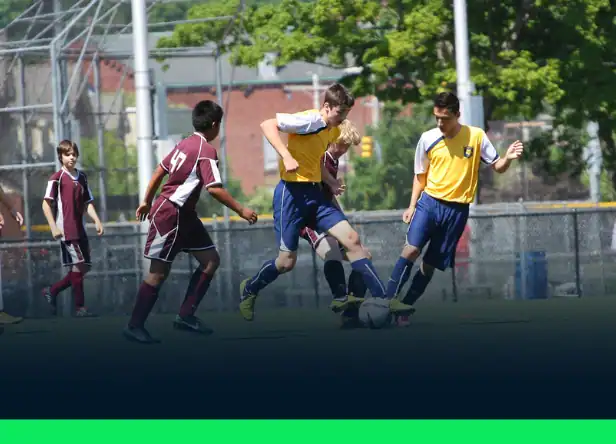
Games are usually played 5 vs. 5, on small fields (about 30×40 meters), with small goals and without a fixed goalkeeper.
This format encourages initiative, frequent touches on the ball, and involvement for every player, rather than a few dominant players controlling the game. Children are exposed to different roles in both attack and defense: pressing, tracking back, supporting teammates, restarting play, and recovering their defensive shape. It is a stage where they “learn to do everything” on the field before any future positional specialization.
A Safe and Supportive Environment
Training sessions for U9s must take place in a safe, reassuring, and positive environment. At this age, children need clear reference points, simple and consistent instructions, and constant encouragement to stay engaged and confident.
The U9 coach must be able to balance structure and freedom: guiding without over-controlling, and supporting without imposing. The goal is to provide enough organization to help players feel secure, while still giving them the freedom to explore, make decisions, and enjoy the game.
Learning Objectives for 8-Year-Olds
U9 soccer pursues specific goals — motor, technical, and social. The aim is to create strong foundations so every child can move into the next age group with confidence, enthusiasm, and a solid base of skills and habits.
1. Develop Motor Skills and Coordination
Children at this age continue to improve their balance, reaction speed, agility, and body coordination.
Exercises should regularly include running, jumping, hopping, stopping, and quick changes of direction—ideally always linked to the ball. These movement patterns are not just “warm-ups”; they are the foundation for all technical learning, such as dribbling, changing pace, or adjusting the body before a pass or shot.
2. Strengthen Ball Mastery
Individual technique becomes a core focus at U9. Players work on dribbling, close control, first-touch receiving, short passing, and basic shooting. At this age, children often enjoy repetition and like to feel themselves getting better at specific moves or skills.
Coaches should design sessions so that each player gets as many touches on the ball as possible, in varied and stimulating situations: 1v1s, dribbling circuits, small-sided games, and technical challenges that keep players active and engaged.
3. Encourage Cooperation
The transition from “me and my ball” to “we as a team” happens progressively at U9. Small-sided games, pair activities, and 3v3 or 4v4 situations help introduce simple ideas: passing to a teammate, moving into space to receive, supporting the ball carrier, and defending together.
The key learning point is that success in soccer comes not only from individual talent, but from collaboration, communication, and effort for the team.
The Role of the U9 Youth Soccer Coach
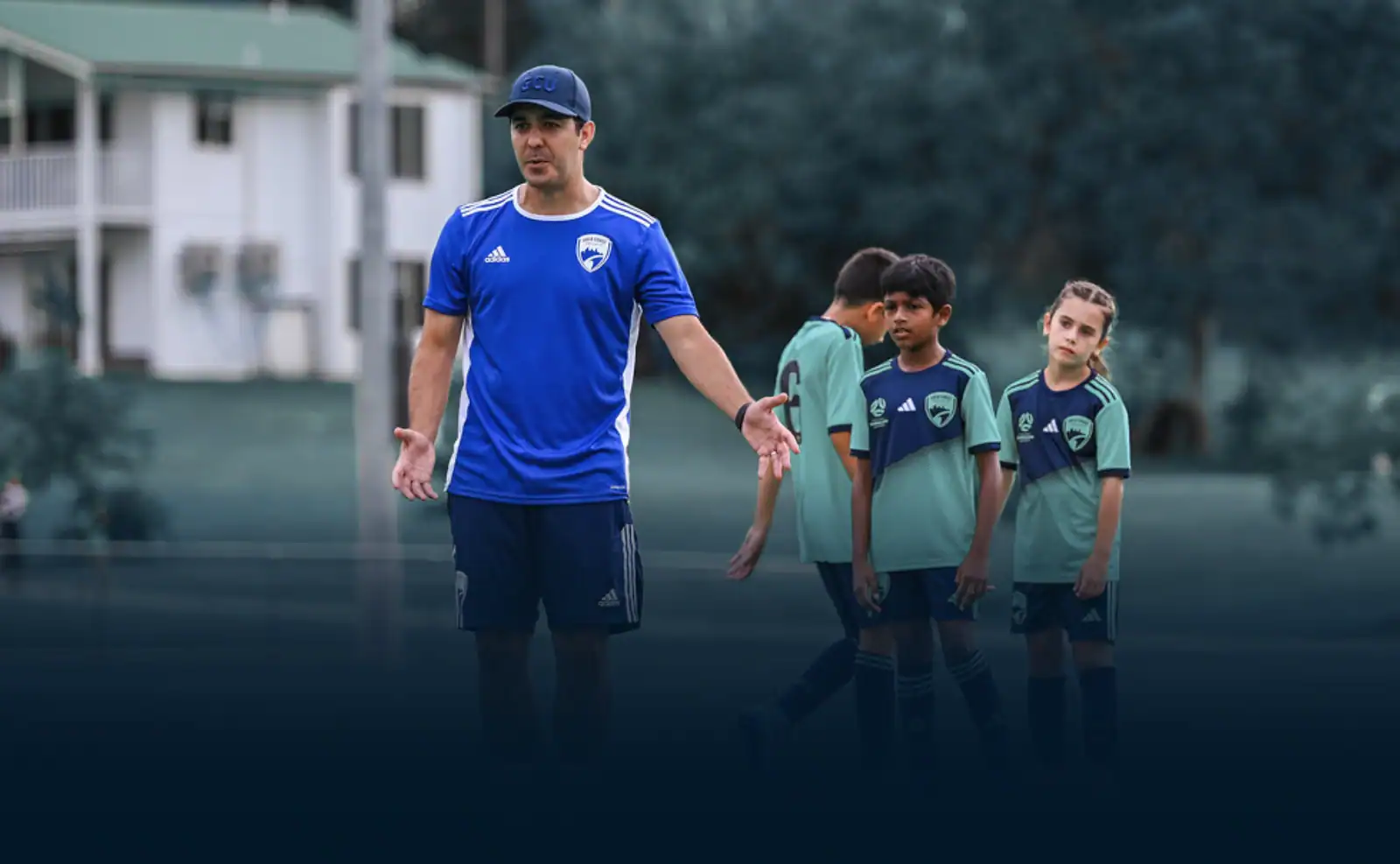
The youth soccer coach is not just a technical coach — they are a teacher and an activity leader capable of adapting their communication to a child’s understanding.
Supporting Without Pressure
Performance and results should never be the main priority at U9. Mistakes are a normal and necessary part of learning. The coach should encourage risk-taking, praise positive intentions (for example, trying a pass or a move), and highlight progress over time rather than judging individual actions.
Players need to feel that they are allowed to try, fail, and try again without fear of being criticized or benched.
Promoting Independence
Little by little, children should be encouraged to make their own choices on the field: choosing a position they feel comfortable in, deciding whether to pass, dribble, or shoot, and figuring out how to restart play in game-like situations.
These small decisions build responsibility and confidence. Learning to read the game and make choices is just as important as technical execution, especially at this age.
Creating a Positive Atmosphere
A U9 group learns best in an environment based on enjoyment, shared moments, and a strong sense of belonging. Coaches can introduce simple rituals: a team huddle or cheer, a short group challenge, or a moment at the end of practice to recognize effort, good behavior, or improvement.
These habits strengthen team cohesion, help players feel valued, and keep motivation high throughout the season.
How to Organize a U9 Training Session
Training sessions must be short, dynamic, and varied. At this age, focus rarely lasts more than 10–15 minutes per activity. Each session can follow a simple 3-part structure:
1. Fun Warm-Up
Start with movement-based games, relay races, tag games, or ball hunts. The goal is for players to move, smile, and get physically and mentally ready to train.
This is also a good moment to set the tone for the session: establishing basic rules, attention, and a climate of trust and respect.
2. Core Session
The main block of the session should focus on technical fundamentals like dribbling, passing, shooting, and first-touch control, always through games or realistic situations rather than isolated, static drills.
Small-sided games and themed activities allow a high number of repetitions, frequent decisions, and natural learning through play. For example:
- 1v1 or 2v1 dribbling games.
- 3v3 with end zones to encourage passing and movement.
- Shooting games with different targets and restrictions.
These formats help players develop technique and basic game understanding at the same time.
3. Free Play or Match
Ending the session with free play or a small-sided scrimmage (for example, 4v4 or 5v5) reinforces enjoyment and gives players a chance to apply what they worked on earlier.
The coach’s goal here is not to correct every mistake, but to observe, encourage, and let children experiment in a safe setting. Short interventions focused on one clear idea are better than constant stopping and talking.
Key Learning Areas in U9
Between ages 7 and 9, children are in a perfect window for learning without pressure. Their curiosity, imagination, and energy help them progress quickly — as long as the approach stays balanced.
Technical Development
Core technical priorities at U9 include:
- Dribbling with both feet and in different directions.
- Short passing and receiving, including using the inside of the foot.
- Basic shooting technique with proper body shape.
- First-touch control that prepares the next action.
These elements should appear in every session, preferably within fun, game-like activities instead of long lines or static drills.
Tactical Development
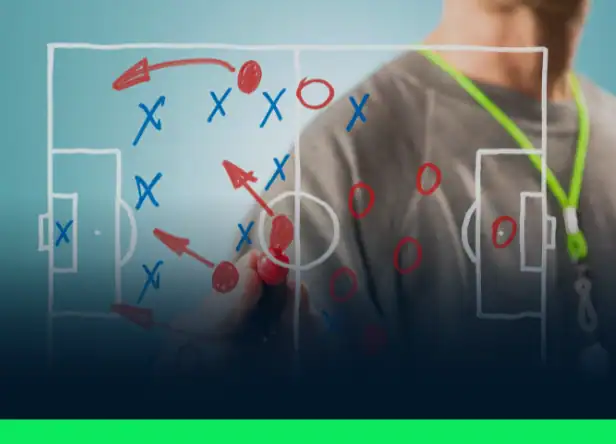
The goal is not to impose a complex system, but to introduce simple tactical ideas:
- Basic positioning (not all players chasing the ball).
- Spacing (using width and depth).
- Playing with and without the ball.
- Working together in attack and defense.
Small-sided games with numerical advantages (such as 3v2 or 4v3) are excellent for developing decision-making without overwhelming players.
Mental and Social Development
At this age, emotional and social learning is as important as technical progress. Players begin to learn how to:
- Handle wins and losses.
- Recover after a mistake.
- Show respect for teammates, opponents, and referees.
- Encourage and support one another.
The coach must lead by example, modeling calm behavior, respect, and positive communication.
Our Tips for Coaching U9 Players
Coaching a U9 group requires energy, patience, and clear, age-appropriate communication. Children need:
- Lots of movement and minimal standing in lines.
- Simple rules and clear expectations.
- Variety in games and exercises to stay focused.
It is important to alternate high-intensity activities with calmer moments so players do not lose focus or become exhausted.
The coaching approach should be highly visual. Demonstrating movements, positions, and patterns is far more effective than long explanations. Children of this age learn best by watching and copying, not by listening to abstract instructions.
Coaches should actively encourage initiative. Allowing young players to try their own solutions—whether it is a dribble, a pass, or a shot—builds creativity and confidence. The goal is not perfect execution, but the courage to try and learn.
Cooperation is another key theme. Praising good passes, teamwork in defense, communication, and supportive behaviors strengthens team spirit. Complexity is not required here; habits are formed through repetition of simple, clear basics. It is better to repeat core skills like dribbling, passing, and controlling the ball frequently than to overload children with complicated patterns or rules.
By combining clarity, kindness, structure, and variety, the coach creates a stimulating learning environment where every child can progress at their own pace while genuinely enjoying the game.
U9 Soccer: A Key Step Before Formal Initiation
The U9 category marks the end of the early discovery cycle and prepares young players for larger formats and more structured competition at U10–U11 and beyond.
It is a crucial time to reinforce fundamentals: coordination, love of the ball, understanding of the game, and team spirit. With thoughtful guidance, young players can move into the next stages of their soccer journey with confidence, enthusiasm, and a strong foundation.
This is the core mission of educational youth soccer: developing children who are fulfilled, curious, confident, and happy to play and grow together through the game.