At age 10, young soccer players enter a transformative phase of their development. Most have completed several seasons of competitive or recreational play and are beginning to grasp the nuances of collective team soccer. This is when individual skill development intersects with tactical understanding.
U10 soccer represents a pivotal structuring stage in player development: athletes demonstrate improved ball control, communicate more effectively on the field, and start to recognize that the soccer ball can travel faster than they can run. This realization opens the door to understanding passing, movement off the ball, and intelligent positioning.
The coach’s role becomes increasingly vital during this phase. It’s no longer solely about fostering curiosity and enthusiasm—though these remain essential—but about teaching players to construct plays, think tactically, and execute coordinated team movements. Enjoyment and competitive spirit must be balanced with purposeful progression and skill development.
What Is the Age Range for U10 Soccer?
The U10 category typically includes children who are 9 years old as of January 1 of the current competitive season. These players are in the foundational training cycle, a developmental period when motor skills sharpen significantly and sustained attention becomes more reliable. Training sessions can be extended in duration and more formally structured while still maintaining the playful, engaging atmosphere appropriate for this age group.
At this stage, players are ready to absorb more complex concepts through repeated exposure and guided practice, making the transition from pure recreational soccer to more organized, skill-focused training both appropriate and beneficial. Coaches should emphasize the Four Corner Model—covering technical/tactical, psychological, physical, and social aspects—to ensure holistic growth.
The Structure of the U10 Competition
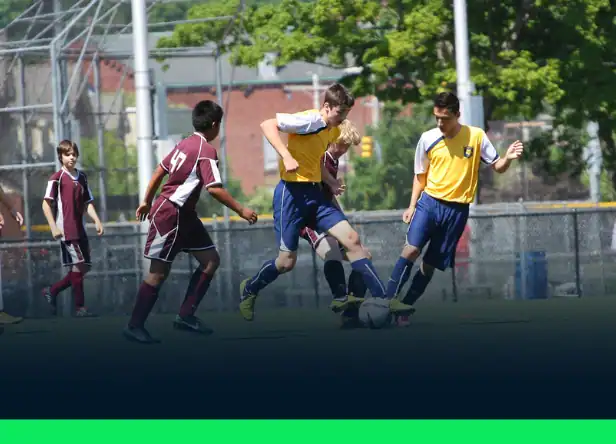
Matches in the U10 category are typically contested in 7v7 or 5v5 formats on field dimensions larger than those used in U8 or U9 play. This expanded playing area provides several developmental advantages: it creates more passing opportunities, demands increased movement and decision-making, and presents more frequent 1v1 situations where players can apply their emerging technical skills.
The larger field also necessitates collective organization among teammates. Young players must learn essential positional concepts: how to recover defensive shape, maintain proper spacing, control the tempo of play, and adjust their positioning relative to the ball’s location. These organizational elements become just as important as individual skill execution and goal-scoring ability.
The educational framework at U10 remains centered on experiential learning and respect for opponents and teammates. The emphasis is on continuous improvement within a supportive environment rather than prioritizing winning at any cost. This approach builds healthy attitudes toward competition while fostering genuine love for the game, with scores ideally kept within 5 goals to promote sportsmanship.
Key Learning Objectives at U10
U10 players progress quickly but require consistent repetition and clear, concrete reference points. Effective training sessions strategically alternate between isolated technical work, small-sided game scenarios, and decision-making activities. This is the optimal age to introduce fundamental tactical concepts: creating space and finding open teammates, providing support to the ball carrier, and executing organized defensive pressure.
Deepening Individual Technical Skills
While U10 players possess basic competency with dribbling, passing, and ball control, they must now develop precision and rhythm in their execution. Coaches can begin emphasizing first-touch quality, passing while moving at speed, and shooting after a controlled receiving touch. The soccer ball transitions from simply a tool for enjoyment to an instrument of technical mastery.
The coaching priority is creating high-repetition training environments that reinforce skill development without becoming monotonous or discouraging. Effective coaches build strong technical habits through varied, game-realistic drills that maintain player engagement and enthusiasm, such as juggling, turns, and dribbling in grids.
Improving Awareness and Decision-Making
At this age, young players begin to genuinely “look up” and scan the field before executing actions. They’re developing the cognitive ability to process multiple pieces of information simultaneously—the location of teammates, opponents, the ball, and open space.
Directional passing circuits (rondos), small-sided possession games, and lightly contested drills are exceptionally effective for developing this anticipatory ability and encouraging players to analyze their options before acting. Coaches can facilitate this cognitive development by asking purposeful, open-ended questions: “Where is your nearest teammate?” “Why did you choose to pass in that direction?” “What would happen if you moved to that space?”
Team Play Build Up
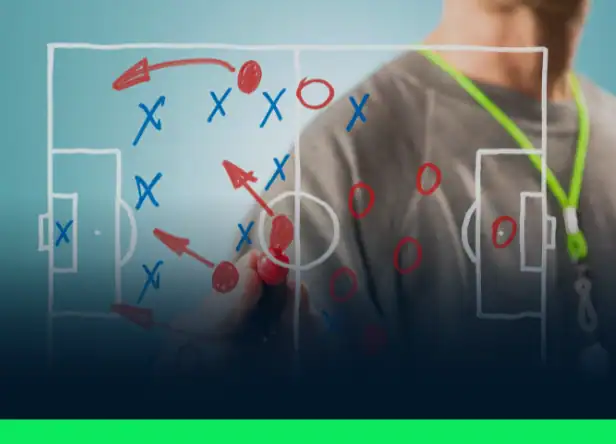
U10 soccer introduces the first genuine principles of team-oriented play. Players transition from individual skill expression to understanding how their actions interconnect with teammates’ movements and positioning. They learn to move the ball systematically, respect positional responsibilities, and collaborate toward shared objectives.
Constraint-based exercises—such as 4v4 possession games requiring three passes before attempting a shot—effectively promote understanding of collective play. Progressively, concepts including off-the-ball support, intelligent positioning, and voice communication assume genuine tactical importance and become measurable in matches. Simple tactics like kicking wide on defense or across the goal on attack help without overwhelming players.
Is It Possible to Start Soccer at Age 10?
Absolutely. The age range from 8 to 12 years old is widely recognized as the optimal “golden age” for technical skill acquisition in soccer. During this window, young players establish their foundational technical base within an environment centered on playful exploration, genuine enjoyment, and individual growth.
Although most players begin soccer at U6 or U7 (ages 5-6 or 6-7), late starters should not be discouraged. A skilled coach can evaluate the individual player’s current ability level and thoughtfully address any technical gaps. Coaches should prioritize strengthening core technical competencies—first touch, passing accuracy, dribbling control—while encouraging consistent practice outside organized training sessions, like home juggling or wall passes. Importantly, maintaining intrinsic motivation and genuine enjoyment of the game are perhaps the most critical factors accelerating improvement in late-starting players.
The Critical Role of the U10 Coach
Coaching a U10 team requires discovering the optimal equilibrium between systematic instruction and realistic competitive expectations. The coach functions as an experienced guide, capable of explaining tactical principles and structural concepts without constraining young players’ creative expression and natural problem-solving abilities.
Effective coaches at this level demonstrate technical concepts and movements more frequently than they lecture. At age 10, children learn predominantly through observation and imitation. Visual demonstrations, encouraging feedback, and concrete examples carry substantially more pedagogical weight than extended verbal instruction—use short, simple messages and get down to their level.
Coaches must deliberately adapt their communication style to this developmental stage: concise sentences, unambiguous instructions, and transparent objectives. Every training session should be energetic, purposefully structured into warm-up, skills, scrimmage, and cool-down, and sufficiently varied to maintain group concentration and individual engagement.
The human element remains paramount. Genuine kindness, attentive listening, and authentic recognition of individual effort and improvement constitute the most powerful tools for facilitating meaningful progress and sustaining long-term player motivation.
Main Seasonal Objectives for U10 Season
| Objective | Pedagogical Details |
|---|---|
| Strengthen ball mastery | Increase touches, vary surfaces, control while moving |
| Improve coordination and speed of execution | Introduce quick sequences, passes on the move, rhythm changes |
| Develop game vision | Encourage situations where the child must observe before acting |
| Strengthen team cooperation | Work on support, movement around the ball carrier, communication |
| Manage effort and recovery | Introduce longer sequences, teach breathing and repositioning |
These objectives provide a coherent framework for structuring seasonal progression. Coaches should adjust emphasis based on the team’s overall technical level and learning pace.
Exercises Suitable for the U10 Category
U10 sessions must remain lively and motivating. The goal is to balance technical drills and game formats, ensuring every child touches the ball often while learning to understand the game.
For concrete examples of sessions and workshops adapted to this category, consult our dedicated article on U10 soccer drills. You can find all the details about the exercises here at SoccerEdu.
Practical Coaching Strategies for U10 Players
Coaching U10 groups requires skillfully channeling collective energy. Young players naturally love movement, experimentation, and self-expression—your role is directing that enthusiasm productively rather than restricting it.
Strategically alternate between intense, energetic activity phases and comparatively calmer, lower-intensity periods to sustain focus and mental engagement. Encourage authentic discovery by permitting players to attempt new techniques and tactical solutions, even when execution isn’t immediately polished. Learning fundamentally occurs through mistakes, and durable habits develop through deliberate repetition—no tackling or heading at this level.
Place significant emphasis on valuing cooperative play: specifically acknowledge high-quality passes, committed defensive efforts, and genuinely supportive teammate interactions. While foundational skill repetition remains the core training priority, ensure this happens consistently within an enjoyable, motivating environment. U10 players who feel supported and properly motivated learn rapidly and retain knowledge durably throughout their soccer development.
U10 Soccer: Constructing the Foundation for Tactical Soccer
The U10 category functions as a genuine springboard toward sophisticated, tactically-aware soccer. Players begin comprehending that individual actions form components of a larger collective system: a precisely weighted pass, perfectly-timed off-the-ball run, or coordinated defensive shift all contribute to team success.
By deliberately structuring training sessions around technical mastery, intelligent game reading, and authentic cooperation, coaches establish robust foundations for players’ subsequent development. U10 soccer fundamentally represents a comprehensive school of the game—emphasizing collective effort, tactical awareness, and the enduring joy experienced when players consistently show up prepared to improve and compete together.