Young players entering the U11 age group experience a pivotal developmental phase marked by rapidly improving physical coordination, more precise technical execution, and the emergence of foundational tactical understanding. At this critical stage, players develop the cognitive capacity to think about the game while simultaneously executing increasingly complex technical actions. This combination creates both opportunity and responsibility for coaches to design training sessions that bridge the gap between basic skill development and soccer-specific game intelligence.
A well-structured U11 drill must therefore balance fun, technical demand, and measurable progression, rotating strategically between isolated technical workshops, movement-focused exercises, and realistic game scenarios that mirror match conditions.
The Priority Objectives of a U11 Session
Before introducing specific drills, coaches must structure each session around three essential developmental areas that define the U11 age group.
Shift Toward Tactical Structure and Collective Movement
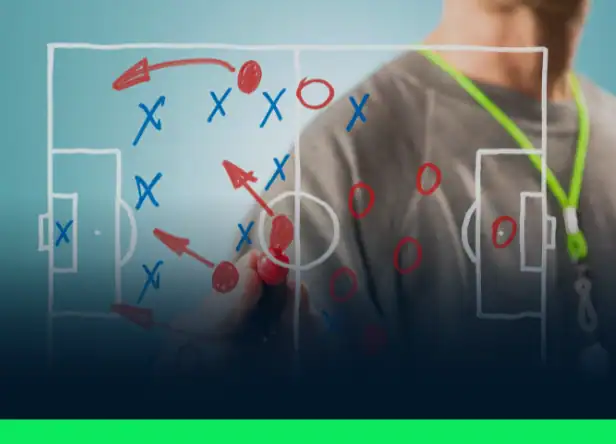
The U11 soccer approach demands significantly more tactical sophistication than U10 training. At this stage, coaching must gradually transition away from primarily individual-focused motor skill development toward building readable collective logic: understanding and managing space, recognizing early transition opportunities, establishing stable positional reference points, and gradually introducing differentiated roles within formations.
The 8v8 format (7v7 in some districts) requires considerably more structural organization than previous age groups. U11 players must grasp how to move as a cohesive unit, how to position themselves as available passing options, and how to establish rhythm in ball circulation. They begin understanding the “how and why” behind movements, not just executing predetermined patterns.
U11 objectives fundamentally increase the cognitive load of training, introducing more decision-making constraints and extended play sequences while preserving the essential technical repetition necessary for skill automaticity.
Strengthen Technical Mastery in Motion
Players must now execute technically demanding actions at varying speeds and under changing conditions. This includes variable-pace dribbling, oriented first touches that prepare the next action, and crisp short passing while scanning for threats and opportunities. Technical workshops should specifically emphasize forward-thinking play—receiving the ball in advanced positions and making progressive passes rather than sideways or backward circulation.
The concept of “receiving with your head up” becomes non-negotiable. Players should consistently scan the field before receiving possession, creating a habit that translates directly to match performance.
Develop Decision-Making and Game Reading
Beyond pure technique, U11 players must develop the cognitive tools to observe actively, execute one-touch passing when appropriate, deliberately slow tempo when possession is threatened, and identify penetrating through-pass opportunities. They need to quickly assess situations and select the best option from multiple possibilities.
Effective workshops incorporate constraints that stimulate decision-making—touch limits, designated target zones, positional role changes, and time pressures—to deliberately bridge the gap between controlled training and authentic match demands.
U11 Drills: Technique, Coordination, and Speed of Execution
Technical workshops build individual confidence and establish quality standards for first touches and passing fundamentals before players enter pressurized game scenarios.
Dribbling plus Oriented Control in Sequence

Setup: Position three cones in a straight line, spaced approximately 6-8 meters apart. Players dribble at controlled speed toward the first cone, execute an oriented first touch (receiving with their body already positioned toward the next target), immediately move toward the second cone, then deliver a precise pass to a teammate positioned perpendicular to their movement line.
Technical focus: This drill specifically trains players to establish visual awareness before controlling the ball, develop proper body shape that enables quick forward progression, and strike passes cleanly off their supporting foot rather than their dominant kicking foot.
Progression variations: Require weak-foot execution only; demand one-touch passing after the dribbling phase; increase the distance between cones to emphasize speed; or specify the receiving teammate’s position to force directional accuracy.
Wall Pass (One-Touch) with Rhythm and Acceleration

A central player rapidly exchanges one-touch passes (wall passes) with two supporting partners positioned on alternating sides, approximately 8-10 meters away. After each exchange, the central player accelerates explosively around a cone positioned 3-4 meters behind them, then sprints back to the center to receive again.
Objectives: This drill chains rapid actions together, maintains consistently high tempo, and improves the coordination between explosive running and receiving sharp passes. Players experience the rhythm and timing essential to possession-based play.
Progression: Add a final shot or pass toward a target; require weak-foot exchanges; or increase the number of repetitions to develop aerobic capacity alongside technical skill.
Decision-Making and Team Play in U11 Soccer
This developmental stage marks when players genuinely begin collaborating strategically to progress toward the opponent’s goal, moving beyond basic passing drills.
3v3 Plus Two Neutral Players

Setup: Create a 25×25-yard field. Two three-player teams compete in possession, with two additional neutral players who always support the team currently holding the ball (creating a 5v3 numerical advantage). The objective is to maintain possession through rapid identification of passing options.
Educational benefits: This format actively encourages movement off the ball around the player with possession, significantly accelerates circulation speed through multiple passing angles, and teaches players to identify and exploit zones of numerical superiority. Defenders develop pressing angles and understand how defensive positioning limits opponent options.
Key progression: Reduce to two-touch maximum per player to force faster decision-making and combination play.
Offensive Transition: Win-to-Attack Sequence

Setup: Position two small goals (or cones marking goal areas) outside and away from the main play zone. Two teams compete in a 30×40-yard central area. When a team recovers the ball, they immediately transition forward and must complete a shot or goal-scoring attempt within six seconds. Turnovers or incomplete transitions result in possession loss.
Developmental purpose: This drill crystallizes the modern soccer principle of “win it, attack immediately,” which U11 players must internalize. It builds reactive speed, forward-thinking progression, and forces quick decision-making between combining short passes or attacking depth with longer direct balls. Players experience authentic defensive pressure while learning to play decisively in transition moments.
Duels, Finishing, and Commitment in the U11 Soccer
Individual commitment to winning duels and scoring opportunities becomes increasingly important at this age. Young players must develop comfort defending actively while moving forward, protecting possession under pressure, and finishing with composure under defensive challenge.
1v1 Duels With an Acceleration Zone

Setup: Create a 12-meter lane with clear acceleration and finishing zones. The attacker starts slightly ahead with possession; the defender begins just behind and must attempt to catch up and disrupt before the shot zone. The attacker must accelerate, navigate the lane with ball control, and finish before the defender closes them down.
Technical objectives: This drill develops enhanced ball protection while moving at speed, improves technical execution under pressure, and teaches finishing composure when defenders are approaching. Players experience one-on-one situations common in modern soccer.
Variation: Establish a “no-tackle zone” in the initial 4-5 meters, forcing attackers to accelerate early or face immediate defensive pressure—a more game-realistic constraint.
Combination Finishing: Lateral Service to Central Striker

Setup: Two wide players position themselves on the flanks with a supply of soccer balls. A central attacker times their run and adjusts their positioning to receive low crosses. The striker must connect with the ball in one or two touches, emphasizing clean striking technique.
Benefits: This workshop develops run timing and body positioning adjustment, reinforces shot accuracy under game-speed conditions, and directly connects to authentic match scenarios where strikers receive wide service.
This drill consistently ranks among players’ and coaches’ favorites because it replicates genuine attacking moments from competitive matches.
Complete 75-Minute U11 Training Session Structure
Here is a concrete example structuring a full U11 session with approximate time allocations and learning objectives:
| Time | Content | Objective / Focus |
|---|---|---|
| Warm-up (10 min) | Passing game in motion + muscle activation | Gradually enter the session while reinforcing technical basics |
| Technical workshop (15 min) | Dribbling + oriented control then pass | Focus on supporting foot and scanning |
| Team play (20 min) | 3v3 with neutrals | Get open, play fast, identify free spaces |
| Guided game (20 min) | Offensive transition after recovery | React quickly, choose direction, attack in numbers |
| Cool-down (10 min) | Stretching + discussion on successes and difficulties | End calmly and encourage individual & collective reflection |
How to Adapt U11 Drills According to Level
The U11 category encompasses considerable variety: some players demonstrate mastery of fundamental skills while others are still discovering certain technical gestures and tactical concepts. Maintaining engagement across this spectrum requires intentional adaptation.
Adjust distances and execution speed: Developing players benefit from shorter distances and simplified tasks (control, then pass). Advanced players progress by increasing speed, demanding weak-foot execution, or transitioning to one-touch combinations.
Modify game constraints: Touch limits challenge advanced players, while additional space gives developing players time to observe and decide.
Prioritize enjoyment: Fun remains the primary motivational engine. Even demanding sessions should conclude with simple gameplay—always finish with a genuine match when possible.
Tips for Essential Coaching Principles for U11 Development
U11 players thrive with activity, clear rhythm, and understandable objectives. A successful session energizes players while teaching systematically.
Demonstrate rather than explain: Visual demonstrations communicate instructions far more effectively than lengthy verbal explanations.
Encourage initiative: Reward all sincere attempts, even imperfect execution, to build confidence and risk-taking.
Distribute responsibilities: Assigning players roles—equipment management, small-group leadership, timekeeping—increases engagement and ownership.
Value effort and progression: Praise intelligent movement, accurate positioning, and tactical intentions alongside successful outcomes.
Maintain consistent structure: Technical foundations → collective theme → guided match. This progression helps players understand session objectives and progress logically.
What to Remember for Building an Effective U11 Session: Key Takeaways
The U11 category represents a genuine developmental turning point: children begin playing as a team rather than as individuals, understand spatial concepts, and chain actions with considerably greater control.
An effective U11 session balances:
- Technical execution under realistic conditions
- Decision-making and game reading
- Collective team movement and positioning
- Competitive finishing and commitment
- Consistent enjoyment and engagement
This foundation at U11 doesn’t radically transform at U12—it amplifies. U11 establishes the tactical and technical structure; U12 executes those principles at higher speed and with greater consistency under increased pressure. By strategically rotating drill types and maintaining clear pedagogical direction, coaches position young players for continued progression while sustaining the joy and passion that brings them back week after week.