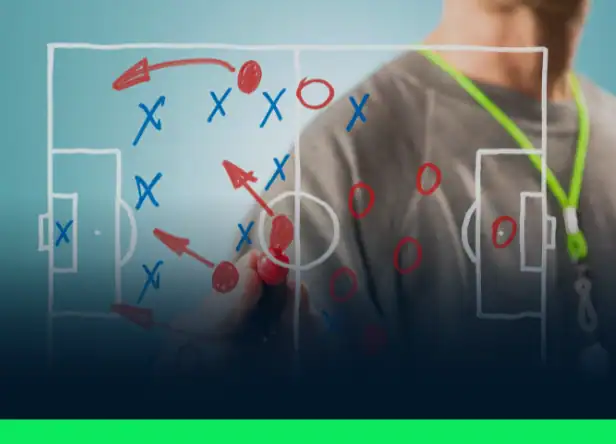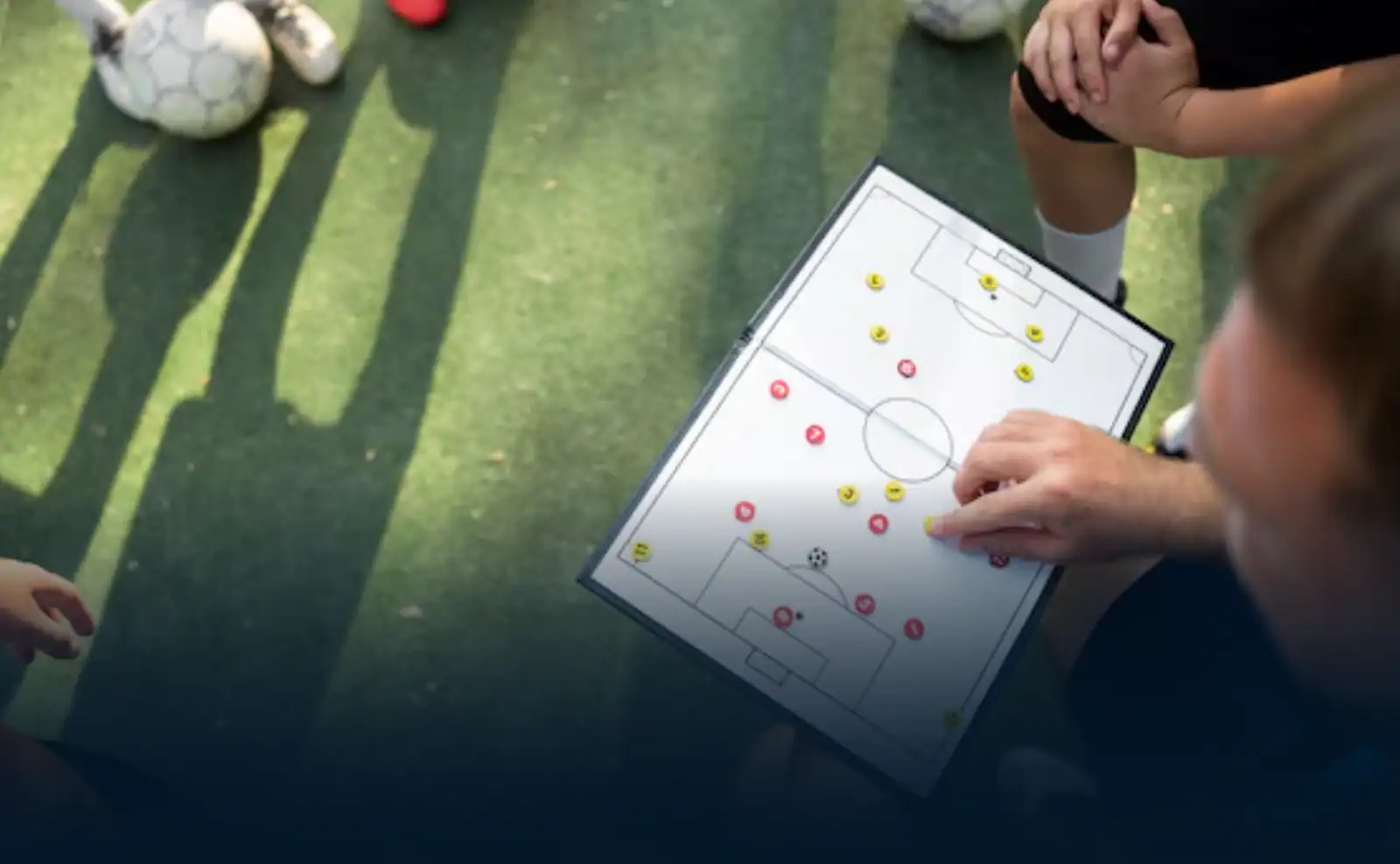
Designed to coherently integrate the tactical, physical, technical, and mental aspects of the game, this methodology places tactics at the center of every training session. But what exactly is tactical periodization, and how can it transform your team’s play? Let’s find out together.
What Is Tactical Periodization?
Tactical periodization aims to prepare soccer players by emphasizing the tactical principles of the game. Unlike traditional methods that divide training into separate sessions (physical, technical, tactical, mental), tactical periodization merges them to create an integrated approach.
Within a single training session, you’ll encounter physical conditioning, mental stimulation, technical execution, and tactical decision-making—all unified through ball-focused exercises that mirror match scenarios. This specificity allows players to develop their capabilities within authentic game contexts, dramatically enhancing both the efficiency and relevance of training while preparing them for the complex, chaotic nature of competitive soccer.
Where Does Tactical Periodization Come From?
Developed by Vítor Frade in the 1980s at the University of Porto, tactical periodization is based on the idea that soccer is above all a tactical game. Vítor Frade sought to overcome the limitations of traditional training methods by integrating tactics at the core of preparation.
“Tactical periodization rejects physical or technical formations that are separate from the game model, as this leads to inactivity in the process.” — Vítor Frade
His groundbreaking philosophy has been embraced and popularized by some of soccer’s most celebrated coaches, including José Mourinho—perhaps its most famous proponent—who utilized the methodology to spectacular effect at FC Porto, winning the UEFA Champions League in 2004. Pep Guardiola has integrated these principles with his renowned positional play philosophy, while André Villas-Boas, Brendan Rodgers, Nuno Espírito Santo, and Marco Silva have all implemented tactical periodization to achieve success at the highest levels of the game.
Understanding Tactical Periodization
The Principles of Tactical Periodization
To properly apply tactical periodization, it is essential to master its key principles, which guide each training session.
A Chosen Game Model
The first principle is based on consistency with the team’s game model. Every exercise, whether passing drills or defensive movements, must reflect the tactical principles defined by the coach. This ensures continuity between training and matches, allowing players to better understand their role and adopt the right habits.
Real Match Situations
At the same time, the specificity and realism of exercises are crucial. Rather than using generic drills, they must reproduce real match situations. This allows players to work effectively on key phases such as transitions or counter-pressing, while staying faithful to the team’s style of play.
Specificity and Match Realism
Simultaneously, the principle of specificity demands that exercises possess authentic game realism. Rather than utilizing generic, decontextualized drills, training activities must accurately reproduce genuine match situations. This allows players to work purposefully on critical phases such as counter-pressing (gegenpressing), defensive transitions, or attacking third combinations while remaining faithful to the team’s established playing identity.
Progressive Complexity Throughout the Season
Training design must also embrace systematic progression and increasing complexity. As the season unfolds, exercises gradually become more sophisticated and demanding, commencing with fundamental tactical principles before progressively preparing players for more intricate, multi-layered, and dynamically challenging scenarios that replicate high-pressure competitive environments.
Holistic Player Development
Tactical periodization acknowledges and addresses all performance dimensions: physical conditioning, technical proficiency, tactical intelligence, and psychological resilience. Rather than training these elements in isolation, they’re harmoniously integrated within every session, ensuring comprehensive soccerer development that mirrors the multifaceted demands of the modern game.
Also, carefully planned periods of active recovery are strategically incorporated to prevent physical and mental overload. These recovery windows combine physiological rest with cognitive engagement through video analysis sessions, tactical debriefs, and reflective discussions, ensuring balanced, sustainable preparation throughout the competitive calendar.
The Advantages of Tactical Periodization
In connection with the different principles of tactical periodization mentioned earlier, we can identify many advantages visible both on the field and during training sessions:
Team Cohesion
By consistently training tactical principles within realistic game contexts, players develop profound collective understanding and heightened game intelligence, which significantly strengthens team cohesion and synchronizes decision-making patterns on the pitch
Match Realistic Preparation
Players are continuously exposed to authentic match scenarios under pressure, which substantially improves their capacity to read game situations, make appropriate decisions rapidly, and execute technical actions effectively when facing intense opposition.
Intelligent Physical Load Management
Physical demands are managed strategically through the weekly training cycle (morphocycle), optimizing conditioning while simultaneously reducing injury risk and ensuring players reach peak readiness for crucial fixtures.
Continuous Tactical Development
Training sessions dynamically adapt to the evolving tactical and physical requirements of the squad, facilitating progressive development and performance stabilization throughout the entire season rather than pursuing unsustainable performance peaks.
Setting Up a Tactical Periodization Session
The Four Phases of Play in Tactical Periodization
Tactical periodization is structured around four fundamental phases of the game:
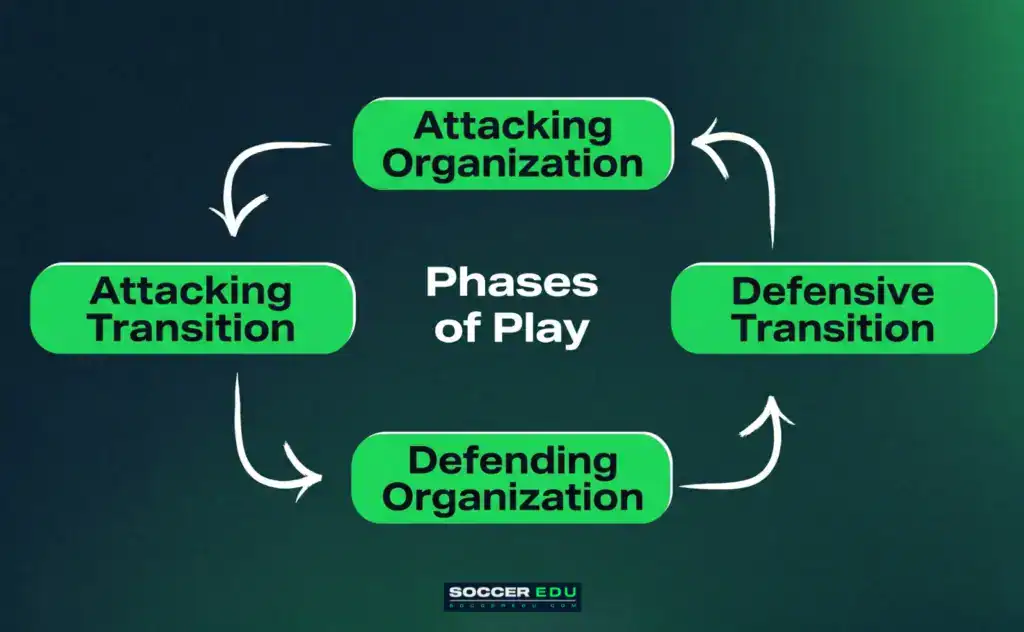
- Offensive Organization (Organized Attack): Constructing possession-based attacks through structured build-up play, utilizing positional rotations, spatial width, penetrating depth, and synchronized movement patterns to disorganize defensive structures and manufacture goal-scoring opportunities.
- Defensive Transition (Moment of Losing Possession): The immediate reaction when possession is surrendered, implementing counter-pressing principles to either recover the ball instantly within the critical 5-6 second window or strategically slow opponent progression by denying forward passing options.
- Defensive Organization (Organized Defense): Establishing defensive structure to prevent opponent advancement, focused on regaining possession through maintaining collective compactness, positional discipline, coordinated pressing triggers, and effective spatial control.
- Offensive Transition (Moment of Winning Possession): Rapidly exploiting defensive disorganization immediately after ball recovery, utilizing direct vertical passes, explosive forward runs into space, and quick decision-making to capitalize on numerical or positional advantages before opponents can reorganize defensively.
Each training exercise deliberately incorporates at least one—and ideally multiple—of these game moments to ensure training specificity.
Creating a Game Model for Tactical Periodization
Let’s now look at the importance of creating a clear game project, which is essential for implementing tactical periodization. This conceptual framework must articulate your desired playing philosophy and the specific tactical principles that will guide every training session throughout the season.
To construct a robust game model, coaches must initially define the overarching tactical ideas that characterize their preferred approach. This demands precise understanding of how the team should behave within each of the four game moments mentioned previously, establishing clear behavioral expectations for different tactical scenarios and match contexts.
Guided by this game model, coaches can systematically structure sessions that continuously reinforce chosen tactical principles while simultaneously integrating the physical, technical, and mental components required for optimal performance. Once your playing philosophy is established, it must be methodically deconstructed into a hierarchical system of principles, sub-principles, and sub-sub-principles that provide tactical guidance for every moment of play.
These principles form the foundation of the tactical approach and are essential for organizing the team’s play:
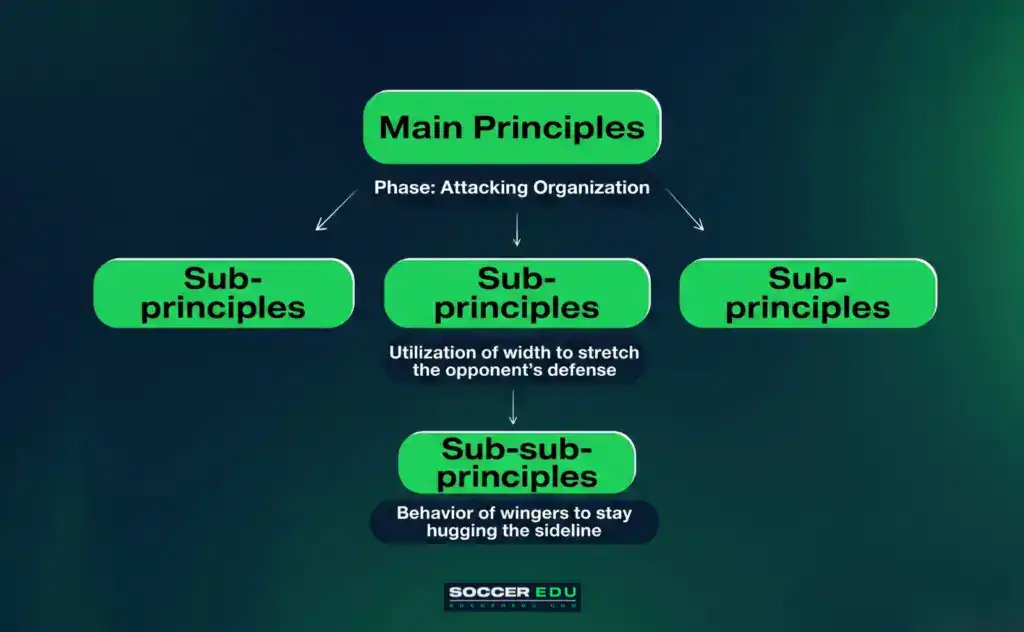
- Main principles: These represent the bedrock of your game model—the overarching tactical directives that govern your team’s collective behavior across all game moments.
Example: In offensive organization, a main principle might be maintaining ball possession while looking to progress quickly toward the opponent’s goal. - Sub-principles: These extend and refine main principles by specifying more detailed tactical actions and positional behaviors.
Example: In the offensive organization phase, a sub-principle could be using width to stretch the opponent’s defense. - Sub-sub-principles: These define highly specific technical-tactical details adapted to particular situational contexts.
Example: For the sub-principle of using width, a sub-sub-principle could be the behavior of wingers staying close to the touchline to maximize available space.
By thoroughly understanding the four game moments and constructing a well-defined game model, coaches can implement tactical periodization with clarity and purpose.
Tactical Periodization Session
Now that you know the key points for implementing a session with tactics at its core, here is an example of a typical tactical periodization session:
| Phase | Main Objective | Description | Duration (min) |
|---|---|---|---|
| Activation | Prepare body and mind | Dynamic warm-up with short passes and specific movements related to offensive organization, to promote quick ball circulation and player reactivity. | 15 |
| Offensive Organization | Develop build-up play in possession | 6v6 exercises with passing lanes, use of width and depth to unbalance the opponent’s defense, and choosing the right moments to attack decisively. | 20 |
| Defensive Transition | React quickly after losing the ball | 5v5 small-sided games focused on rapid transitions after losing the ball, with the goal of immediately regaining possession or slowing down the opponent by blocking passing lanes. | 20 |
| Defensive Organization | Structure the defense to stop opponent progression | 7v7 defensive positioning drills, focusing on maintaining compactness, marking key players, and constantly adjusting positions according to opponent movement. | 20 |
| Offensive Transition | Exploit imbalances after recovery | 11v11 global play emphasizing quick exploitation of space after recovery, with direct passes or forward runs to surprise an unorganized defense. | 25 |
| Active Recovery | Reflection and feedback | Stretching, tactical debrief with the team, video analysis of exercises, and discussions on decision-making during transitions to consolidate tactical learning. | 15 |
Tips for Integrating Tactical Periodization Successfully
Beyond understanding the principles, game moments, and importance of creating a coherent game model, here are practical recommendations to maximize tactical periodization effectiveness within your training program:
Tip 1: Structure Your Season in Training Cycles
Divide the competitive season into distinct mesocycles (typically 4-6 week blocks) with specific tactical emphases—pre-season foundational work, early season tactical implementation, mid-season performance stabilization, late season tactical refinement—and systematically adapt tactical objectives to maintain progression, motivation, and prevent stagnation.
Tip 2: Individualize Within the Collective Framework
While maintaining consistency with your overarching tactical approach and game model, individualize certain training aspects to address position-specific requirements and player-specific developmental needs, ensuring each soccerer progresses optimally within the collective system.
Tip 3: Leverage Performance Analysis Technology
Systematically analyze individual and collective performance using video analysis platforms, GPS tracking systems, and performance monitoring tools to refine tactical periodization programming with objective data-driven feedback, identifying areas requiring tactical emphasis and validating training effectiveness.
Tactical Periodization: Final Thoughts
Tactical periodization transcends being merely another training methodology—it represents a comprehensive soccer philosophy that positions tactics at the absolute center of player and team development. By embracing this approach, coaches fundamentally transform how they conceptualize and execute team preparation.
Modern coaches implementing tactical periodization no longer confine themselves to isolated physical conditioning or decontextualized technical repetition. Instead, they aspire to cultivate complete soccerers who possess profound tactical understanding, exceptional decision-making capabilities, and the ability to execute effectively within the dynamic, unpredictable chaos of competitive matches.
Through this integrated methodology, players simultaneously develop their physical capacities, technical proficiency, tactical intelligence, and psychological resilience—emerging as complete, adaptable soccerers capable of making rapid, contextually appropriate decisions across all game situations. This holistic approach, pioneered by Vítor Frade and proven successful by elite coaches worldwide, continues to shape modern soccer training at the highest levels of the professional game.