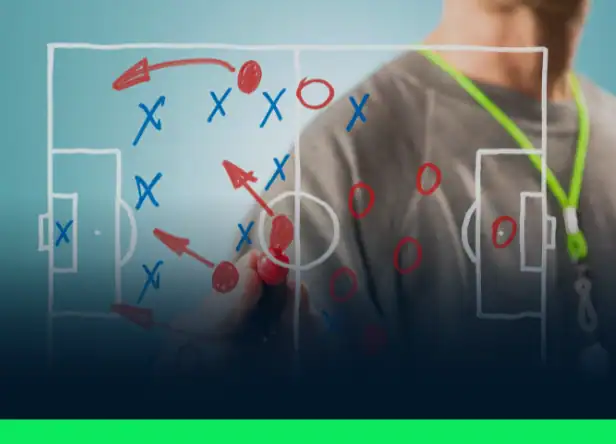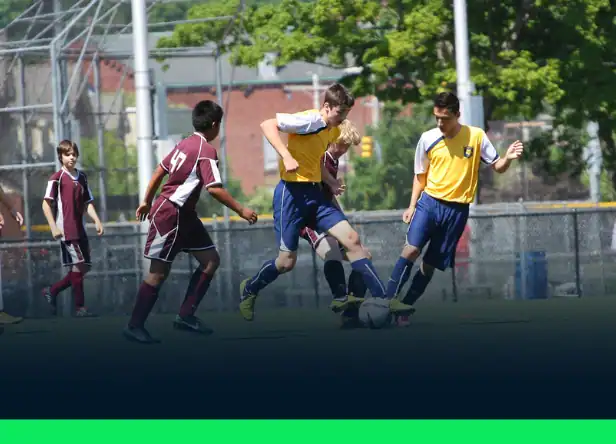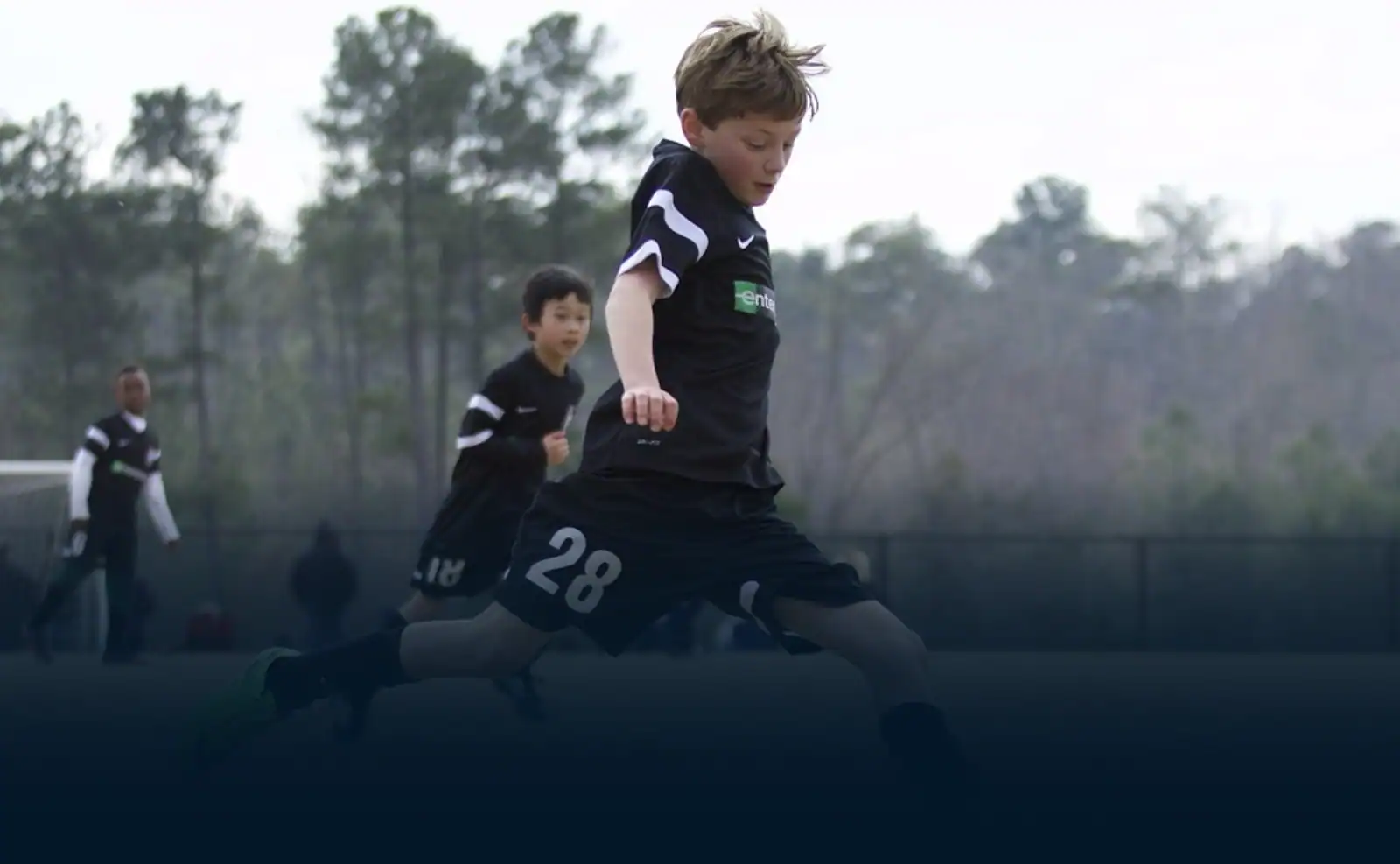
At age 10, young players begin to stabilize their technical gestures and better understand the principles of team play. This critical age marks a transition where players gain improved coordination, faster execution speed, and enhanced attention capacity. The U10 category represents a pivotal moment in youth soccer development where the fundamentals established in earlier age groups begin to crystallize into more advanced, game-realistic scenarios.
For the youth soccer educator, this stage is ideal for reinforcing the fundamentals—dribbling, passing, and first touch—while introducing situations closer to authentic match play: tactical positioning, defensive transitions, and active scanning of the field. The shift from repetitive technical drills to more dynamic, decision-making-focused activities becomes essential at this level.
A well-designed U10 soccer drill must therefore combine enjoyment, purposeful repetition, and cognitive challenge. The objective is no longer simply executing a technical skill in isolation, but rather using it at the right moment within a collective, game-like context. Players must begin thinking about the “why” behind their actions, not just the “how.”
U10 Drills: Technical Mastery and Precision
At this age, the soccer ball must become a trusted companion. Each training session should include regular work on ball control, dribbling, and passing accuracy, with clear coaching points and dynamic progressions that keep players engaged.
1. Directional Dribbling and Control Circuit

Each player dribbles within a designated area, alternating between different surfaces of the foot—inside, outside, and sole. At the coach’s signal, players must stop the ball, change direction sharply, or execute a pass to a teammate before resuming dribbling. This drill develops individual ball mastery and the ability to react quickly to external cues, simulating the demands of in-game decision-making.
Progression variation: Require an oriented (first-touch) control before each pass to work on anticipation and receiving the ball in a way that facilitates the next action. You can also add constraints like maximum touches before passing, or require players to dribble with their weaker foot.
2. Passing Rhythm and Accuracy in Motion

Players work in groups of four, forming a square formation approximately 10-15 yards apart. Each player passes to the teammate diagonally across from them using one or two touches, then rotates clockwise around the square. The goal is to maintain rhythm and timing while continuously improving pass accuracy and weight. This repetitive format builds muscle memory and communication between partners.
Progressive variation: Add a second soccer ball to the drill to stimulate concentration, communication, and awareness. This addition forces players to track multiple balls and anticipate the movement of teammates, mirroring the multitasking demands of match play.
U10 Drills: Decision-Making and Action Sequences
Players must now learn to observe before acting. These coaching sessions promote game reading and the ability to chain multiple actions within limited time—an essential skill for long-term soccer progression and player development.
3. Keep-Away Game with Positional Constraints (4v2)

In a 15×15-meter square, four players attempt to maintain possession against two active defenders. The objective is to complete a predetermined number of consecutive passes (for example, 10 passes) before switching zones or rotating defenders. This drill improves scanning ability, positioning off the ball, and communication between teammates under light pressure.
Strategic variation: Award bonus points if a possession sequence ends with a pass to a designated target player or a shot on a mini-goal. This adds an attacking objective and encourages more purposeful, directional play rather than aimless possession-for-possession’s sake.
4. Control–Pass–Run Combination Drill

Players work in groups of three arranged in a triangle. The first player receives a pass, executes an oriented control (receiving the ball with their first touch in a way that opens their body to the field), passes to the second player, and immediately runs to take their spot. This rapid action sequence reinforces coordination, execution speed, and continuous movement. The constant rotation keeps all players engaged and accountable.
Progression with pressure: Introduce a passive defender who applies light pressure without aggressively blocking. This addition forces decision-making under realistic conditions and encourages players to think about their first touch and passing direction before receiving the ball.
U10 Drills: Team Play and Realistic Match Scenarios
This is when young players truly discover the joy of playing together. The soccer coach must thoughtfully guide them toward understanding space, support positioning, and transitions between defensive and attacking phases.
5. Small-Sided Game with Build-Up Requirements (4v4)

Two teams play on a small field (approximately 25×20 meters) with mini-goals or cones marking the target area. The key constraint: a goal counts only if the attacking team completes at least two passes in their own defensive half before advancing toward the opponent’s goal.
This rule encourages patient build-up and prevents direct, chaotic play. This drill develops teamwork, verbal communication, positional discipline, active scanning, and support play. Players learn the importance of possession and controlled progression rather than reckless attacking. The spatial restriction also naturally develops first-touch quality and decision-making under mild pressure.
Tactical variation: Ban backward passes to encourage positive, forward-thinking play and force players to problem-solve when building out of the back. Alternatively, award extra points for goals scored after a quick combination play (three or fewer passes).
6. Fast Transition Game

Two teams play on half a full soccer field in a 5v5 format. The defining element: when a team loses possession, they have just five seconds to win the ball back before the opponent can shoot or advance significantly. This drill develops reactivity, focus, collective defensive work rate, and team spirit.
Progression variation: Add a time limit for counterattacking (for example, the attacking team must score within eight seconds of regaining possession). This creates urgency and teaches players to capitalize on transitions—a critical element of modern youth soccer.
Adjusting Drills Based on Individual Development and Group Dynamics
Not all U10 children progress at the same pace. Some already demonstrate mastery of the fundamentals, while others require additional repetition and confidence-building. The experienced youth soccer coach must adjust sessions using several strategic tools:
- Field size: Increase or decrease the designated area depending on individual ball control levels and technical comfort. Smaller spaces force more frequent touches and decision-making, while larger spaces allow developing players more time to execute.
- Group composition: Simplify to 2v2 formats for players needing more individual touches, or expand to 4v4 to challenge advanced players and stimulate tactical cooperation between multiple teammates.
- Coaching instructions: Gradually introduce constraints (time limits, direction of play, minimum pass requirements) as players demonstrate readiness. Avoid overwhelming players with too many rules or complex instructions.
- Equipment modifications: Use appropriately sized soccer balls and goals scaled to U10 dimensions to ensure proper technique development.
This flexibility keeps the entire group engaged and motivated while ensuring individual progress and player development continues at an appropriate pace.
Example of a U10 Training Session Structure
Here is an example of a 1-hour session for the U10 category, with different content and adapted coaching objectives:
| Phase | Duration | Objective | Content |
|---|---|---|---|
| Warm-up | 10 min | Activation | Technical dribbling circuit with ball |
| Workshop 1 | 15 min | Technical mastery | Dribbling and passing on the move |
| Workshop 2 | 15 min | Decision-making | 4v2 game + quick transition |
| Team play | 20 min | Application | 4v4 themed match (e.g., 2 passes before goal) |
| Cool-down | 5 min | Relaxation | Stretching, breathing, group feedback |
This straightforward structure effectively balances technical skill development, team play application, and enjoyment—the three pillars of effective U10 coaching.
Essential Coaching Principles for U10 Training Sessions
Working effectively with ten-year-old soccer players requires both structure and adaptability. Unlike younger age groups such as U6 or U7, U10 players crave meaningful challenges and competition. However, they also need clear reference points, specific feedback, and recognition of effort.
Varying the pace and intensity of your training remains essential: alternating dynamic, high-intensity workshops with calmer, skill-focused moments promotes concentration and prevents mental fatigue. The experienced coach remains highly visual with instructions—demonstrating technical gestures, showing proper positioning, and encouraging authentic attempts, even imperfect ones.
It is equally important to value team effort and collective success. Praising defensive work, acknowledging successful pass completion, and highlighting supportive attitudes throughout the session builds team spirit and creates a positive training environment. Young players respond powerfully to recognition and encouragement.
Favor consistency and repetition over constant variation: good technical habits are built through purposeful, repeated practice of fundamentals, not through constantly rotating different drills. Players need time to internalize movements and develop true confidence with the soccer ball at their feet.
Conclusion: U10 Soccer Development and Long-Term Player Growth
U10 soccer represents a key developmental stage where children learn to structure their play, actively observe opponents and teammates, and anticipate future play. By offering thoughtfully adapted U10 drills that combine technical skill development, dynamic movement, and real decision-making challenges, the youth soccer coach lays the foundation for a future intelligent, creative, and confident player.
Each training session must maintain a genuine sense of fun and enjoyment—because engagement and joy remain the primary drivers of progress and continued participation at this age. The young soccer player who loves coming to practice is the one who will continue developing and improving over time.
Coaching a U10 player means first and foremost giving them the desire to return and play the following week. Success is measured not just by technical proficiency, but by the player’s enthusiasm, growth mindset, and love for the beautiful game.