At ages 5 and 6, children take their first steps into the world of soccer. For many, it’s their very first experience with a team sport. The goal at this age isn’t competition or tactics — it’s simply to have fun, move, and share a joyful experience.
While tactical systems and advanced technical skills will develop in later years, even at this foundational level, every training session must be thoughtfully structured to address the unique developmental needs of 5- and 6-year-old players. Some coaches mistakenly believe that coaching U6 players simply involves adapting older age group activities by making them “easier.” This approach significantly underestimates the complexity of youth development.
To become an effective youth coach at this level, you must cultivate a playful, nurturing environment that develops fundamental movement skills, coordination, and ball familiarity while simultaneously building confidence and instilling a genuine love for playing alongside teammates.
Why Structure Matters in U6 Training Sessions
Five- and six-year-olds are full of energy but have short attention spans.
If the session lacks structure, it can quickly turn chaotic. Organizing a U6 session logically helps channel that energy and ensures progressive learning.
A clear structure also ensures safety, keeps activities varied to maintain focus, and establishes positive behavioral patterns that will serve players throughout their soccer journey. The predictable routine becomes reassuring for both young players and parents observing from the sidelines, creating a comfortable learning environment.
Understanding the Developmental Profile of U6 Players
At six years old, children are still in a phase of discovery. They don’t yet have the reflexes, coordination, or physical control of older players, so the coach must adapt their approach.
Attention spans are short — after just a few minutes, a child may lose focus if not stimulated. Instructions should therefore be simple, given one at a time, and always demonstrated. Body language, gestures, and visual examples are often more effective than long verbal explanations.
From a motor development perspective, the goal isn’t yet to teach advanced dribbling techniques or powerful shooting mechanics. Instead, focus centers on fundamental movement patterns: running, jumping, turning, balancing, and developing spatial awareness. These basic athletic skills form the foundation for future ball control and on-field confidence.
Social learning represents another critical component. For many children, soccer provides their first structured group activity outside of school. The sport becomes a valuable social laboratory where young players learn to follow rules, wait their turn, support teammates, and understand the concepts of cooperation and friendly competition.
Primary Objectives of Effective U6 Soccer Drills
Quality U6 training activities should address three fundamental developmental goals specifically tailored to this age group:
- Motor Skills and Coordination Development: Help young players move fluidly across different surfaces, run without losing balance, change direction quickly, and maintain body control during various movements. These skills form the athletic foundation for all future soccer development.
- Ball Familiarity and Discovery: Encourage frequent, positive contact with the ball through pushing, guiding, stopping, and rolling movements. The objective is for the ball to gradually become a familiar friend rather than an unpredictable object, building comfort and confidence through repetitive exposure.
- Teamwork and Cooperation Introduction: Although soccer at this age remains largely individual in nature, training activities should gradually introduce basic teamwork concepts: sharing the ball, celebrating goals together, and understanding simple cooperative movements.
How to Structure a U6 Session? Optimal U6 Session Structure and Timing
The ideal session length is 45 minutes to 1 hour.
That might seem short, but it’s perfect for maintaining attention and enthusiasm.
A complete session usually includes three to four different activities, with minimal transition time between segments.
- Dynamic Warm-Up (10 minutes)
Maintain a playful approach using running games, gentle chasing activities, or tag-style movements that channel energy while engaging all participants.
- Basic Technical Activity (15 minutes)
Introduce a simple exercise, such as dribbling around cones or gently shooting into small goals.
- Group Game Activity (20 minutes)
The main part of the session can feature a fun team game, adjusted to the number of kids.
- Cool-Down and Reflection (5-10 minutes)
Conclude with a calm regrouping — light stretching, positive feedback, and a few encouraging words.
Essential U6 Drills: Coordination and Ball Discovery
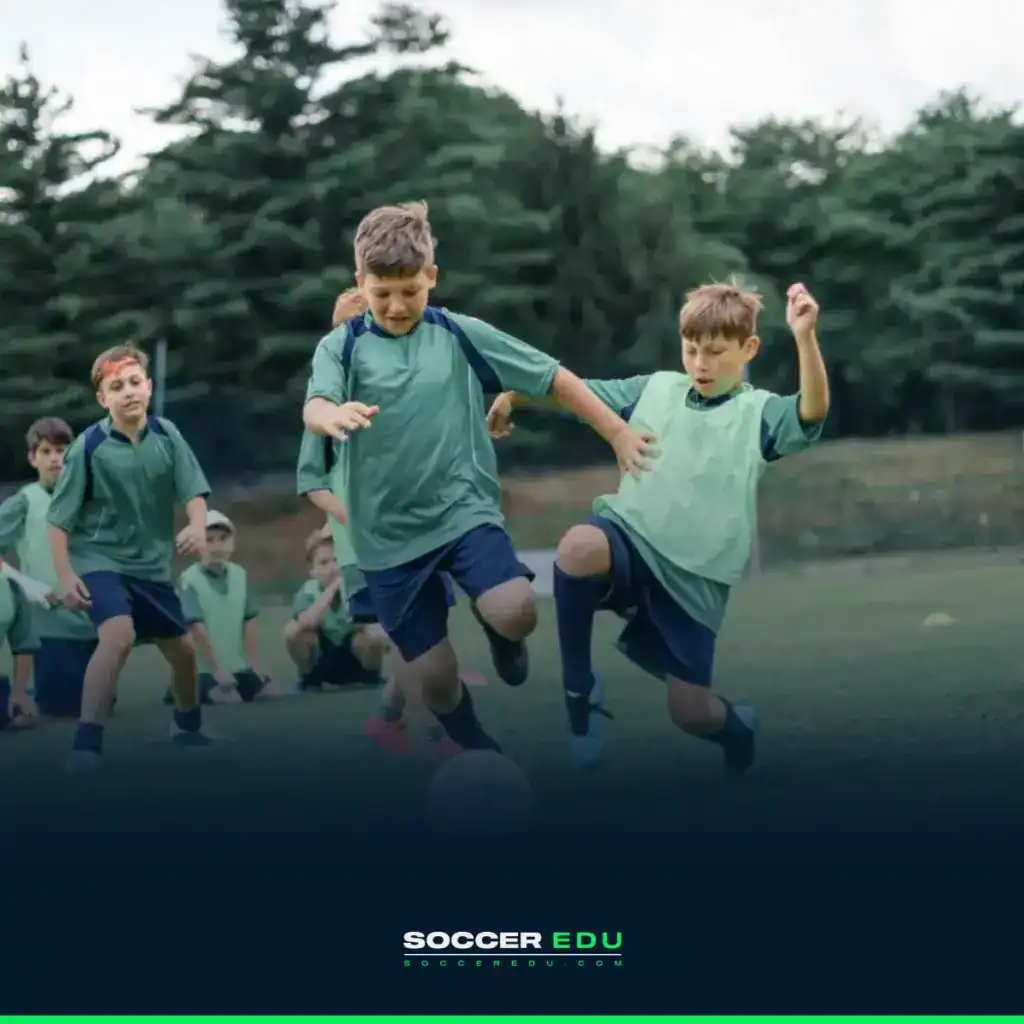
At this developmental stage, the primary focus involves developing basic movement competencies while establishing comfort with ball contact. Activities should seamlessly blend movement, balance, directional changes, and ball interaction through engaging, play-based formats that maintain high activity levels.
The Adventure Obstacle Course

Create an exciting obstacle course using readily available soccer equipment — cones, training hoops, and small hurdles. Each child navigates the course by running, jumping, stepping through hoops, and gently pushing their ball toward a designated target. This drill brilliantly combines general motor coordination development with ball discovery in an adventure-style format that captivates young imaginations.
The Follow-the-Leader Snake game

Players form a single line, each with their own ball. The first player leads the group, creating a winding path that others must replicate while maintaining ball control. This activity develops concentration, imitation skills, coordination, and team movement awareness while remaining dynamic and entertaining for all participants.
U6 Drills: Team Play and Shared Fun Activities
Even though genuine teamwork remains limited at this age, gradually introducing simple cooperative games helps young players experience shared objectives and friendly competition. These games should emphasize passing, ball sharing, and protecting common goals in accessible, enjoyable formats.
The Castle Defense Game

Each team builds a “castle” using cones or hoops.
The objective is to protect your own castle while trying to knock down the other team’s structure by hitting it with the ball.
This game improves accuracy, introduces attack and defense, and encourages cooperation among teammates.
Small-Sided Mini-Matches (3v3)

Nothing replaces the pure joy of playing actual soccer. Three-versus-three matches on appropriately sized fields without goalkeepers prove perfect for this age group. Players enjoy frequent ball contact, rules remain straightforward, and every participant stays actively involved. Although play remains largely individual, this format provides the ideal introduction to authentic soccer in an enjoyable, pressure-free environment.
Effective Coaching Techniques for U6 Sessions
At this age, coaching methodology matters as much as activity content.
Children learn best through imitation and repetition — meaning demonstration is far more effective than long explanations.
As a coach, always praise effort, not just results.
Encourage kids for trying — even if the shot misses the goal. This builds confidence and motivation to try again. Repetition, combined with small fun variations, helps establish strong foundations.
Parents also play a vital role. They can help set up equipment, cheer for the players, and create a warm, welcoming atmosphere. When families actively participate, the overall experience becomes significantly more rewarding for young players.
Example: 4-Week U6 Training Program
| Week | Primary Focus | Learning Objectives |
|---|---|---|
| 1 | Motor skills + discovery | Develop basic coordination and first contact with the ball |
| 2 | Simple ball control | Learn to move forward with the ball and control speed |
| 3 | Small group games | Discover cooperation, share the ball, understand space |
| 4 | Simplified matches | Play 3v3 games, score goals, and learn basic soccer rules |
U6 Soccer Drills: Learning Through Play
Coaching U6 players focuses on creating positive first soccer experiences rather than achieving immediate performance outcomes. Young players should run freely, laugh enthusiastically, explore ball contact, and thoroughly enjoy playing with their peers. Training activities must remain simple, varied, and fundamentally enjoyable.
Children who experience joy, receive frequent ball touches, and feel consistently encouraged will naturally develop essential motor skills, coordination, and a genuine passion for soccer. This foundation represents the most valuable gift any young player can receive — the building blocks for continued growth, improvement, and lifelong soccer enjoyment.
The journey begins with fun, discovery, and positive shared experiences that will resonate throughout their soccer development for years to come.