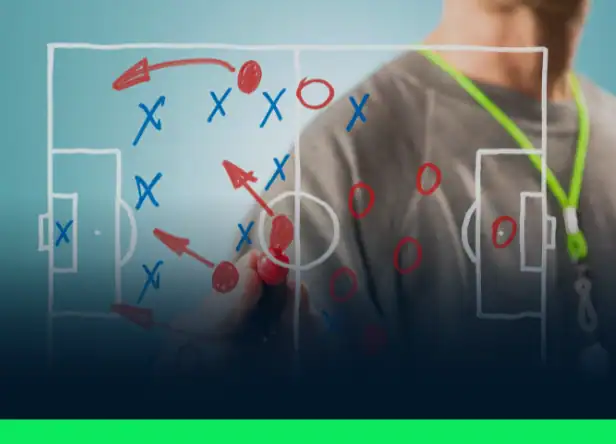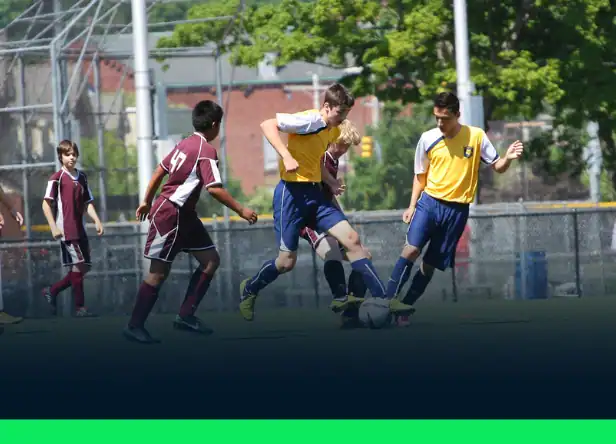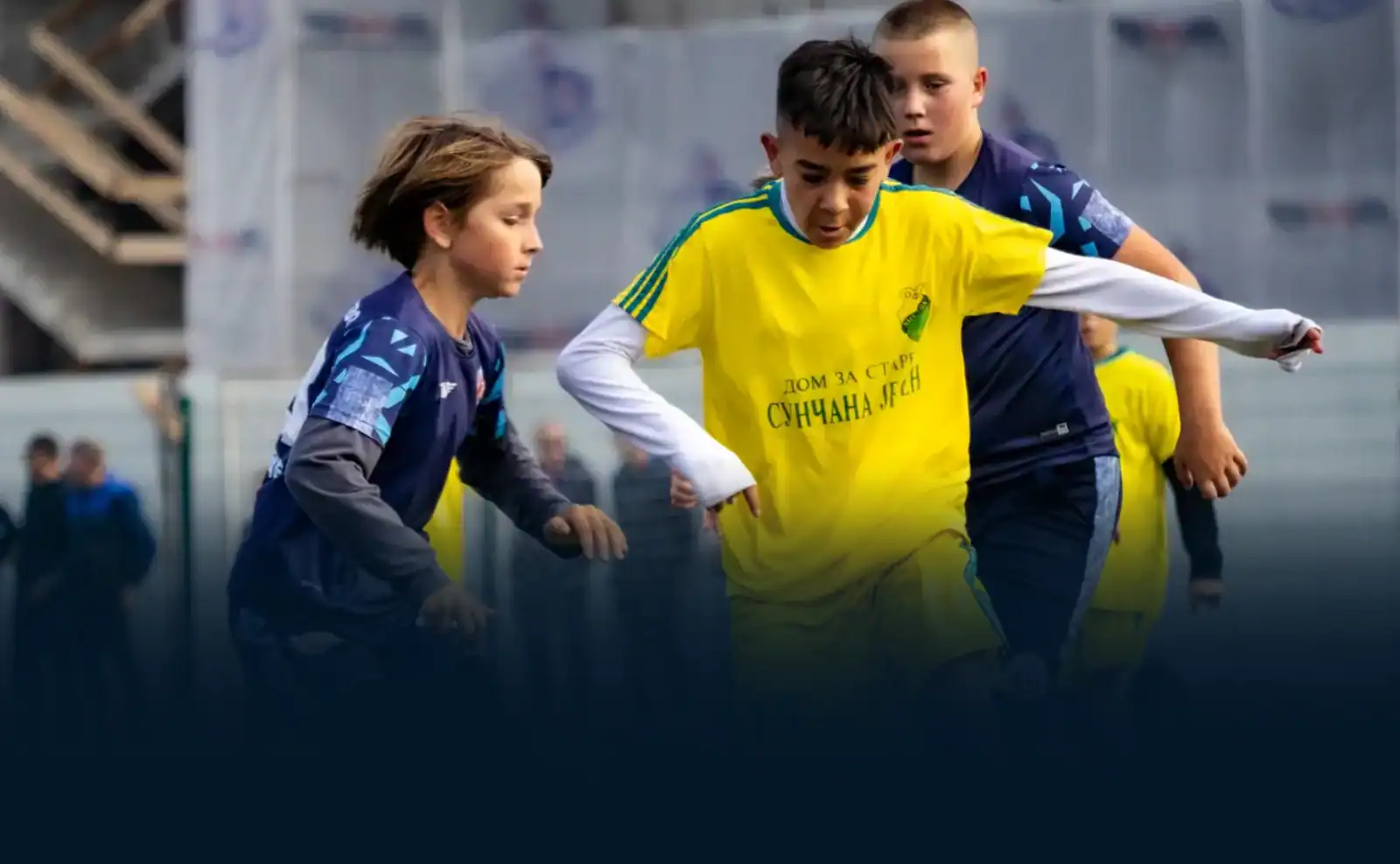
Young players in the U9 category are in a full phase of learning and motor development. The coach’s role is essential in creating a fun, structured, and progressive learning environment that builds foundational soccer competencies. An effective U9 soccer drill must stimulate coordination and spatial awareness, develop technical ball mastery, and introduce the principles of collective team intelligence.
In this comprehensive guide, you’ll discover concrete examples of U9 soccer training sessions featuring easy-to-implement drills that coaches can set up with minimal equipment. Each session strategically combines technical objectives (dribbling, passing, ball control), physical development goals (reaction time, agility, explosive movement), and educational elements (communication, cooperation, listening skills).
Why structuring a U9 soccer session is essential
At eight or nine years old, are in a critical window of physical and cognitive development. They’re refining gross motor coordination, building comfort with the soccer ball, and beginning to grasp fundamental team play principles. A well-structured U9 training session addresses these developmental needs while establishing a motivating and safe learning environment that fosters a lifelong love for the sport.
Soccer drills and session structures vary significantly across age categories—each group has distinct developmental needs and objectives tailored to its age stage. U9 coaching requires a fundamentally different approach than training U11 players or older categories, as younger athletes have shorter attention spans, developing motor skills, and emerging tactical awareness.
The specific developmental needs of U9 players
U9 players require frequent movement and varied activities to progress effectively. Their concentration span remains limited: an exercise that runs too long or introduces excessive complexity can quickly lead to frustration or disengagement. It’s essential to include rhythmic, short activities where every child stays actively involved throughout the session.
The main goals of a U9 training program
Technical priorities include developing first-touch ball control, executing accurate short and medium passes, refining dribbling technique with both feet, and building overall foot-eye coordination.
Physical development goals should focus on improving reaction time, change of direction agility, and spatial awareness on the field.
Behavioral and social objectives emphasize building team spirit, understanding basic positional roles, and fostering communication among teammates.
How to organize a U9 training session
A good U9 session lasts between 60 and 75 minutes and follows a logical progression designed to maximize player development and engagement. The standard session structure includes:
- Dynamic warm-up (5–10 minutes)Technical skill development (20–30 minutes)
- Small-sided game or soccer-specific situation play (15–20 minutes)
- Cool-down and reflection (5–10 minutes)
Each phase has a clear purpose, and transitions between activities should be quick and efficient to maintain player engagement and maximize activity time.
Phases of an effective U9 session
Begin with a dynamic warm-up featuring movement exercises without the soccer ball to activate the entire body and prepare players for technical work. Then introduce one or two targeted technical drills focusing on a specific skill—such as passing accuracy or dribbling control. Follow technical drills with a team-based small-sided game or game-realistic situation that allows players to apply newly learned skills in a competitive context.
The session always concludes with a brief cool-down period, simple static stretching, and a short coach-led discussion where players reflect on what they learned and how they can improve.
Duration, rhythm, and focus in U9 players
Each drill should last no more than 10–15 minutes though you can extend activity time by adding variations or alternating player roles. Coach instructions must be short, clear, and supported by physical demonstrations—visual modeling works most effectively at this developmental stage, as young players often struggle to translate verbal instructions into physical execution.
U9 Drills: Coordination and Motor Skills
Motor exercises should develop spatial and body awareness while keeping a playful dimension. You can, for example, set up an agility course with slalom, jumps, lateral movement, and zigzag runs, finished with a ball control action.
This activity activates the whole body and reinforces foot-leg coordination.
Agility course to improve coordination

The agility course is an excellent tool for developing quick feet and change-of-direction speed. Set up a route marked with cones, hurdles, and agility rings where players must navigate through various movement patterns. Players should change pace, react to coach signals, and finish with a technical touch or pass.
You can increase difficulty by turning the course into relay races where teams compete against each other, or by adding timed challenges where players attempt to beat their personal best. This creates friendly competition while reinforcing foot coordination and spatial navigation skills.
Running games and ball-free games

Games like freeze tag, reaction races, or starts based on visual or auditory signals effectively develop explosive first-step quickness and anticipation abilities. These movement games are especially valuable for improving acceleration and information processing—critical components of modern soccer at all levels.
U9 Soccer Drills for Building Team Play Foundation
Introducing team play in U9 is about laying the foundation of tactical understanding. It’s not about complex patterns but simple principles: pass, move, support.
Relay with passes and movement

Three players form a line with one soccer ball. The first player passes to the second, immediately follows their pass by moving forward, and takes the third position while the second player passes to the now-open third position. This continuous rhythm forces young players to think about moving immediately after releasing the pass—a critical soccer concept.
Triangle passing to introduce support play

Place three players in a triangle formation with one ball. The objective is to circulate the ball while maintaining the shape and distance between players. As a progression, you can add a passive defender who remains stationary in the center of the triangle, forcing players to move and create better passing angles.
U9 Drill: Dribbling and Individual Technique
Developing dribbling in U9 means helping kids gain confidence and ball mastery without losing the joy of the game. Vary foot surfaces, speeds, and directions.
Free dribbling with visual cues

Each player has a ball and dribbles freely within a defined area. The coach gives simple commands: switch foot, accelerate, change direction. You can enhance complexity by designating zone areas to avoid or specific actions to perform on predetermined signals.
Ball slalom to work on footwork
Players dribble through cones, keeping the ball under control while keeping their head up. The primary objectives are developing soft first touch, maintaining hip stability during direction changes, and executing quick, precise foot movements. Gradually increase cone spacing and pace as players improve.
U9 Training Session: Guided Game and Application
The guided game is essential — it shows whether skills learned in drills transfer naturally.
5v5 game with constraints
Organize a 5v5 short match (8–10 minutes), with a specific rule designed to reinforce the session’s technical focus. For example, require three consecutive passes before a shot attempt, restricting shots from outside the 18-yard box, or limiting players to two touches maximum per possession. These constraints force players to concentrate on ball circulation and positioning rather than simply attempting to score.
Zone-based play to encourage movement
Divide the field into three distinct zones: defensive zone, midfield zone, and attacking zone. Assign each player to a specific zone throughout the match. This structure helps young players maintain positional discipline, understand basic positional roles, and develop awareness of space and movement patterns.
Coaching Tips for leading a U9 session
Children learn through play, observation, and repetition. A coach should be an instructor, guide, and role model.
Adopt a positive educator posture
Emphasize effort and process over immediate results, allow space for mistakes as learning opportunities, and consistently highlight individual and team progress. The session structure should maintain clear organization and purposeful activity, but your coaching tone should remain encouraging, patient, and motivating throughout.
Simplify instructions and demonstrate actions
Young players retain information more effectively when they observe rather than simply listen. Physically demonstrate movements, minimize verbal explanation, and use simple visual cues for technical corrections. This approach respects the developmental reality of U9 players while maximizing their ability to understand and execute your instructions.
Example of a 4-week U9 training program
Here is a sample 4-week U9 training program:
| Week | Main Theme | Objectives |
|---|---|---|
| 1 | Coordination + dribbling | Ball touch, balance, spatial awareness |
| 2 | Passing & movement | Moving after passing |
| 3 | Dribbling + 1v1 | One-on-one duels, changing direction |
| 4 | Team play | Zone play, simple match rules |
Conclusion: Building a Sustainable U9 Development Program
An effective U9 soccer drill is fundamentally simple, keeps all players actively engaged, and is built around a clear technical objective or behavioral intention. By structuring your training sessions with playful, repetitive, and developmentally appropriate activities, you create an environment where young players progress systematically while maintaining enthusiasm for soccer.
Building an efficient U9 training program means consistently adapting to the unique rhythm, developmental needs, and learning style of your players. The overarching priority is establishing strong technical and tactical foundations so young soccer players genuinely enjoy the game while developing the confidence and competencies needed for future advancement. Soccer at the U9 level should be fun, instructive, and increasingly purposeful—creating a platform for long-term player development and a genuine passion for the beautiful game.