In recent years, the term half-space has become a fundamental tactical vocabulary, especially thanks to the rise of positional play popularized by coaches like Pep Guardiola, Jürgen Klopp, and Julian Nagelsmann. Yet for many coaches and players, the concept remains somewhat abstract.
What exactly is the half-space? Why has it become so important in modern soccer? And most importantly, how can coaches teach their players to identify and exploit it effectively? This week, SoccerEDU breaks it all down. Let’s dive in.
What Is the Half-Space in Soccer?
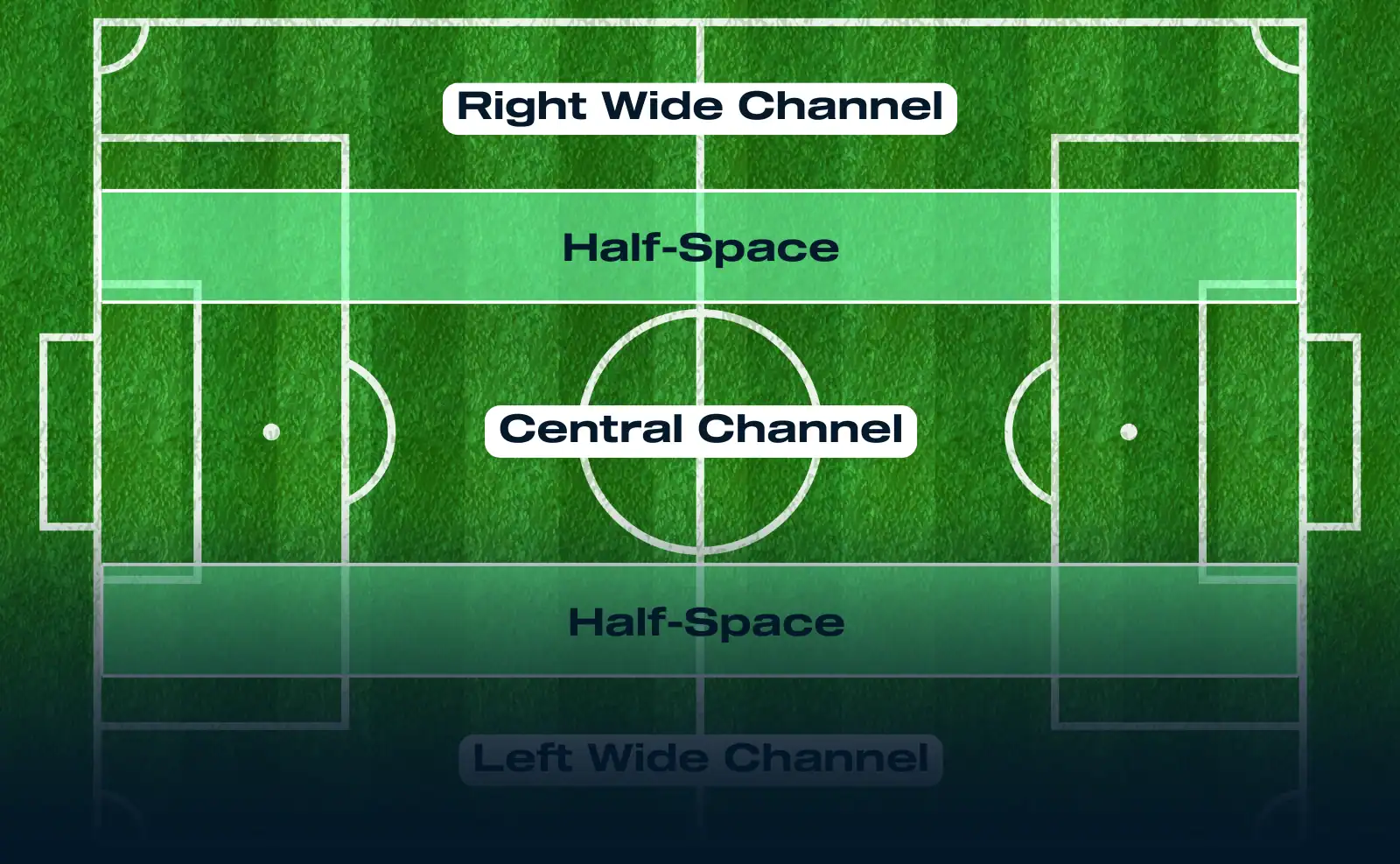
The half-space refers to the vertical zones between the central channel and the wide areas. If you divide the pitch into five vertical corridors, the two zones on either side of the central strip are the half-spaces. In German coaching circles, this area is called the Halbraum (literally “half-space”), and it has become integral to positional play systems.
These zones are strategically unique: they are less congested than the central areas (often heavily defended) and less isolated than the wide channels (typically covered by fullbacks). This makes them prime real estate for advancing possession, creating numerical superiority, and finding incisive passes.
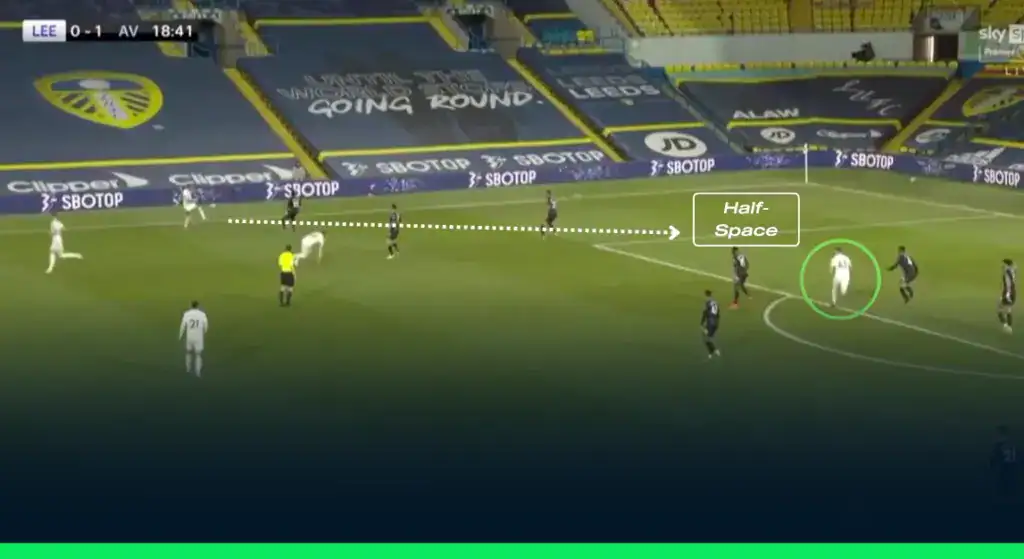
Visual example:
Imagine an attacking midfielder positioning himself between the opposing fullback and centre-back. He’s occupying the half-space, where he can receive possession without immediate pressure and has multiple passing options: drive forward, thread a through-ball, or switch play to the flanks.
Why Are Half-Spaces So Important?
Play through the half-space has become central because it offers an “in-between” zone that creates tactical dilemmas for defenders.
Key Advantages of Half-Space Exploitation
Here are some of the key advantages teams gain by effectively exploiting the half-spaces:
- Creating Defensive Uncertainty: Half-spaces force defensive units into uncomfortable choices—step out of their compact shape and risk exposing gaps, or maintain structure and concede time and space to the ball-carrier.
- Manipulating Defensive Blocks: When used effectively, half-space occupation helps disorganise the opponent’s defensive block and creates switches of play, making attacks less predictable and harder to contain.
- Progressive Passing Angles: Exploiting these zones allows teams to accelerate progression through difficult-to-defend diagonal passes, connect different units more efficiently, and create natural angles for combinations or shooting opportunities.
The Value for Attacking Players
A forward or midfielder positioned in the half-space often receives the ball between the lines—in those crucial areas where defenders hesitate to step out. This grants attackers additional time and space to create danger. Passes played from half-spaces are also more difficult to anticipate: they’re neither traditional crosses nor simple vertical through-balls.
Controlling Tempo and Ball Circulation
Teams that master the half-space use it to advance possession without overexposing themselves tactically. It provides a method to break an opponent’s pressing structure while opening up dangerous diagonal passing lanes that can quickly shift the point of attack.
Real Examples of Half-Space Utilisation in Soccer
Guardiola and the “Half-Space”

Pep Guardiola has been instrumental in popularizing the half-space. In his teams (Barcelona, Bayern Munich, Manchester City), attacking midfielders and inverted wingers consistently occupy these zones to form triangles with the fullback and the striker. Triangular interplay is the backbone of Guardiola’s tactical system.
Research indicates that approximately 90% of Manchester City’s goals originate from half-space areas, demonstrating the effectiveness of this tactical approach.
Players Who Excel in the Half-Space
Kevin De Bruyne, Thomas Müller, and Lionel Messi exemplify half-space mastery. Their intelligent positioning allows them to receive between defensive lines and deliver decisive passes that defences struggle to prevent. These players understand when to drift into half-spaces to receive possession and when to make runs from these areas into more central zones.
Inverted wingers particularly thrive in half-spaces, using their ability to cut inside and create shooting opportunities while also providing creative passing options.
Training Drills for the Half-Space Development
Understanding the half-space is one thing—teaching players to exploit it is another. Here are progressive training methodologies to develop half-space awareness and execution.
Positional Play With Delimited Zones
Divide the training pitch into five vertical lanes using cones or markers. Initially prohibit play through the central corridor to force players into half-space areas. This builds spatial awareness and teaches players to actively seek these zones during possession phases.
Small-Sided Game With Mandatory Half-Space Requirements
Set up 5v5 or 6v6 games on half a pitch, but mandate that every attacking sequence must involve a player receiving in the half-space before progressing toward goal. This encourages proper positioning and recognition of these tactical zones while maintaining game-realistic tempo.
Decision-Making Scenarios for Midfielders and Forwards
Arrange mannequins or cones as defensive units. Midfielders must receive in half-spaces and quickly decide: drive centrally, play penetrating passes in behind, or switch wide. This develops rapid decision-making under realistic match scenarios.
Breaking Lines Through Half-Spaces
Focus on line-breaking passes—passes that penetrate through defensive or midfield lines. Use half-spaces as launching points for these penetrative passes, teaching players to recognise when defensive lines become stretched or unorganised.
Teaching the Half-Space Concepts by Age and Development Level
Learning to exploit half-spaces must be adapted to player maturity and tactical understanding.
- U9–U11: Playful Introduction
At this stage, avoid heavy tactical vocabulary. Simply show that some zones are less defended. Use visual aids (colored cones, lanes on the ground) to help players recognize space. The aim: get them used to “playing between opponents” without overloading them. - U13–U15: Structured Understanding
Here, players better understand defensive lines and positioning. Use small-sided games with rules—for example, requiring a decisive pass from the half-space. Start teaching scanning (looking around before receiving) and oriented control. - U17–Seniors: Speed and Execution
Older players must focus on quick execution. Half-spaces are valuable but close fast. Add time pressure and active defenders—for instance, require decisions within three seconds (shoot, play forward, or switch wide). The goal: simulate competitive match conditions. - Adult Recreational: Simplified Application
For adult beginners, maintain simplicity in instruction. Demonstrate that half-space positioning provides time and space for creative actions. Encourage initiative-taking and highlight successful half-space exploitations to build confidence and tactical habits.
Advanced Coaching Considerations
To teach half-space concepts effectively, combine theoretical understanding with practical application. Clearly explain the zones using diagrams or visual markers, then reinforce through varied training methods.
- Drill Variation: Mix positional games, situation-based practice, and conditioned contests. Positive reinforcement speeds learning by rewarding those who effectively utilize half-spaces and position wisely.
- Integration with Modern Concepts: Connect half-space play with related tactical concepts like breaking the lines (penetrating through defensive units) and creating numerical superiority in key areas.
- Technical Development: Players working in half-spaces need particular technical qualities: good first touch, spatial awareness, fast decision-making, and the ability to carry out under duress. Instruction in design that builds these technological elements with strategic awareness.
The Evolution from Zone 14
Although Zone 14—the central region just outside the penalty box—was once thought to be soccer’s most hazardous creative zone, half-spaces have become equally significant as tactical development has shown. Unlike the main focus of Zone 14, half-spaces provide the tactical flexibility to influence several parts of the field at once. Teams today utilize half-spaces not just as creative But as venues for changing whole defensive systems and producing space over the attacking third, they are also zones.
Key Takeaways: Mastering Half-Space Play
The half-space is not only professional-level tactical jargon,but a basic element of contemporary soccer that coaches at all levels may include into their training approach. Teams have more tools for moving ownership, generating opportunities, and managing game speed when they know and use these areas.
Players will improve their spatial awareness and become more effective in critical parts of the field by means of organized match analysis, targeted coaching instructions, and coordinated drill programs. Essential knowledge for anyone serious about comprehending soccer, the half-space is where tactical intellect meets artistic execution.
Teams acquire tactical sophistication by grasping half-space ideas that can open even the most well-organized defensive systems, therefore producing the kind of fluent, dynamic attacking soccer that characterises elite soccer.