The midfielder position is often described as the heart of the team. It’s the engine room where matches are won and lost, bridging the gap between defense and attack while orchestrating the flow of play. Midfielders are responsible for controlling possession, dictating tempo, and managing transitions between all phases of the game.
Do you aspire to become an exceptional midfielder? Are you a soccer coach looking to optimize your players’ performance? This comprehensive guide explores every aspect of the midfielder role — from tactical responsibilities and specialized player types to all-time greats and practical training tips to help you excel in this pivotal position.
What Is the Role of a Midfielder?
A midfielder is often compared to a conductor orchestrating a symphony on the field. Their job goes far beyond simple ball management — the architects of play, maintaining harmony between defensive solidity and attacking creativity. Their impact is just as vital as that of a goalkeeper, defender, or striker — midfielders can completely change the course of a match through their vision, decision-making, and work rate.
Here are the main responsibilities of a complete midfielder:
- Distributing play: The midfielder must pass the ball with accuracy and vision, constantly scanning to identify the best options. They decide when to penetrate with forward passes, when to switch the point of attack, and when to recycle possession.
- Controlling tempo: They dictate the rhythm of the game, accelerating play to exploit defensive vulnerabilities or slowing it down to allow teammates to recover position and maintain control.
- Winning possession: Defensive midfielders play a crucial role by reading the game, intercepting passes, and recovering loose balls to launch new attacks. They act as a shield in front of the back line, breaking up opposition moves before they become dangerous.
- Creating chances: Attacking-oriented midfielders use their creativity and technical ability to unlock defenses, threading through balls and setting up goal-scoring opportunities.
- Covering ground: Research indicates that midfielders often cover the greatest distances during matches, typically between 10-13 kilometers per game, with central midfielders showing the highest endurance capacities among outfield players.
The Best Midfielders in the World
Over the past few years, soccer has seen an incredible generation of talented midfielders. It’s difficult to define a single list of “the best,” since great midfielders aren’t only judged by the number of passes they make — but by their impact on the game and their ability to control matches.
Let’s analyze two key metrics: distribution and creative impact.
Top 5 Midfielders by Distribution Index (2023–2024)
Distribution Index: The percentage of a player’s passes received by a teammate in the opponent’s final third, adjusted to account for the team’s overall dominance level.
| Impact | Player | Club | Minutes | Position |
|---|---|---|---|---|
| 98.5 | Rodri Hernández | Manchester City | 2757 | Defensive Midfielder |
| 92.3 | Granit Xhaka | Bayer Leverkusen | 2808 | Defensive Midfielder |
| 89.0 | Toni Kroos | Real Madrid | 1970 | Defensive Midfielder |
| 83.7 | Federico Valverde | Real Madrid | 2679 | Defensive Midfielder |
| 83.1 | Hakan Çalhanoğlu | Inter Milan | 2410 | Defensive Midfielder |
Source: CIES Observatory / Wyscout Data
Top 5 Midfielders by Assist Index (2023–2024)
Assist Index: The frequency of passes leading directly to goals or major chances, including second assists (passes to the assister) and passes breaking defensive lines.
| Impact | Player | Club | Minutes | Position |
|---|---|---|---|---|
| 89.9 | Martin Ødegaard | Arsenal FC | 3014 | Defensive Midfielder |
| 89.2 | Florian Wirtz | Bayer Leverkusen | 2355 | Attacking Midfielder |
| 83.7 | Sergej Milinković-Savić | Al-Hilal SFC | 2268 | Defensive Midfielder |
| 80.0 | Isco Alarcón | Real Betis | 2301 | Attacking Midfielder |
| 80.0 | Joey Veerman | PSV Eindhoven | 2301 | Defensive Midfielder |
Source: CIES Observatory / Wyscout Data
The 10 Greatest Midfielders of All Time
Soccer history has been defined by legendary midfielders who shaped the game. Here’s a list of ten who left a lasting mark on the sport:
- Diego Maradona – The Argentine maestro who combined dribbling genius with playmaking vision
- Johan Cruyff – Total Football pioneer who redefined midfield play
- Zinedine Zidane – Elegant playmaker with exceptional technical ability
- Lothar Matthäus – Complete box-to-box midfielder and World Cup winner
- Michel Platini – Creative genius and prolific goal scorer from midfield
- Andrea Pirlo – Master regista who controlled games with his passing range
- Xavi Hernández – Tiki-taka architect with unparalleled ball retention
- Andrés Iniesta – Technically gifted midfielder who excelled between the lines
- Luka Modrić – Modern maestro combining elegance with tactical intelligence
- Frank Rijkaard – Versatile midfielder who excelled in both defensive and creative roles
Each of these players not only defined their era but left a legacy that continues to influence how midfielders play today — combining creativity, intelligence, and technical mastery to control the game’s tempo and outcome to control the game’s tempo and outcome.
Pep Biel: The Best MLS Midfielder in 2025
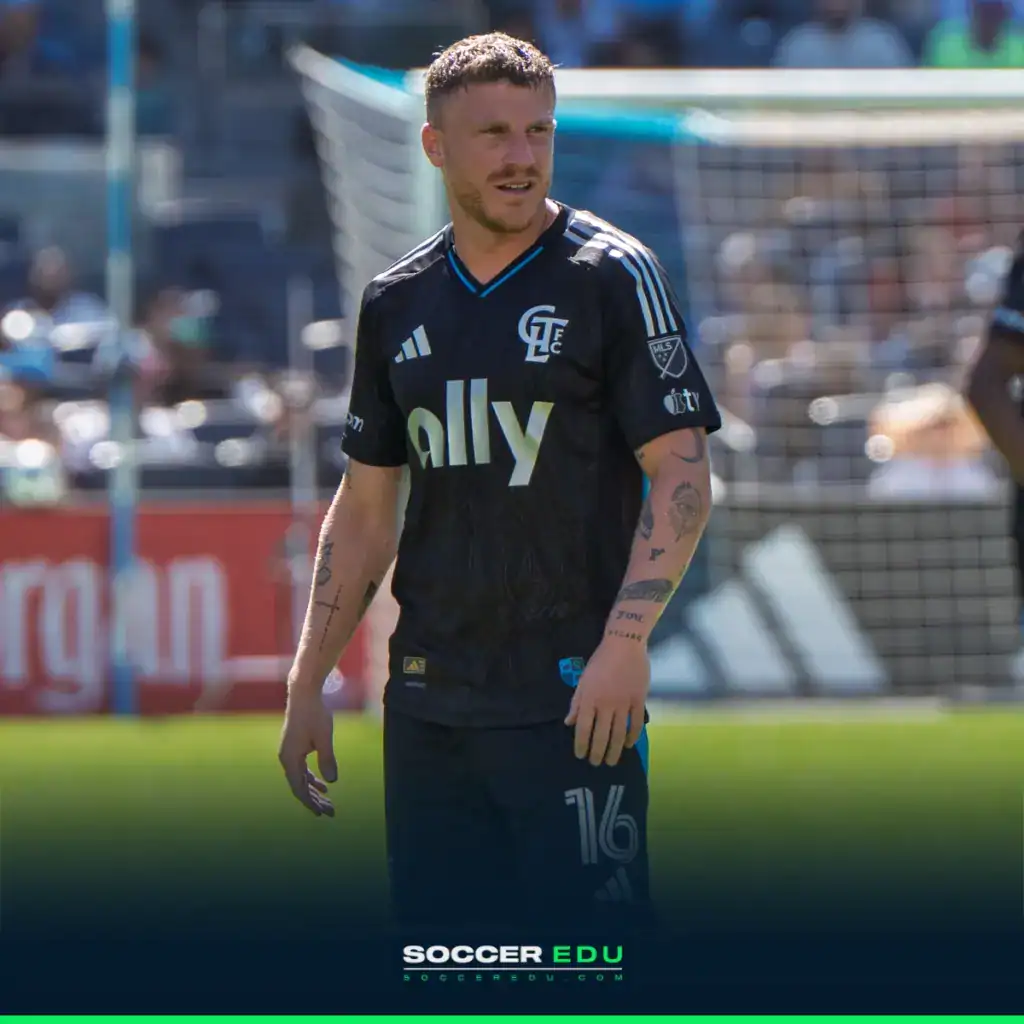
Pep Biel has established himself as a standout midfielder in Major League Soccer during the 2025 season. The 28-year-old Spanish playmaker has been instrumental for Charlotte FC, demonstrating exceptional ability to dictate play and orchestrate attacks from the middle of the park.
Since returning to Charlotte in August 2024, Biel has delivered impressive performances with 8 goals and 11 assists in 30 league matches. In the 2025 season alone, he has produced 6 goals and 8 assists in 19 matches, leading Charlotte FC in assists and joint-top in goals scored. His technical mastery, combined with superior game intelligence and creative vision, makes him a vital component of Charlotte’s midfield and a model for aspiring players in MLS.
Charlotte FC extended Biel’s loan from Olympiacos FC through the end of the 2025 season, with a purchase option if certain performance metrics are met, demonstrating his value to the club’s tactical system.
The Different Types of Midfielders
Modern midfielders perform diverse roles based on tactical systems and team needs. Understanding these specialized positions helps players develop the specific skills required for each role.
1. Defensive Midfielder (Holding Midfielder)
Role:
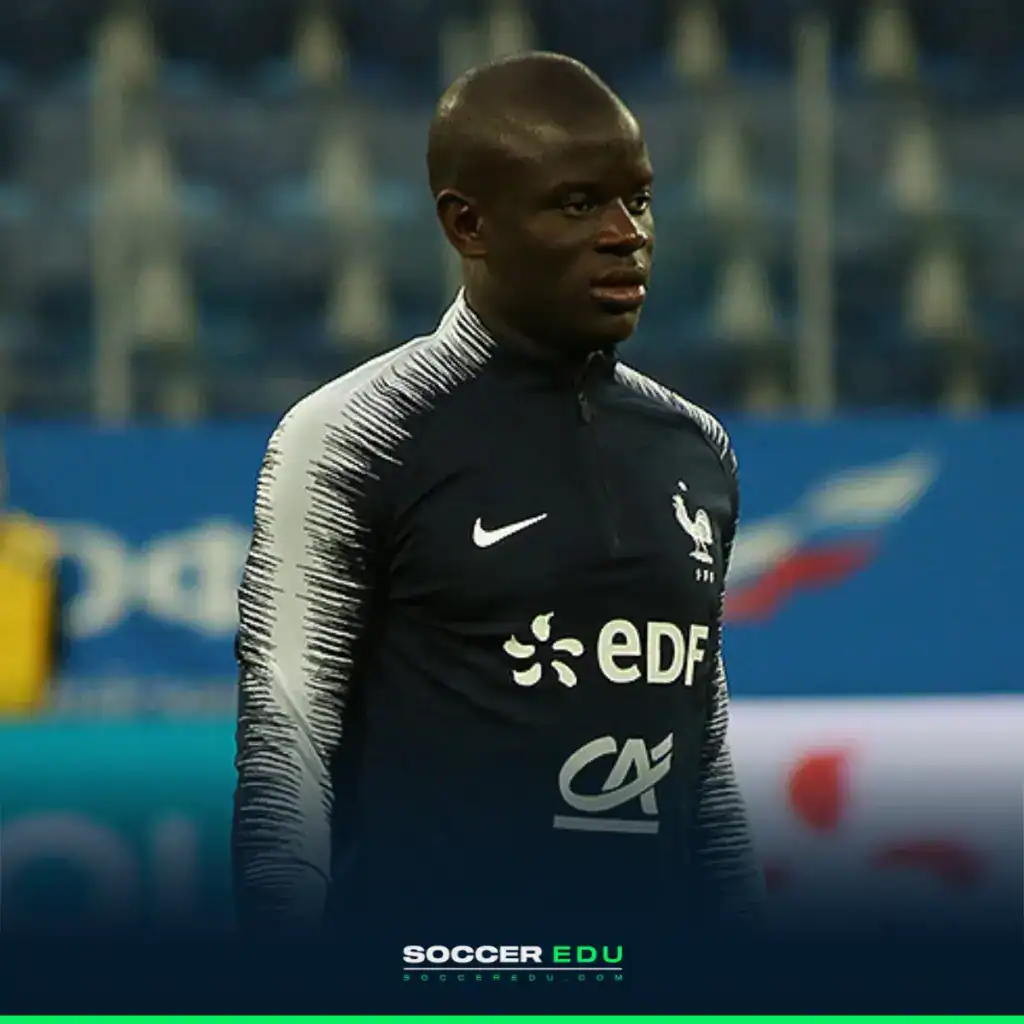
The defensive midfielder, often called a holding midfielder, specializes in breaking up attacks and protecting the back line. Positioned just in front of the defenders, they intercept passes, disrupt the opponent’s rhythm, and provide defensive cover when fullbacks advance.
The terms “defensive midfielder” and “holding midfielder” are often used interchangeably, though subtle differences exist. A holding midfielder focuses on maintaining position and holding space, while some defensive midfielders may have more freedom to press higher or support attacks.
Examples: N’Golo Kanté, Claude Makélélé, Rodri, Casemiro
Key Attributes:
- Exceptional interception and tackling ability
- High endurance to cover extensive ground throughout the match
- Excellent positional sense and defensive awareness
- Strong communication skills to organize defensive shape
- Ability to read the game and anticipate opposition moves
2. Central Midfielder
Role:
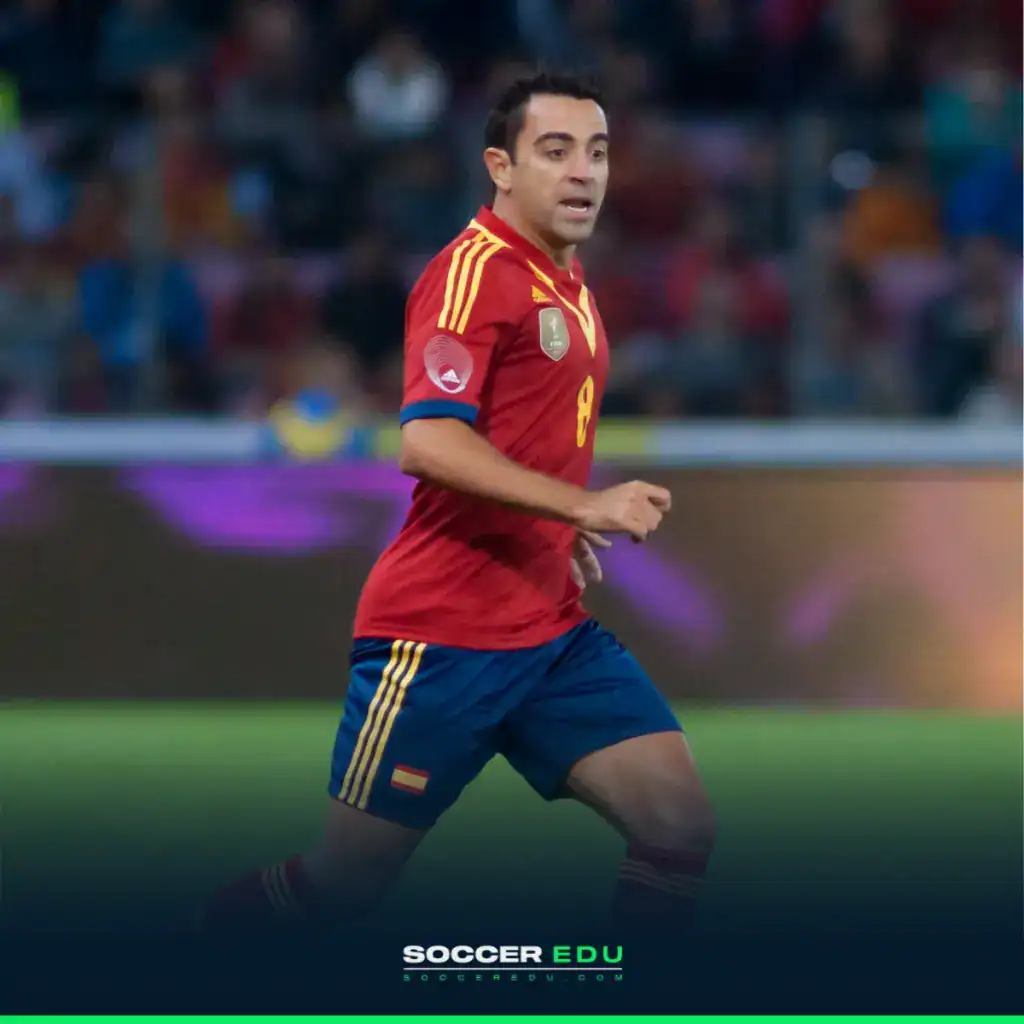
The central midfielder is a versatile playmaker responsible for distributing the ball and maintaining the balance between offense and defense. They operate in the heart of midfield, connecting all lines of the team and controlling the tempo of play.
Central midfielders must excel in multiple phases of the game, making this one of the most demanding positions in soccer. Their positioning varies based on formation — in a 4-3-3, they may operate in a midfield trio, while in a 4-4-2, they typically form a central partnership.
Examples: Xavi Hernández, Toni Kroos, Frenkie de Jong
Key Attributes:
- Exceptional vision and passing accuracy in all ranges
- Tactical intelligence and ability to control game rhythm
- Precision in both short combinations and long diagonal switches
- Strong awareness to scan constantly and identify space
- Composure under pressure when receiving the ball
3. Deep-Lying Playmaker (Regista)
Role: The regista (Italian for “director”) is a specialized deep-lying playmaker who sits in front of the defensive line, orchestrating play from deep positions. Unlike traditional defensive midfielders who prioritize ball-winning, the regista focuses on distribution and controlling tempo through passing mastery.
This role originated in Italian soccer and represents one of the most cerebral positions in soccer. The regista aims to “conduct” the team’s play, dictating pace and tempo like a director guides a performance.
Examples: Andrea Pirlo, Sergio Busquets, Jorginho
Key Attributes:
- Elite passing range with ability to switch play and break lines
- Exceptional spatial awareness and scanning ability
- Quick, intricate footwork to escape pressure
- Composure and patience to control game tempo
- Intelligent positioning to receive from defenders
4. Attacking Midfielder
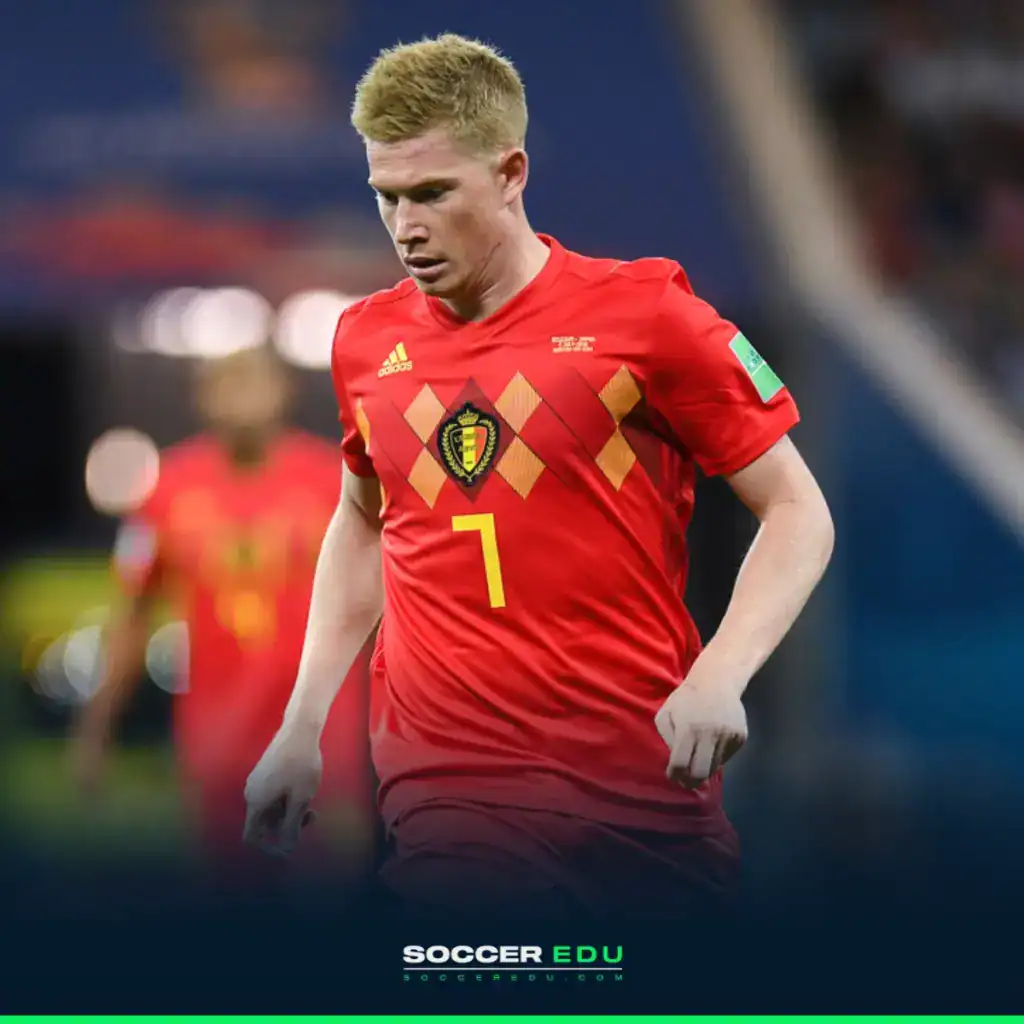
Role: The attacking midfielder, often called the number 10 or playmaker, is positioned in advanced areas between central midfield and the forwards. This player operates in the “half-spaces” and between defensive lines, creating goal-scoring chances and often contributing goals themselves.
The number 10 role embodies creativity and flair in soccer. Also known in Italian as a trequartista (three-quarter specialist), these players possess exceptional technical ability and vision to unlock organized defenses.
Examples: Kevin De Bruyne, Bruno Fernandes, Martin Ødegaard, Lionel Messi
Key Attributes:
- Outstanding creativity and vision to spot passing lanes
- Goal-scoring ability from outside and inside the box
- Excellent dribbling skills and agility to beat defenders
- Ability to play “between the lines” and find pockets of space
- Strong pressing work rate in modern systems
5. Box-to-Box Midfielder (Link Player)
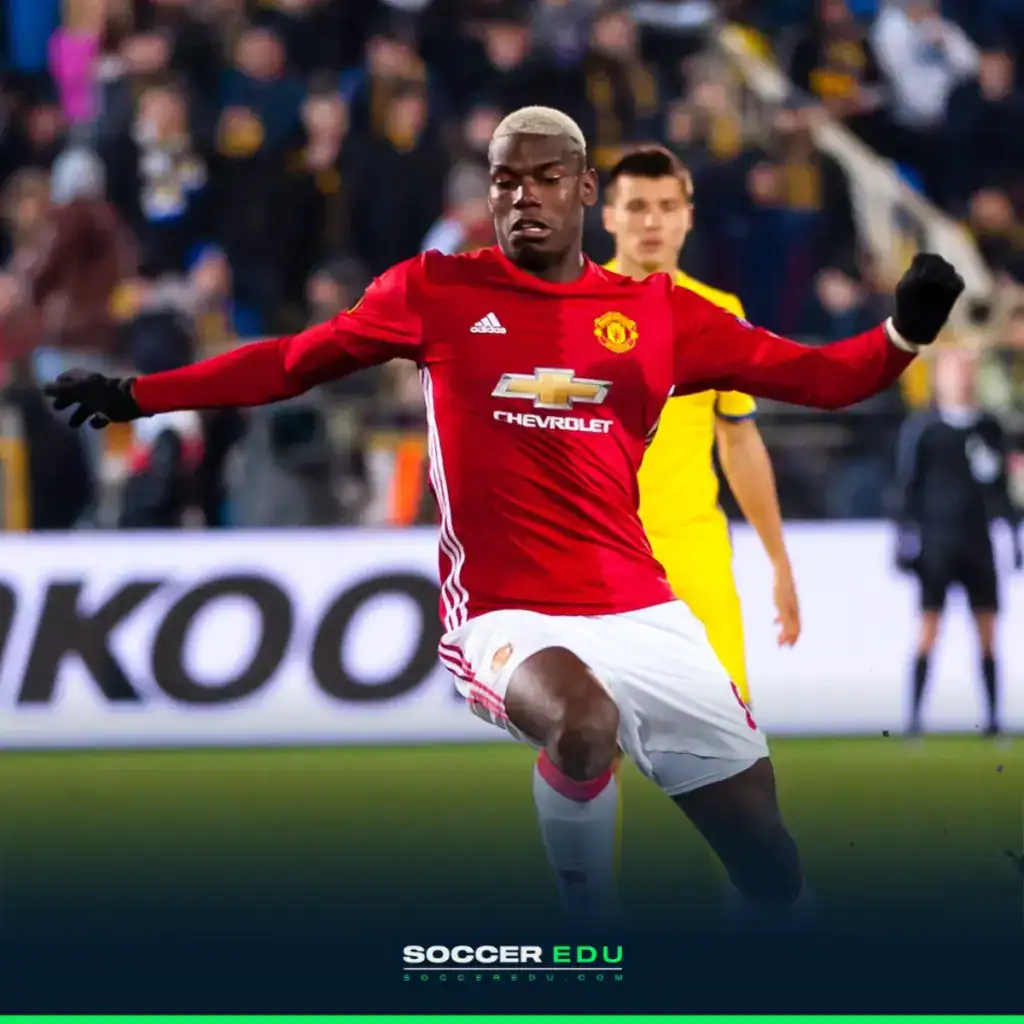
Role: The box-to-box midfielder is the ultimate all-rounder, connecting defense and attack by covering the entire length of the pitch. They support both defensive and attacking phases, carrying the ball forward during transitions and tracking back to provide defensive cover.
This role demands exceptional physical conditioning, as box-to-box midfielders are often among the highest distance-coverers in matches. They act as the “engine” of the team, tirelessly moving between both penalty areas.
Examples: Paul Pogba, Frenkie de Jong, N’Golo Kanté, Steven Gerrard
Key Attributes:
- Outstanding stamina and endurance to maintain intensity for 90 minutes
- Versatility to contribute defensively and offensively
- Long passing range to switch play and launch attacks
- Strong transitional play to exploit space during turnovers
- Intelligent movement and positioning across the pitch
How to Become a Better Midfielder
To excel as a midfielder, you need a blend of technical, tactical, physical, and mental attributes.
Here are four essential areas to develop:
1. Build Strong Physical Conditioning
Midfielders cover more ground than almost any other position, with central midfielders often running 10-13 kilometers per match and performing numerous high-intensity sprints. This demands exceptional aerobic fitness combined with anaerobic power.
Training focus:
- Develop aerobic endurance through steady-state running, cycling, or swimming
- Strengthen legs and core to handle physical duels and maintain balance
- Incorporate plyometric exercises and sprint intervals to improve explosive power
- Practice quick changes of direction to enhance agility
- Build match-specific fitness through high-intensity interval training that mimics game demands
2. Master Tactical Intelligence
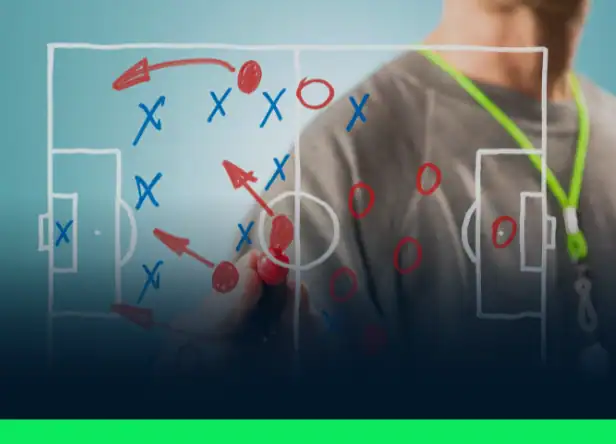
Understanding different tactical systems and your role within them is fundamental to midfield excellence. Study how formations dictate midfielder responsibilities — for example, in a 4-4-2, central midfielders must balance both defensive and attacking duties equally, while in a 4-3-3, one midfielder often sits deeper as a holding player while the others have more attacking freedom.
Development strategies:
- Watch professional matches and analyze elite midfielders’ positioning, movement, and decision-making
- Study different formations and understand how midfielder roles change in each system
- Practice scanning techniques to constantly gather visual information before receiving the ball
- Participate in tactical analysis sessions with coaches
- Play small-sided games that emphasize positional awareness and decision-making
3. Develop Mental Strength
Mental preparation is equally important as physical training for midfield success. The demanding nature of the position requires sustained concentration, composure under pressure, and quick decision-making throughout the entire match.
Mental skills to develop:
- Practice mindfulness and concentration techniques to maintain focus for extended periods
- Develop emotional control to manage pressure situations and bounce back from mistakes quickly
- Set both short-term (per session) and long-term (seasonal) goals
- Build resilience through challenging training scenarios
- Cultivate game intelligence by studying opponents and anticipating their movements
- Develop communication skills to organize teammates and maintain defensive shape
4. Perfect Technical Fundamentals
Technical excellence forms the foundation of every elite midfielder’s game. While tactical intelligence tells you what to do, technical ability enables you how to execute it.
Essential technical skills:
- Ball control: Practice juggling, first-touch drills with both feet, and receiving under pressure. Work on controlling balls arriving from different heights and angles.
- Passing mastery: Develop short, crisp passing for combination play, as well as long-range distribution for switches of play. Practice weighted passes, through balls, and passes into space.
- Receiving on the half-turn: Master the ability to receive the ball while already facing forward, allowing you to play progressive passes immediately. This skill is fundamental for midfielders who need to turn defense into attack quickly.
- Dribbling: Improve close control with cone drills, sharp changes of direction, and practicing moves to escape tight spaces.
- Shooting: Develop shooting technique from distance, as midfielders must contribute goals from outside the box.
3 Essential Soccer Drills for Midfielders
To apply these concepts, here are three essential training drills to develop your midfielder skills:
1. Receiving on the Half-Turn Drill
Goal: Improve the ability to receive passes while already facing forward, enabling quicker transitions and progressive play.
Setup: Create a triangle with three players. One player acts as the passer (simulating a center-back), one as the midfielder receiving on the half-turn in the center, and one as the forward target. Position a mannequin or passive defender behind the midfielder to simulate pressure.
Exécution:
- The defender plays to the midfielder who must check their shoulder before receiving (scanning)
- The midfielder receives with an open body position, taking the ball on the half-turn with the back foot
- Immediately after receiving, play a forward pass to the target player
- Rotate positions after each repetition
Variations:
- Add time pressure or limit touches (one or two-touch play)Introduce an active pressing defender
- Require alternating feet for receiving
- Add decision-making: midfielder chooses to play forward or back to defender based on pressure
2. Short Passing and Movement Circuit
Goal: Improve short-pass accuracy, quick ball circulation, and off-the-ball movement to create passing angles.
Setup: Create a square or diamond shape with cones approximately 10-15 meters apart. Position players at each cone with 2-3 balls in rotation.
Exécution:
- Players pass quickly around the grid with specific patterns (e.g., pass and move clockwise, or pass diagonally)
- After passing, players must sprint to the next cone, ensuring constant movement
- Emphasize crisp, accurate passes and proper body positioning when receiving
Variations:
- Limit touches to one or two
- Add a defender in the middle trying to intercept
- Increase passing tempo gradually
- Introduce combination plays (one-twos, overlaps)
- Create competition: which group completes most successful passes in 60 seconds
3. Transition Play: Defense to Attack Drill
Goal: Strengthen ball recovery skills and the ability to quickly transition from defensive to attacking play.
Setup: Divide the field into three zones: defensive third, middle third, and attacking third. Use 6v6 or 8v8 formats with specific rules for each zone.
Exécution:
- One team starts in possession in their defensive zone
- Upon winning the ball, the recovering team must transition quickly, moving the ball from defense through midfield to attack
- Midfielders must recognize when to carry the ball forward and when to release it quickly
- Emphasize quick decision-making and forward passing when space is available
Variations:
- Add restrictions: must complete 2 passes in midfield zone before attacking
- Limit time to reach attacking third (e.g., 10 seconds after recovery)
- Introduce numerical advantages/disadvantages in different zones
- Add counter-pressing rules: losing team must immediately press to regain possession
The Midfielder Position — In Summary
The midfielder role stands as one of the most demanding and influential positions in modern soccer. Occupying a central position both geographically and tactically, midfielders must master an extensive range of skills to succeed — from technical excellence and tactical awareness to physical endurance and mental resilience.
A great midfielder serves as both the engine and the brain of the team — the player who connects every line, controls the game’s tempo, and keeps play flowing seamlessly. Whether operating as a defensive shield, a creative playmaker, or a tireless box-to-box presence, midfielders are the architects who transform defensive situations into attacking opportunities.
The modern game continues to evolve, with midfielder roles becoming increasingly specialized yet simultaneously more versatile. From the regista controlling tempo from deep positions to the number 10 creating magic between the lines, each midfielder type contributes uniquely to team success. By understanding these roles, developing the required technical and tactical skills, and maintaining peak physical condition, aspiring midfielders can master this crucial position and become the heartbeat of their teams.