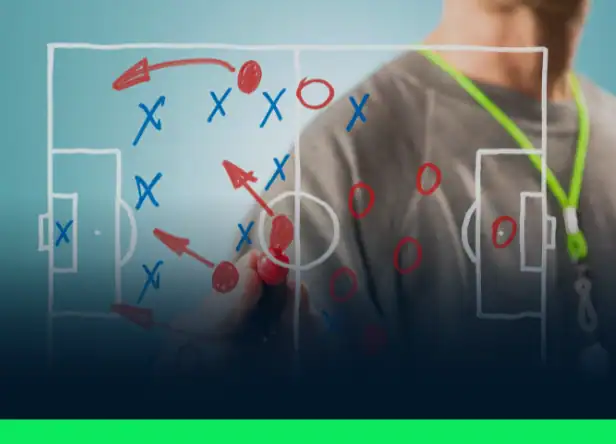
Modern soccer demands complete players capable of sustaining high-intensity efforts throughout an entire 90-minute match. Physical conditioning has become equally important as technical ability and tactical awareness in today’s game. Implementing targeted soccer fitness drills enhances aerobic capacity, sprint speed, explosiveness, agility, match recovery, and injury resilience.
This comprehensive guide explores various soccer-specific conditioning methods and training drills tailored to different objectives. Each physical component includes practical examples that can be adapted based on player age, skill level, or seasonal training phase. The ultimate goal: helping coaches and players construct an effective, match-relevant fitness program.
Why Include Targeted Fitness Work in Soccer?
Physical conditioning forms the cornerstone of soccer performance. It’s not simply about “running more distance,” but developing the ability to repeat high-intensity actions at crucial match moments under game-realistic conditions. Well-structured fitness training elevates overall performance levels, improves consistency throughout matches, and significantly reduces injury susceptibility.
Specificity of Soccer Conditioning
Unlike linear endurance sports such as distance running, soccer involves intermittent efforts including jogging, sprinting, directional changes, aerial duels, and physical challenges. Effective soccer fitness drills must therefore combine intensity variations, reactive elements, and technical execution under fatigue.
How to Program Fitness Drills?
- Preseason: Establish aerobic base and functional strength foundation
- In-season: Focus on maintenance work, explosiveness, and injury prevention protocols
- Youth Development: Build comprehensive motor skill foundation without overloading developing bodies
Dynamic Warm-Up in Soccer: Preparing the Body
Before any training session or match, a progressive warm-up prepares players’ bodies for intense physical demands. The warm-up should be dynamic, sport-specific, and incorporate movements directly related to soccer actions.
Example of a complete warm-up (15 min):
General activation (5 minutes): Light jogging, high knees, butt kicks, side shuffles
Dynamic mobility (5 minutes): Hip circles, leg swings, walking lunges, arm rotations
Reactive preparation (5 minutes): Quick 1v1 duels, ball juggling with constraints, reaction games
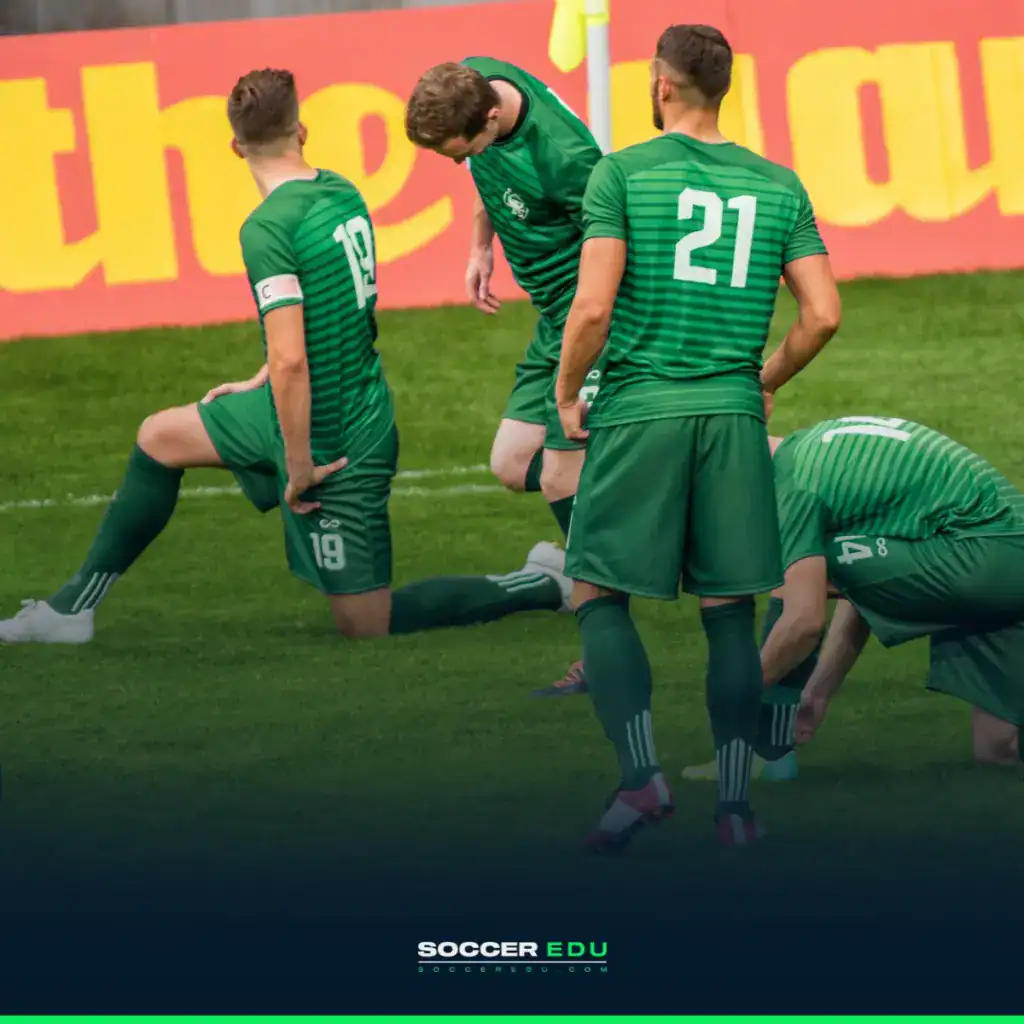
The warm-up can be adapted to age (more fun for youth players) or training objectives (power, speed, etc.).
Aerobic Capacity in Soccer: Building the Foundation
Aerobic fitness provides the foundation for soccer performance, enabling players to sustain repeated high-intensity actions, maintain work rate throughout matches, and recover efficiently between explosive efforts. While not the most glamorous aspect of conditioning, aerobic capacity is essential for linking together sprints, pressing phases, and defensive transitions without experiencing significant performance decline.
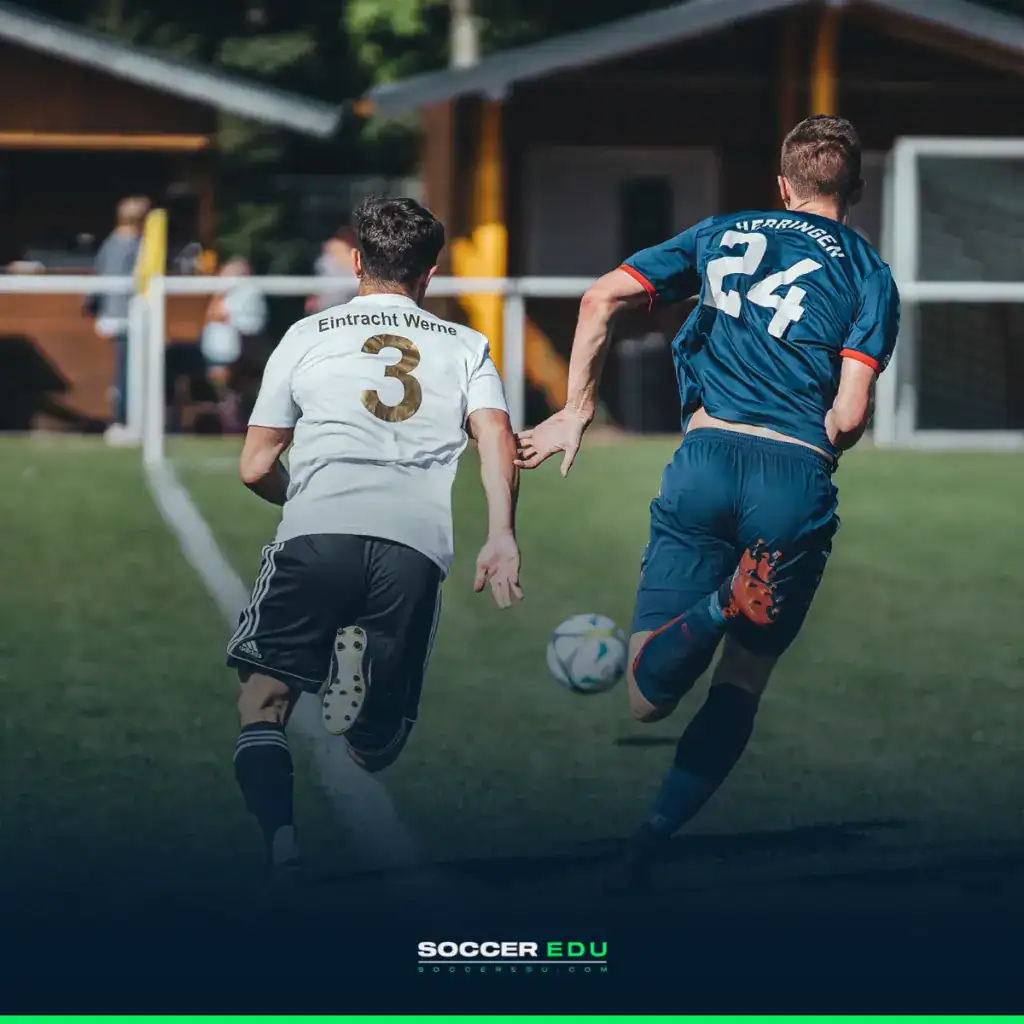
Training Examples:
- Intermittent running (U15 to senior levels): 30-second work periods at 80% maximum aerobic speed, 30-second active recovery, repeated for 10-12 minutes. Objective: Enhance recovery capacity between high-intensity efforts
- Continuous aerobic work (U13 and below): 2 × 6-minute runs with pace variations every 30 seconds. Objective: Progressively develop aerobic power and running economy
Power and Explosiveness: Game-Changing Attributes
In soccer, explosive power creates decisive moments—accelerating past defenders, winning aerial battles, delivering powerful shots, or making game-saving tackles. Developing power and explosiveness enables players to be more effective in crucial match situations. This training demands maximum intensity, proper technique, and adequate recovery between repetitions.
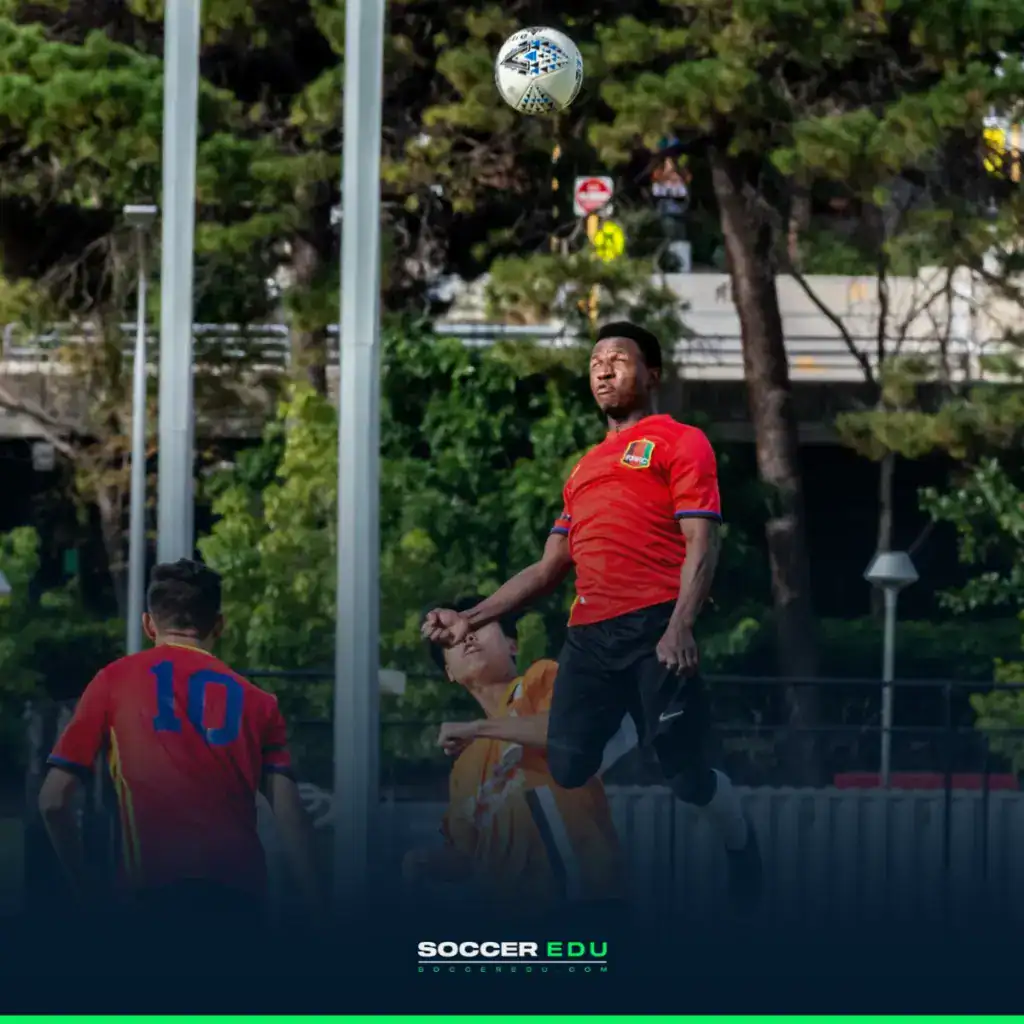
Training Examples:
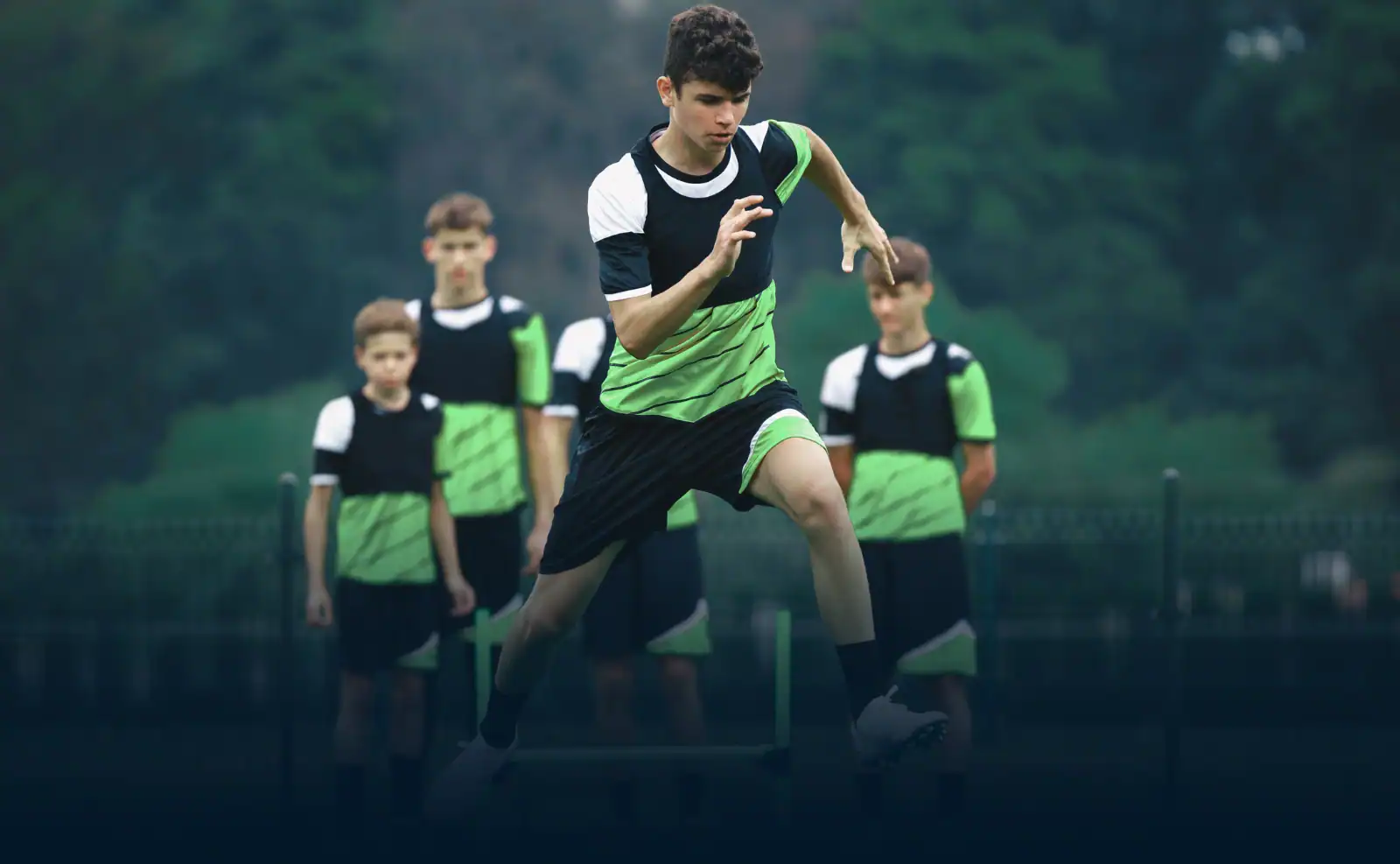
- Plyometric combination (U17+): Hurdle jumps followed by 10-meter sprints. 3 sets × 4 repetitions, 60-second rest between reps. Variations: Add change-of-direction sprints or resistance bands
- Dynamic circuit training (youth and amateur levels): 5 stations including jump squats, explosive push-ups, single-leg bounds, medicine ball slams, and burpees. 30 seconds per station, 4 complete rounds, 60-second rest between rounds
Speed and Reactivity: Gaining the Competitive Edge
Soccer speed encompasses far more than straight-line sprinting—it includes explosive starts, reacting to visual cues, sharp directional changes, and winning critical duels in tight spaces. This training develops running mechanics, anticipation skills, and match awareness. For all age groups, speed drills should emphasize short durations, engaging activities, and maximum effort.
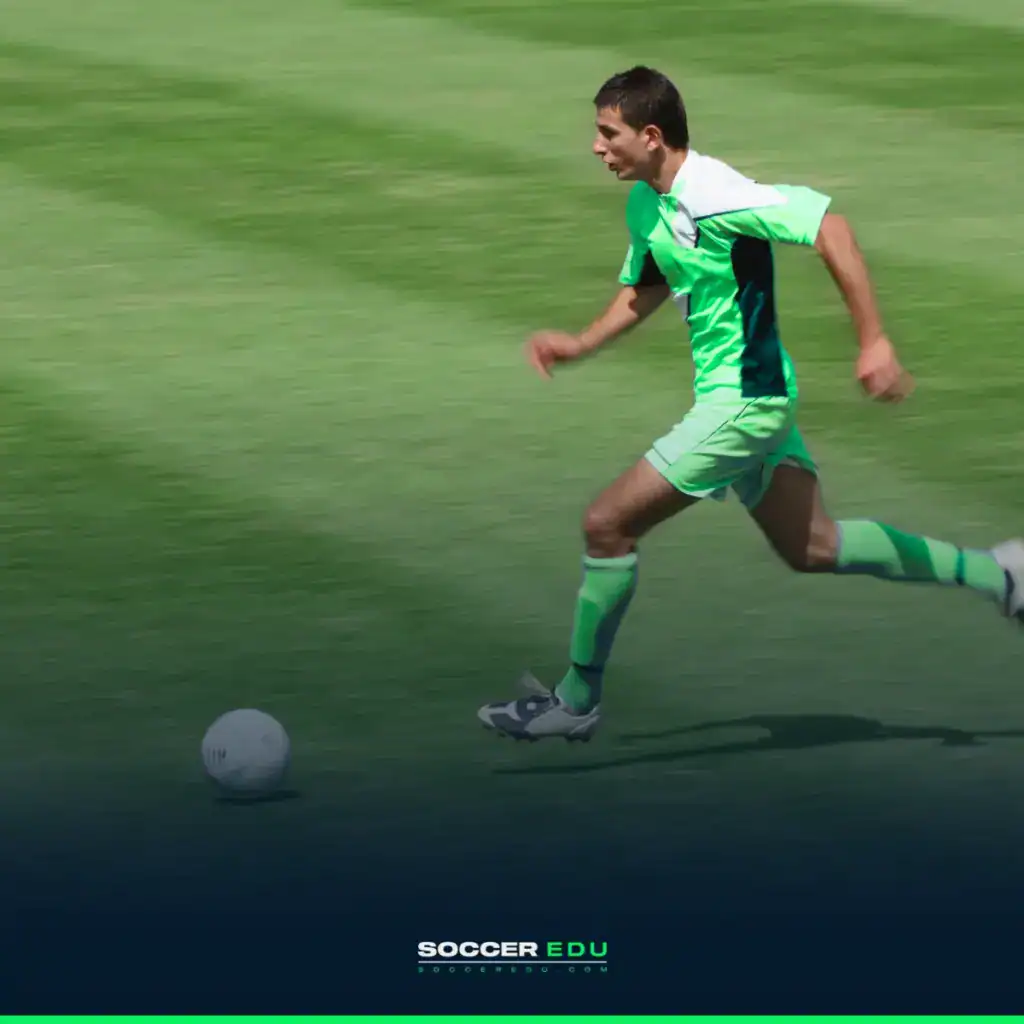
Training Examples:
- Reactive acceleration: Begin from various starting positions (prone, supine, kneeling) on the coach’s visual or auditory signal. Sprint 10-15 meters, 6-8 repetitions with complete recovery. Variations: Include 180-degree turns or backward starts
- Competitive speed duels (U11+): Position two players 5 meters apart with a ball placed centrally. On signal, both players sprint to win possession. Highly motivating while developing reactivity and competitive instincts
Core Stability and Functional Strength: Injury Prevention Foundation
Focused strength training, particularly targeting the core musculature (abdominals, lower back, hip stabilizers), is essential for maintaining stability during all match phases. A strong, stable core enhances balance in physical duels, improves shooting and passing accuracy, reduces muscular fatigue, and significantly decreases injury risk. Core conditioning can be implemented using bodyweight exercises or simple equipment and easily integrated into training sessions.
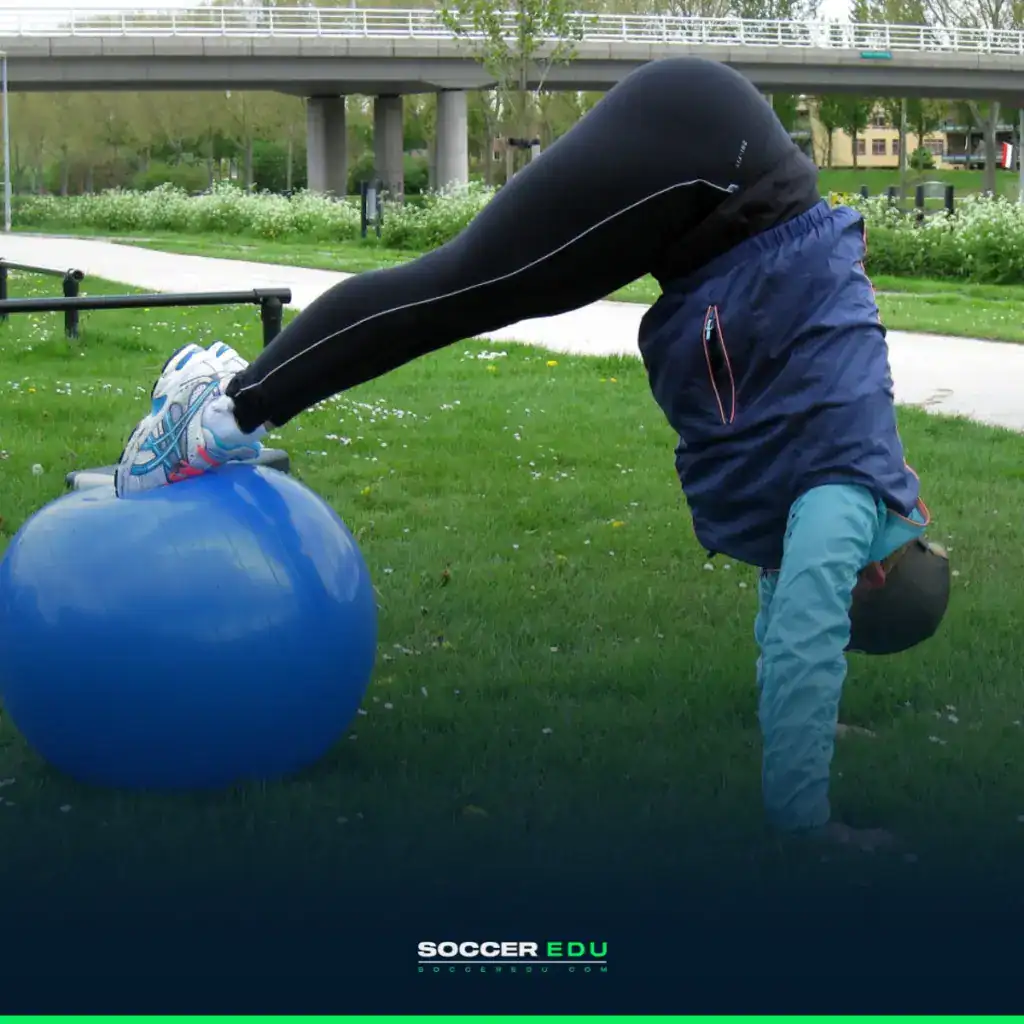
Training Examples:
- Core stability circuit (all levels):
- Front plank: 30-45 seconds
- Side planks: 30 seconds each side
- Dynamic planks with limb movements
- Dead bugs or bird dogs
3-4 complete rounds, 60-second rest between rounds
- Equipment-based training:
- Rotational core with medicine ball (seniors)
- Resistance band exercises combined with lateral movements (U15+)
Coordination and Proprioception: Enhancing Movement Quality
Superior movement coordination is fundamental in soccer for developing reactivity, maintaining balance under pressure, and reducing injury susceptibility. Coordination and proprioceptive training enhance joint stability and movement efficiency during dynamic match situations.
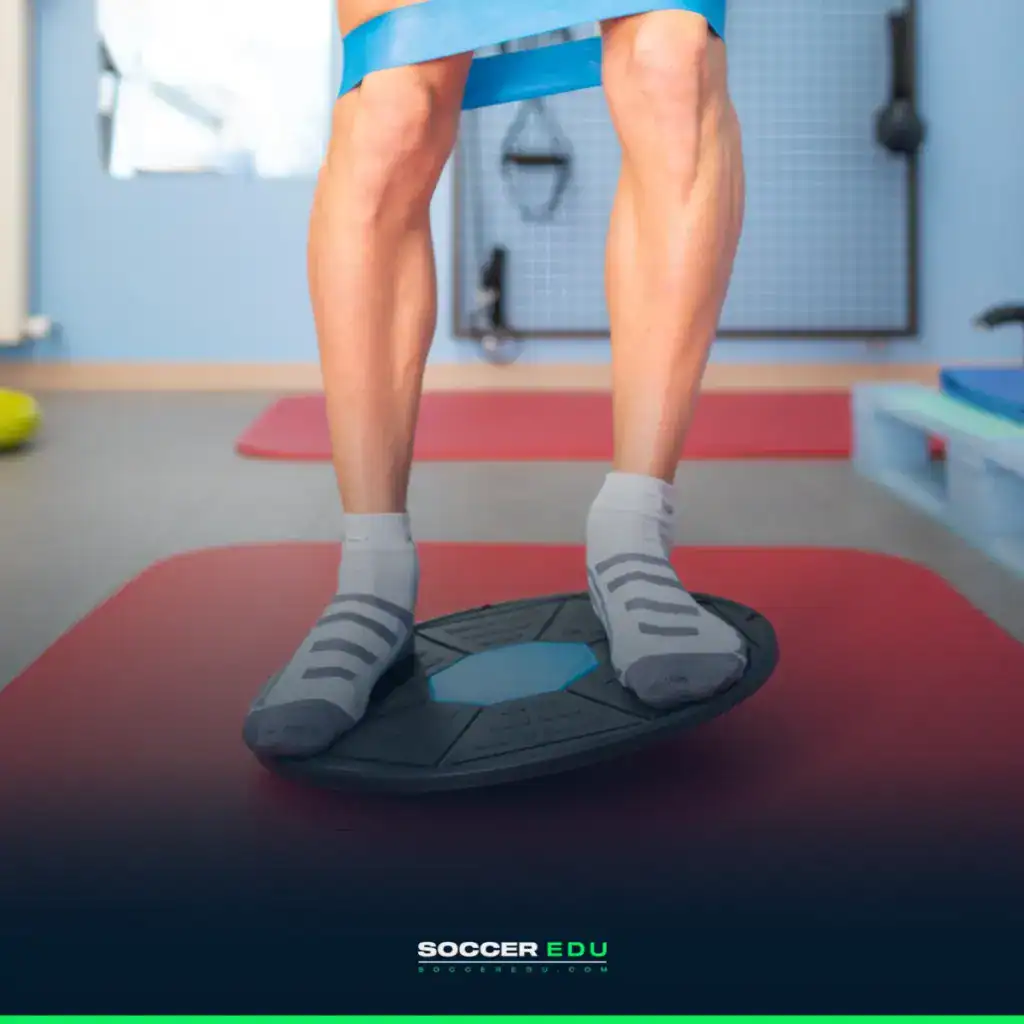
Training Examples:
- Agility Ladder drills: Short efforts (3x20s, 40s rest). Variant: add a pass or dribble at the end.
- Unstable surface training (bosu, wobble board): Single-leg balance 30s. Can combine with passes. Improves ankle/knee stability and prevents sprains.
Sample Soccer Fitness Training Session Structure
Here is a table presenting the typical structure of a soccer fitness training session, outlining each phase, its duration, and key components designed to optimize player performance.
| Phase | Duration | Content | Example |
|---|---|---|---|
| Warm-up | 15 min | Mobility + activation + reaction | Ball reaction game |
| Specific conditioning | 20 min | Endurance + explosiveness + speed | Circuit or drills |
| Soccer intégration | 20–30 min | Small-sided game | Integrating fitness into play |
| Cool-down | 5 min | Stretching, breathing | Group or individual |
Practical Guidelines for Building a Soccer Fitness Program
Adapt training loads appropriately for player age and developmental stage. For youth players, emphasize movement variety and motor skill development without excessive physiological stress. Integrate physical conditioning with technical skill development whenever possible to maximize training efficiency.
Schedule high-intensity sessions with minimum 24-hour recovery periods between demanding workouts. Systematically vary training focuses (explosive power, aerobic development, proprioceptive work) while progressing gradually throughout the season.
Essential Equipment for Soccer Fitness Training
Effective conditioning programs benefit from basic equipment including marker cones, hurdles, agility ladders, resistance bands, medicine balls, and balance training devices. This equipment enables varied, engaging sessions without significant financial investment. However, excellent fitness training can also be conducted using bodyweight exercises alone or incorporating soccer balls into conditioning drills.
Soccer Fitness Drills by Age Group
Here is a table presenting age-specific soccer fitness drills, highlighting the main physical focus and practical examples tailored to the developmental needs of each age group.
| Age Group | Focus | Example Drills |
|---|---|---|
| U9–U11 | Coordination, proprioception, fun speed | Ladder drills, simple balance work, speed duels, fun warm-ups |
| U13 | Base endurance, coordination, core | Continuous runs, core circuit, ladder work |
| U15 | Intermittent aerobic, banded core | 30s/30s intervals, elastic pulls + lateral steps, unstable surface drills |
| U17 | Explosiveness, reactive speed, dynamic core | Jumps + sprints, COD sprints, dynamic planks, med ball drills |
| U19–Seniors | Power, explosiveness, injury prevention | Hurdle jumps + sprints, resisted sprints, strength circuits, proprio + technical work |
| All levels | Warm-up, core, footwork | Mobility, planks, ladders with technical exit |
Critical Note: Following age-appropriate fitness progressions is essential for optimal development. Improperly designed training can hinder performance improvements, reduce motivation, or increase injury risks. Each developmental stage has specific priorities: fundamental movement skills for children, progressive power development for adolescents. Respecting these developmental windows ensures sustainable, long-term athletic progress.
Soccer Fitness: The Performance Foundation
Effective soccer fitness drills must be purposeful, practically applicable, and tailored to individual player profiles. By systematically developing aerobic capacity, speed, explosiveness, functional strength, and movement coordination, coaches create more resilient, capable players with reduced injury susceptibility.
The fundamental principles remain consistent: training variety, systematic progression, and consistent application. Whether coaching youth players or elite professionals, integrating these physical components will enhance performance and help players reach their full potential on the pitch.