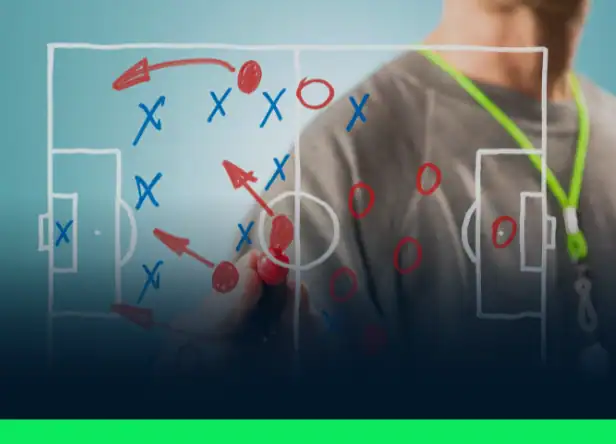
Speed represents one of the most crucial physical attributes in soccer. Whether it’s winning a crucial tackle, creating space in the final third, or tracking back defensively, split-second advantages often determine match outcomes. Contrary to popular belief, speed isn’t solely determined by genetics—targeted training can significantly enhance acceleration, top-end velocity, and reaction times.
This comprehensive guide presents soccer-specific speed drills that are straightforward to implement, combining explosive acceleration work, sprint technique, and reactive training. The objective is to equip coaches and performance specialists with practical training formats that translate directly to match situations.
Why Work on Speed in Soccer? Understanding Speed in Soccer Context

Before examining specific drills, it’s essential to understand that soccer speed extends far beyond straight-line sprinting. Modern soccer demands multiple speed components: explosive acceleration off the mark, the capacity to maintain high velocity over distance, instantaneous reactions to match stimuli, and the ability to execute sharp directional changes whilst maintaining momentum.
The Multifaceted Nature of soccer Speed
Acceleration refers to the explosive power required to reach maximum velocity quickly—essential for creating separation in attacking phases or recovering defensively. This initial burst often determines success in duels and breakaway situations.
“Explosive power and acceleration are fundamental qualities for any forward, both in possession and off the ball—provided the timing of the run is perfect.” – Frédéric Antonetti, former professional coach, discussing striker attributes
Maximum velocity enables players to sustain sprints over longer distances, particularly crucial during counter-attacks or covering defensive ground. Reactive speed involves responding instantly to visual or auditory cues during match play—a skill that separates elite performers from their peers. Directional agility makes player movement unpredictable and more effective against opponents whilst maintaining speed through changes of direction.
Benefits of Structured Speed Training
A systematic approach to soccer sprint development enhances overall athletic capacity whilst providing direct competitive advantages. Players become more explosive off the mark, reduce reaction times, and can chain multiple high-intensity efforts with greater efficiency. Structured speed training also reduces muscular injury risk by strengthening the specific muscle fibres heavily recruited during explosive accelerations.
The Critical Link Between MAS and Speed Performance
Alongside raw speed, Maximal Aerobic Speed (MAS) represents a fundamental performance indicator—the minimum velocity at which maximum oxygen consumption occurs. Players with higher MAS values can repeat high-intensity efforts and maintain speed throughout matches without significant performance decline. Developing MAS through interval training and small-sided games improves the capacity to accelerate repeatedly whilst sustaining match intensity.
Research demonstrates that MAS strongly correlates with repeated sprint ability, with elite players showing correlations of r = 0.813 between combined MAS/sprint speed measures and repeated sprint performance. This highlights the importance of developing both aerobic and anaerobic speed qualities simultaneously.
Fundamental Acceleration Drills
Initial speed development should emphasise sprint mechanics and explosive power output. These foundational drills can be integrated early in sessions or immediately following dynamic warm-ups.
Short-Distance Explosive Sprints (10-20 metres)
Players begin from stationary positions and execute maximum-effort sprints over short distances. The emphasis should be on explosive starting mechanics, optimal torso positioning, and stride frequency development.
Variations include:
- Ground starts: Players begin lying prone, exploding upward at the signal
- Seated starts: Starting from seated positions to eliminate momentum advantages
- Three-point stance: Athletic starting position emphasising forward lean and explosive drive
Progressive Acceleration with Markers
Position 3-4 cones approximately 5 metres apart. Players gradually build speed until reaching the final cone, then transition to maximum sprint velocity. This drill develops the ability to control acceleration phases whilst building toward peak speed—essential for timing runs and creating optimal separation.
Intermediate Training: Speed with Directional Changes
Match situations rarely involve pure linear sprinting. Players must accelerate, decelerate, and cut sharply whilst maintaining speed and control.
High-Intensity Slalom Patterns
Establish 6-8 cones in zigzag formation, spaced 2-3 metres apart. Players weave through at maximum intensity whilst maintaining precise foot placement and body control. The objective is improving coordination and change-of-direction speed whilst under physical stress.
Sprint-Cut-Sprint Sequences
Players sprint 10 metres at maximum effort, execute an abrupt directional cut, then sprint an additional 5-10 metres. Coaching variation: The coach signals the new direction at the last moment to enhance reactive capabilities and decision-making under pressure.
Advanced Training: Speed Under Match Pressure
Elite-level speed development must incorporate external constraints such as opposition pressure, visual stimuli, and auditory triggers to replicate match demands.
Competitive Sprint Duels (1v1)
Two players position themselves back-to-back. At the signal, both sprint toward a ball placed 10 metres away, competing to reach it first. This drill combines explosive speed, competitive pressure, and ball-winning technique—directly applicable to match situations.
Multi-Stimulus Reaction Training
Players maintain ready positions whilst awaiting coach signals (visual or auditory). Upon receiving the stimulus, they sprint in the indicated direction or toward specific targets. Advanced variation: Use multiple balls positioned at different locations—players must react to the correct signal and pursue the appropriate target, enhancing decision-making speed.
Sample Training Session: soccer-Specific Speed Development
Here’s a comprehensive 60-minute speed-focused training session structure:
| Phase | Duration | Content |
|---|---|---|
| Dynamic Warm-Up | 10 min | Progressive runs, mobility work |
| Acceleration Development | 15 min | Short sprints (10–20m) + cone accelerations |
| Directional Speed | 15 min | Explosive slalom + angled sprints |
| Reactive Opposition Work | 15 min | Reaction to signal + 1v1 sprint duel |
| Recovery & Mobility | 5 min | Stretching and breathing |
Age and Ability-Specific Adaptations
Speed training must be carefully tailored to the player ‘s developmental stage and current fitness levels.
- Youth Categories (U9–U11): Emphasise enjoyment through ball-based racing formats and competitive challenges. Technical speed development should take precedence over pure physical output.
- Adolescent Players (U13-U15): Introduce structured sprint work and systematic change-of-direction training. Begin developing MAS through progressive interval training.
- Senior and U17 Players: Train at maximum intensities with genuine opposition pressure, ensuring adequate recovery periods between high-intensity efforts.
- Adult Beginners: Prioritise sprint mechanics over intensity, focusing on proper movement patterns before progressing to maximum-effort work.
Essential Coaching Guidelines for Effective Speed Training
To maximise the effectiveness of soccer acceleration drills, coaches should adhere to these fundamental principles:
- Complete Warm-Up Protocol: Always commence with comprehensive dynamic preparation to ready muscles for explosive efforts and reduce injury risk.
- Maintain Sprint Specificity: Keep individual efforts between 3-8 seconds to mirror match-specific demands and energy system requirements.
- Prioritise Recovery: Allow complete recovery between repetitions—quality always supersedes quantity in speed development.
- Vary Training Stimuli: Regularly modify drill patterns and challenges to maintain engagement whilst targeting different speed components.
- Monitor Training Load: Use appropriate work-to-rest ratios and avoid excessive volume that compromises movement quality.
Key Insights for Soccer Speed Development
Speed is not a fixed attribute—consistent, targeted training can yield significant improvements in acceleration, explosiveness, and reactive capabilities. By systematically integrating speed drills into training sessions, coaches help players develop the physical qualities essential for elite-level performance.
The most crucial factor remains progressive development: respecting players’ current abilities whilst designing sessions that are varied, challenging, and inherently motivating. When combined with technical and tactical work, comprehensive speed training creates complete players capable of excelling in the modern game’s high-intensity demands.
Remember that effective speed training in soccer must always maintain match relevance—developing not just faster players, but smarter, more reactive athletes who can apply their enhanced physical capabilities when it matters most on the pitch.