Moving into U11 soccer marks a significant milestone in a young player’s journey. At ten years old, children are not just growing physically; they are also developing greater coordination, a budding sense of independence, and a more sophisticated understanding of how a soccer match unfolds. They become more focused, capable of repeating complex skills with practice, and increasingly enthusiastic about teamwork. This age group serves as a critical bridge from the foundational, fun-focused early years to a more structured form of the game, where positioning, speed of play, and tactical awareness begin to take on real meaning.
U11 Soccer: Age, Practice Setting, and Game Format
The U11 category is composed of players who are 10 years old during the seasonal year. In most youth soccer systems in the United States, this is the final stage of the “developmental” or “foundational” phase before players transition to the 11v11 format and a more competitive environment.
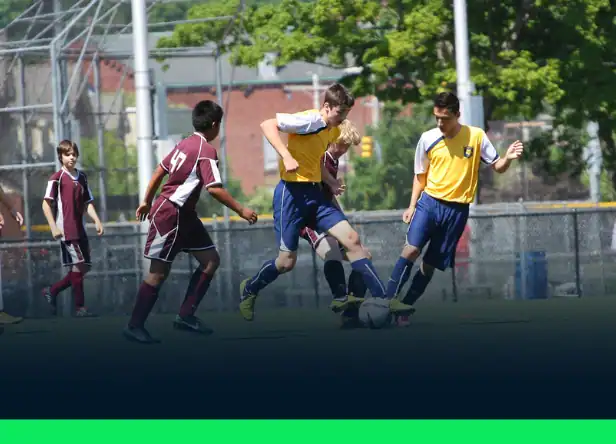
- Game Format: The standard format is 8v8 on a larger field than the one used in U9/U10. This expansion of space naturally opens up the game. Roles on the field—like defenders, midfielders, and forwards—become more distinct, though the core philosophy remains educational and player-centric, not focused on rigid positions.
- Practice Structure: Training sessions typically extend to 75-90 minutes. Progressive clubs and leagues will offer two practices per week. This increased frequency provides a consistent, motivating rhythm that allows young players to build on their skills, retain information, and see tangible progress.
What Learning Objectives Should Be Prioritized in U11?
Progress at this age can be incredibly rapid, but it hinges on a coaching plan that coherently blends technical skill, game intelligence, and individual creativity. The focus should be less on winning and more on the quality of the performance and the developmental process.
1. Technical Mastery in Motion
A primary objective is to move players beyond static drills. Technique must be executed while in motion, at game speed. Dribbling to beat a defender, taking a positive first touch into space, and mastering the “pass and move” combination should become second nature. The goal is for a player’s technical ability to be fully integrated into the fluid, dynamic rhythm of the game. This also includes an increased emphasis on developing the weaker foot, which is no longer just a “bonus” but a necessary tool for opening up more options on the field.
2. Developing Game Intelligence
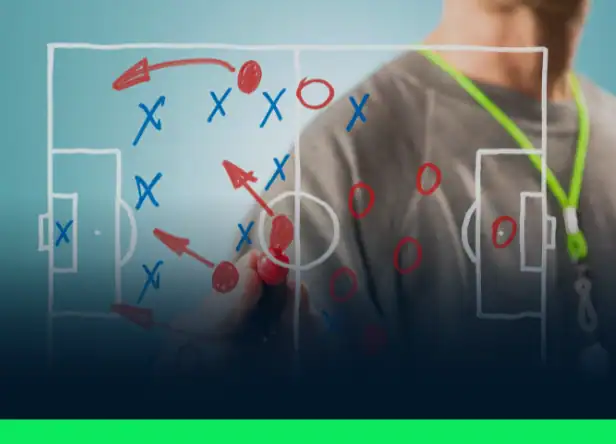
The 8v8 format introduces players to more advanced team concepts. They can now begin to grasp the tactical principles of width, depth, and support. Coaches should introduce these ideas in simple terms:
- Width: “Can you make the field as big as possible to create space?”
- Depth: “Can we have players in high, medium, and low positions to pass forward?”
- Support: “Are you providing a safe passing option for your teammate on the ball?”
Defensively, this is the perfect age to instill the importance of a quick transition to defending. Players can understand why immediately pressuring the ball after losing it can help win it back high up the field or prevent a goal-scoring opportunity for the opposition.
3. Fostering Autonomy and Creativity
U11 players are beginning to think for themselves and love to experiment. A coach’s role is to empower this instinct. Creating a learning environment where players feel safe to try a new move, attempt a risky forward pass, or organize a quick throw-in strategy is essential for building confidence. These moments of player-led decision-making are the bedrock of game understanding and long-term engagement.
The Evolving The Role of the U11 Coach
Coaching a U11 team requires a delicate balance of being a structured teacher and a supportive mentor. Players at this age can process more complex instructions, but their motivation remains deeply tied to having fun and receiving positive validation.
The coach must act as a “guide on the side,” not a “sage on the stage.” Your job is to advise without stifling spontaneity. When a player makes a mistake, help them understand the “why” behind a better decision, rather than simply criticizing the outcome. When they succeed, praise the process that led to the success. This approach builds a climate of trust where players are not afraid to fail, which is a prerequisite for learning.
An ideal U11 practice session has a clear, energetic flow:
- Dynamic Warm-Up (10-15 min): Game-based activities that get bodies moving and brains engaged. Think fun tag games with a ball, dribbling challenges, or group passing patterns.
- Technical Focus (20-25 min): High-tempo, repetitive drills focused on a core skill (e.g., 1v1 moves, receiving on the half-turn). Use short, intense blocks of work.
- Small-Sided Game (20-25 min): A 3v3 or 4v4 game with a simple constraint or objective that reinforces the technical theme. This is where learning is applied.
- Scrimmage (20-25 min): End with a larger 8v8 scrimmage, allowing players to freely apply the concepts of the day in a real-game context with minimal interruptions.
The Priority Focus Areas of U11 Training
To ensure each session is truly educational, three priority areas should consistently appear.
1. Quality at Game Speed
Every technical drill should challenge players to execute skills under pressure and at a pace that mirrors a real match. Can they control a pass while running forward? Can they orient their body to see the field before the ball arrives? Chaining actions together—touch, turn, pass—without hesitation is a key benchmark for progress.
2. Intelligent Off-the-Ball Movement
With a larger field, what players do without the ball becomes just as important as what they do with it. The concept of “occupying space” needs to be coached actively. Encourage players to constantly scan the field, identify open lanes, and understand how their movement can pull defenders away to create space for others. This is the foundation of tactical soccer.
3. Purposeful Ball Movement
U11 players are ready to move beyond just kicking the ball forward. They can start to understand simple offensive patterns. Introduce concepts like short passing combinations (give-and-gos), switching the point of attack (playing from one side of the field to the other), and quick transitions from defense to offense. This isn’t about complex tactics but about instilling the first principles of a possession-based, intelligent team identity.
Practical Tips for Effectively Coaching U11 Players
To ensure all players progress under good conditions, a few educational principles can guide session planning.
Creating a climate of confidence is essential. Children progress more when they feel valued, listened to, and encouraged. The coach must take time to explain, but always with simple words and clear demonstrations, since verbal explanations alone are often harder to retain.
It is also important to maintain consistency in the teaching messages. Repeating the same reference points—look up, play quickly, defend together—helps players retain the principles of the game over time. An effective session does not rely on piling up instructions but on a few strong messages repeated week after week.
The game must remain central. Small-sided formats like 3v3 or 4v4 offer a very high number of ball touches and require players to make many decisions. These situations are ideal for developing game intelligence and speed of execution.
It can also be helpful to vary organization to account for differences in level. Some children need more technical repetition; others progress faster in game-based situations. Structuring sub-groups can help avoid frustration and reinforce engagement for everyone.