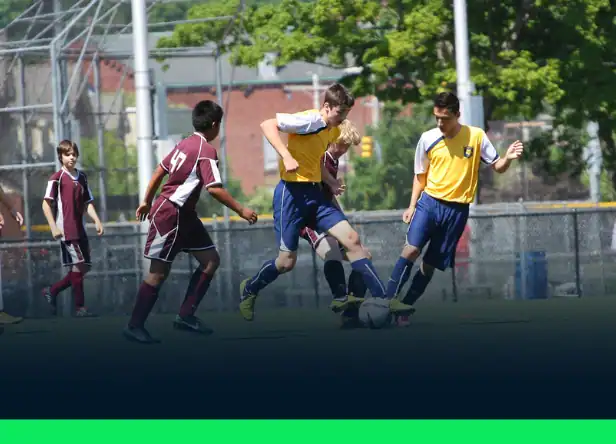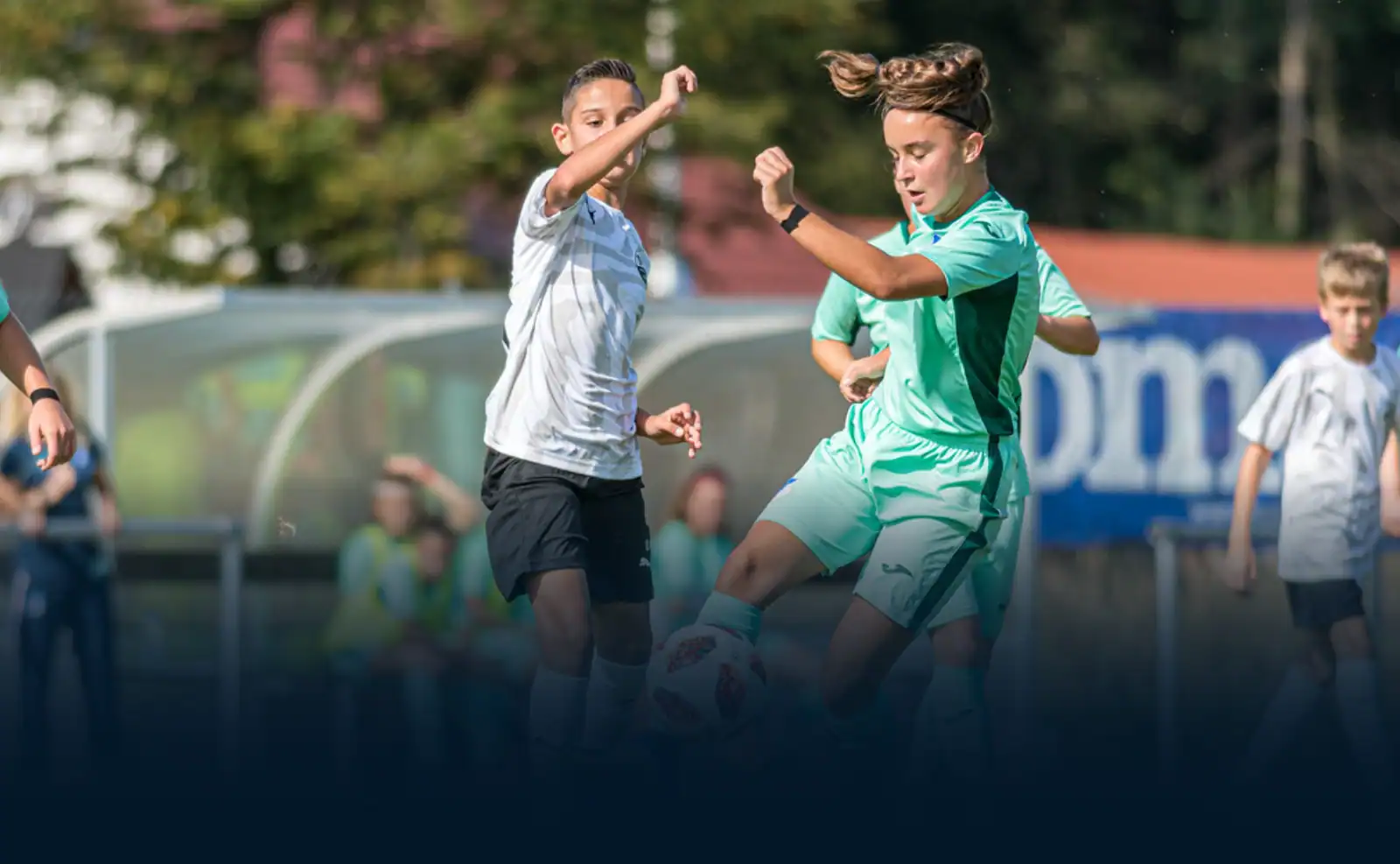
The U15 category is a decisive stage in a young soccer player’s development pathway. In earlier age groups, from U6 through U14, players are primarily in a broad learning and structuring phase, where the emphasis is on basic skills, enjoyment, and discovering the game. At U15, the environment changes: the game becomes more structured, physical demands increase, and collective expectations become more defined. At this age, coaching takes on particular importance, because it involves not only helping players progress on the field, but also supporting them through a period of major personal and social change.
Understanding what U15 soccer truly represents allows coaches, clubs, and parents to better grasp the unique demands of this category and to adapt their day-to-day approach accordingly.
Understanding the U15 Soccer Category
How Old Are U15 Soccer Players?
U15 players are generally between 14 and 15 years old. This age range corresponds to early and mid-adolescence, with all the physical, emotional, and social changes that come with it. Players are navigating school pressures, identity questions, and shifting peer groups at the same time that the game is becoming more demanding and competitive.
What Does U15 Mean in Soccer?
U15 stands for “Under 15.” It is the age group that includes players who have not yet turned 15 by a given cut-off date for the season, as defined by the competition or federation rules. This level is often considered a pre-professional or pre-competition training phase, with rules, field formats, and competitive structures adapted to the players’ stage of development.
Within a U15 roster, differences in maturity can be very noticeable. Some players may already have gone through a significant growth spurt, while others are still physically and hormonally developing. On the field, these differences can show up in strength, speed, power, and endurance, as well as emotional control and confidence.
The coach’s role is to provide a fair and balanced framework in which every player can progress, without being held back or placed at an unfair disadvantage by these natural disparities. This means avoiding judging potential purely by current physical advantage and focusing instead on long-term development.
The Practice Framework in U15 Soccer
From the U15 category onward, the training and competition environment shifts closer to the adult game. Rules, pitch size, and collective organization gradually mirror senior soccer, which has a direct impact on how players train, compete, and recover.
A Game That Resembles Adult Soccer
In U15 soccer, the 11v11 format is generally established on a regular basis. Full-size fields, regulation goals, and refereeing standards closely resemble those used in senior competitions. This evolution changes the way the game is played: spaces are larger, distances to cover increase, and collective decision-making becomes more complex.
Players must now learn to:
- Maintain their positioning over the entire field in and out of possession
- Read the game across all thirds – defensive, middle, and attacking
- Manage more open situations, longer passing distances, and quick transitions
- Sustain high-intensity efforts over longer sequences and full match duration
The tactical structure (team shape, lines, and units) becomes more important, and players must understand their role within the system, not just their individual skill set.
An Increased Training Load
Unlike in U7 or U8 categories, the weekly rhythm intensifies significantly at U15. Two to three training sessions per week become common, often complemented by a weekend match and sometimes by friendly games, tournaments, or position-specific sessions.
This increased training and match load requires particular attention to:
- Recovery strategies (sleep, nutrition, hydration, stretching)
- Fatigue management across the week
- Growth-related issues, such as joint pain or temporary coordination loss
- Balancing soccer with schoolwork and family commitments
Because players are going through major physical and hormonal changes, coaches must be especially careful about overtraining and must be willing to adjust intensity, playing time, and expectations when necessary.
Development Objectives in U15 Soccer
Training at the U15 level focuses on consolidation and refinement. Previous learning remains essential, but it takes on a new dimension, with higher demands on execution speed, decision-making, and physical engagement. The goal is to help players become more complete, intelligent, and resilient competitors.
Building a More Complete Player
At this age, development is no longer limited to learning isolated technical skills. A U15 player must learn to apply their abilities in realistic game contexts, under pressure, and at high intensity. Technique remains central, but it is now inseparable from decision-making and collective play.
Key objectives include:
- Executing core techniques (first touch, passing, receiving, dribbling, finishing, heading, tackling) at match tempo
- Performing skills in tight spaces and under pressure from opponents
- Combining with teammates (give-and-go, overlaps, third-man runs, switching play)
- Managing weaker foot use to expand options and unpredictability
Training sessions should therefore aim to strengthen players’ ability to play quickly, make the right choices, and adapt to constantly changing match situations. Small-sided games, positional rondos, and scenario-based drills are particularly valuable at this age.
Developing Game Intelligence
U15 soccer places greater emphasis on tactical understanding, often described as “game intelligence” or “soccer IQ.” Players begin to grasp more advanced concepts, such as:
- Team shape and compactness, both in possession and out of possession
- Transitions: reacting quickly when the ball is won or lost
- Balance between attacking and defensive risk
- Managing strong and weak phases of a match (controlling tempo, pressing or dropping off)Understanding roles within different systems (e.g., 4-3-3, 4-2-3-1, 3-5-2)
This understanding does not develop solely through lectures or whiteboard talks. It grows through:
- Clear and concise coaching interventions, not constant stoppages
- Collective discussions and video feedback when available
- Short reflection moments built into sessions, where players share what they saw and decided
The objective is to develop players who can read the game independently, anticipate situations, and make smart choices without being constantly directed from the touchline.
Supporting Physical Development
The rapid growth experienced by many U15 players calls for a progressive and thoughtful approach to physical preparation. At this age, the focus should be on building a robust athletic base and teaching players how to care for their bodies.
Important priorities include:
- Coordination and agility (especially for players in or just after a growth spurt)
- Functional strength, core stability, and basic injury-prevention work
- Correct running, jumping, and landing mechanics
- Flexibility and mobility to reduce muscle tightness and overuse injuries
The aim is not to chase maximum performance numbers in the gym, but to help players understand how their bodies work, adopt healthy habits, and prepare for higher-intensity demands in later age groups.
The Role of the U15 Coach
Coaching U15 players requires an adapted mindset and a strong educational approach. The coach is no longer focused solely on technical instruction. Instead, the coach must also support adolescents who are undergoing significant personal, social, and academic changes, each with specific human and athletic needs.
Providing a Structured and Reassuring Framework
The U15 coach plays a key stabilizing role. The coach must offer a clear framework with consistent rules, routines, and expectations, while remaining attentive to each player’s needs and challenges.
At this age, the need for reference points is strong, even if adolescents sometimes question or push back against them. Consistency between the coach’s words, coaching decisions, and sideline behavior is essential to building trust and credibility.
A good U15 environment typically includes:
- Clear team values and standards (effort, respect, discipline)
- Transparent selection criteria and playing-time philosophy
- Regular communication with players and, when appropriate, with parents
- A safe space for players to express concerns and ask questions
A Mentor, Not Just a Coach
Beyond the sporting dimension, the U15 coach acts as a mentor. Players at this age often experience:
- Fluctuating confidence, especially during and after growth spurts
- Variable motivation levels, influenced by school, social groups, or results
- Constant comparison with teammates and opponents (physical size, status, playing time)
Knowing how to highlight progress, put setbacks into perspective, and encourage persistence is an integral part of the educational role at this level. The coach should:
- Praise effort and improvement, not just outcomes
- Help players interpret mistakes as opportunities to learn
- Teach emotional control in both victory and defeat
- Support players who are struggling with reduced playing time or role changes
Ultimately, the coach’s influence at U15 often extends beyond the field, shaping how players view challenges, teamwork, and commitment.
Difference Between U14 and U15
The difference between coaching U14 and U15 players lies in the transition to a more defined adolescence and a more demanding game environment. U15 players change physically, mentally, and socially at a rapid pace, requiring the coach to adapt both training content and communication style.
U14 soccer is still largely dominated by learning, enjoyment, and often very uneven maturity, with a strong focus on basic technique and simple team concepts. At U15, the game intensifies: duels become more physical, tactical understanding deepens, and concepts such as performance, role status, internal competition, and selection become much more visible.
In practical terms, the challenge evolves from a focus on engagement and raw technical progression to a more refined management of:
- Growth differences and physical imbalance
- Accumulated fatigue and recovery
- Increased injury risk
- Ego, self-esteem, and frustration, especially around playing time and team hierarchy
Coaching U15 players above all means individualizing the approach and never rushing the stages. The coach must carefully understand each young player as an individual, which involves:
- Adjusting training loads and intensity for players at different maturation levels
- Structuring a stable but flexible framework
- Explaining expectations and decisions clearly and calmly
- Maintaining an educational approach that prioritizes long-term development over short-term results
How to Effectively Lead U15 Soccer Training Sessions
The quality of session leadership directly influences player engagement and learning. At U15, how exercises are presented, how the session is paced, and how the coach communicates with the group matters just as much as the technical and tactical content itself.
Giving Meaning to Training Content
U15 players need to understand what they are doing and why they are doing it. They are far more likely to invest fully in a drill when they can see its connection to real match situations.
For each exercise, it is helpful to:
- Present the objective in simple, clear terms
- Explain its link to specific game moments (e.g., “breaking a high press,” “defending crosses,” “transition after losing the ball”)
- Briefly debrief at the end of the activity, asking players what they noticed and how it could apply in a match
This approach encourages autonomy, reflection, and active participation in their own development.
Finding the Balance Between Demands and Enjoyment
Even as expectations rise, enjoyment remains a fundamental driver of progress and long-term engagement.
A well-designed session balances:
- Periods of high intensity and focus
- Moments of more open play where creativity and expression are encouraged
- Competitive elements (small tournaments, challenges) that motivate players
The game itself should remain the primary learning tool, even when working toward tactical or physical objectives. Game-based training – small-sided games, conditioned matches, and realistic scenarios – is especially effective at this level.
Adapting Content to the Group
Every U15 team has its own dynamics. Some groups are very balanced, while others feature large differences in level, physical maturity, or experience. The coach must be prepared to adapt tasks and rules to keep the session challenging but attainable for everyone.
Useful adjustments include:
- Modifying field size or numerical advantage/disadvantage
- Assigning different roles or constraints based on position or level
- Creating progressions and regressions of the same exercise for different sub-groups
This type of differentiation helps maintain a positive, stimulating environment in which all players feel included and pushed to improve.
What Exercises Should Be Used for U15 Players?
For coaches who want to go further in designing their sessions, a dedicated resource of U15-specific exercises is a natural extension of this overview. Such a collection should include:
- Technical drills carried out at game speed and under pressure
- Positional games and rondos to develop ball retention and support play
- Tactical games focusing on pressing, defensive organization, and attacking patterns
- Full or half-field scenarios that rehearse transitions, build-up play, or finishing phases
- Examples of complete training sessions with clear objectives (e.g., transition play, ball circulation, defensive compactness, game intensity)
These resources make it easier to select formats based on the day’s objective, whether working on transitions, ball retention, pressing, or attacking creativity, while staying consistent with the specific needs and constraints of U15 players.
U15 Soccer: A Pivotal Stage in a Player’s Development
U15 soccer represents far more than a simple step between youth categories. It is a period in which work habits, deeper game understanding, and a lasting relationship with the sport are formed. Players begin to see themselves either continuing seriously in the game or drifting away from it.
Appropriate coaching at this level—demanding yet supportive, structured yet flexible, and attentive to both individual and collective development—allows players to approach the next stages of their journey with confidence and motivation. For coaches and parents alike, understanding the challenges and opportunities of the U15 category is an essential first step in supporting young players as they continue to grow, both as athletes and as people.