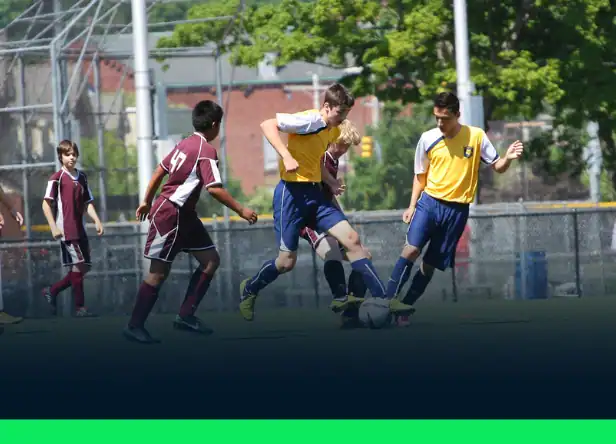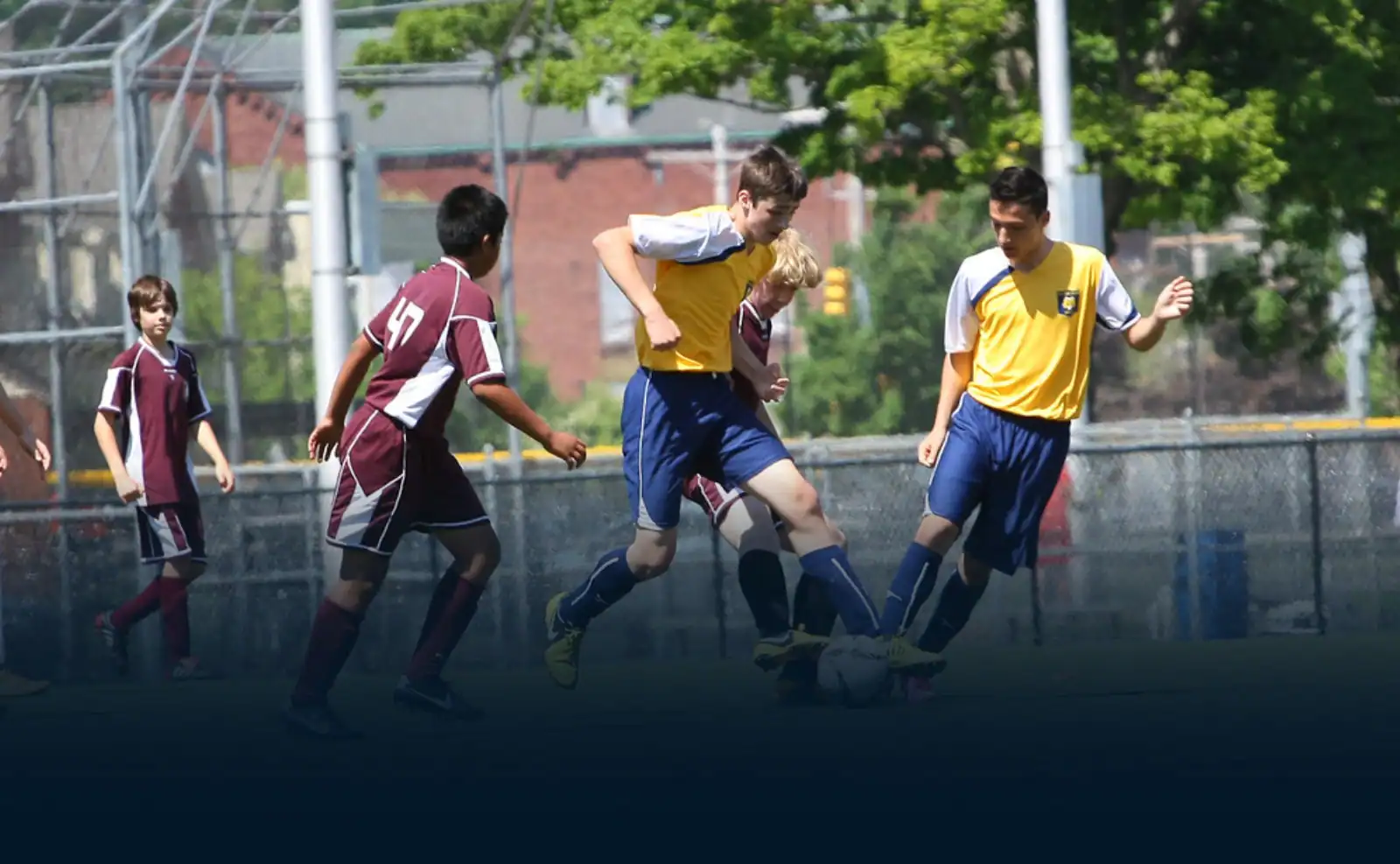
The U14 category marks a pivotal transition in youth soccer development. Players shift from the foundational skill-building of U12–U13 to structured 11-a-side soccer on full-size fields, facing longer distances, increased player density, and more complex tactical demands. Puberty-driven physical changes add coordination challenges, while cognitive growth enables deeper game understanding.
This guide equips coaches, clubs, and parents with practical, evidence-based strategies to navigate this demanding stage effectively.
U14 Soccer: Key Characteristics of the Category
What Age Is the U14 Soccer Category?
U14 players are typically 13-14 years old, based on federation birthdate cutoffs. This age signals the shift from small-sided games to 11v11 on fields roughly 100×60 yards, dramatically expanding spatial requirements and information processing needs.
Growth spurts create temporary disruptions: center of gravity shifts upward, muscle lags behind bone growth, and coordination becomes inconsistent. Early-maturing players gain physical advantages, but late-maturers often show greater long-term functional gains. Coaches must adapt training to these biological realities rather than pushing uniform intensity.
Player density increases despite larger fields, tightening possession space and demanding refined positioning. Roles solidify—fullbacks overlap, center backs organize defensive shape, box-to-box midfielders cover ground, wingers stretch width—requiring position-specific technical and tactical work.
The Practice Framework of U14 Soccer
Training typically includes 2-3 sessions weekly (85-95 minutes each) plus weekend matches. Structure follows this progression for optimal learning and recovery:
- Warm-up (15 min): FIFA 11+ injury prevention protocol with dynamic movement and ball contact
- Technical/small-group work (25-30 min): Position-specific skills under pressure
- Tactical scenarios (25-30 min): Directional games emphasizing pressing patterns and transitions
- Game play (30-35 min): 6v6, 8v8, or 11v11 with session objectives
- Cool-down (10 min): Recovery focus and reflection
Recovery emphasis grows critical. Monitor fatigue, ensure 48-hour gaps between high-intensity sessions, and prioritize sleep/hydration. Small-sided games build aerobic capacity without isolated conditioning runs, preserving technical focus.
Core Development Objectives in U14
This level often represents the first step toward a more structured form of soccer. Expected progress goes beyond technical skills and also includes physical, tactical, and mental dimensions. U14 coaching targets four integrated areas, embedding skills in game-realistic contexts rather than isolated drills.
1. Dynamic Technical Mastery
Technique evolves from static ball mastery to execution under movement and pressure. Prioritize technical speed: scanning before receiving, first-touch orientation toward target space, and chaining actions (receive-turn-pass).
Key drills:
- Wall passes/one-twos with trailing defenders
- Rondo variations forcing quick decisions
- Receiving across body to switch play
- Dribbling at speed into 1v1 scenarios
Progression: Add passive defenders → active pressure → multiple opponents. This builds first-touch efficiency for congested midfield areas.
2. Tactical Awareness and Collective Organization
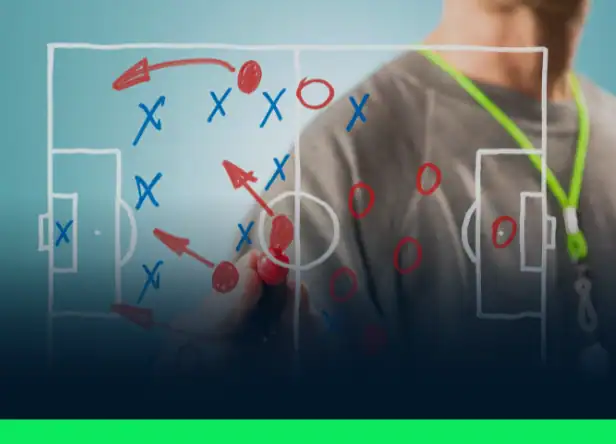
Players master coordinated defensive actions: pressing traps, compactness between lines, and covering runners. Attacking principles emphasize triangles, width/stretch, and third-man combinations.
Essential concepts:
- Pressing triggers: Bad touch, backward pass, wrong-footed receiver
- Defensive shape: Reduce vertical/horizontal gaps
- Transition speed: Immediate counter-press or organized retreat
- Combination play: Overlaps, underlaps, double passes
Use 4-3-3 formation initially—four defenders for stability, three midfielders for balance, three forwards for penetration. Progress to 3-4-3 for advanced groups emphasizing midfield control.
3. Physical Stability During Growth
Address puberty’s coordination disruptions with targeted work:
- Proprioception/balance: Single-leg stability, cone weaves
- Change-of-direction: Cutting drills at varying speeds
- Core/postural control: Planks, med-ball throws
- Speed development: 10-20 yard sprints with ball
FIFA 11+ reduces injury risk by 30-50% while building these capacities. Avoid heavy strength training; focus on bodyweight functional patterns.
4. Psychological Autonomy and Resilience
Foster independent thinkers through questioning: “Where’s your support?” “What’s your trigger?” rather than dictating solutions. Allow productive failure in safe scenarios to build risk tolerance.
Manage emotional volatility—frustration spikes during coordination loss. Create “no-fear” environments where effort trumps outcomes.
The Role of the U14 Coach
U14 coaching blends tactical guidance with adolescent psychology. Establish 3-5 consistent principles (e.g., “Quick decisions,” “Shape first”) applied across sessions.
- Balance creativity and structure: Let flair players express within team shape. A dribbling fullback thrives if defensive responsibilities remain non-negotiable.
- Question-driven feedback: “Why that pass?” develops game intelligence over rote execution.
- Emotional attunement: Spot fatigue signals (slumped posture, error clusters) and adjust—simplify drills or provide encouragement.
Provide Clear Reference Points
Teenagers need a stable framework to progress. It is not necessary to stack rules; a few simple principles are enough, as long as they remain consistent. Clear guidelines improve focus and reduce misunderstandings.
Encourage Individual Expression in Service of the Team
At this age, many players are searching for their playing style. Allowing individual expression while respecting collective organization helps players understand that technical skill only truly matters when it serves the team.
Encourage Reflection
Rather than immediately giving answers, asking quick questions such as “Where is the space?” or “Which teammate gives you a better option?” helps develop game reading. This method teaches players to understand situations instead of merely reacting to them.
Support the Emotional Dimension
U14 players experience emotional highs and lows, sometimes within the same session. A coach who is attentive to signals such as frustration, fatigue, or loss of motivation can adjust drills accordingly and maintain a positive dynamic.
Tips for Effectively Leading a U14 Training Session
U14 attention spans peak at 12-15 minutes. Rotate activities: technical → tactical → game. Demonstrate movements rather than lecturing.
Session blueprint:
- Activate with competitive warm-up (e.g., 1v1 to small goals)
- Technical under pressure (e.g., 4v2 possession)
- Tactical phase (e.g., half-field 7v7 with pressing rules)
- Free play with constraints (e.g., must use goalkeeper build-up)
- Debrief key moments
Use slightly reduced fields (80-90×50 yards) for age-appropriate spacing—full adult dimensions prioritize endurance over technique.
What About U14 Drills?: Recommended Drills and Resources
Technical: “Transition Rondo” (6v3 in grid; attackers keep possession 10 seconds then attack goal)
Tactical: “Pressing Boxes” (teams press in zones, rotate pressure location)
Physical: “Dynamic Circuit” (agility ladder → sprint → change direction → finish)For complete sessions, reference US Soccer or US Club Soccer curriculum aligned with U14 benchmarks.
Practical Guidance Beyond Coaches
Clubs: Cap training at 8-10 hours weekly total. Schedule complementary sports to prevent burnout. Track maturity status to equalize teams.
Parents: Praise process (“Great scanning!”) over results. Transport promptly; model sportsmanship. Monitor for overuse pain (knees, back).
Key Takeaway: Supporting U14 Players Toward More Structured Soccer
U14 soccer transforms players from skill-focused athletes to tactically aware competitors. Success hinges on coaches providing clear structure with creative space, physical support during growth turbulence, and emotional scaffolding for autonomy.
The 11v11 transition tests resilience but builds sophisticated understanding when guided properly. Prioritize development metrics—technical speed, pressing cohesion, decision confidence—over win-loss records. This foundation determines long-term soccer potential.