Soccer stretches are fundamental to every player’s success — from grassroots youth to elite professionals. Whether you’re preparing for a crucial match or recovering after intensive training, implementing the correct stretching protocols at optimal times can dramatically enhance your performance, prevent career-threatening injuries, and accelerate recovery between sessions.
This comprehensive guide reveals when, why, and how to execute soccer-specific stretches, providing evidence-based routines tailored to different age groups and skill levels to maximise your potential on the pitch.
Why Soccer Stretches Are So Important?
Soccer demands explosive multi-directional movements — sprinting, cutting, jumping, tackling, and powerful shot execution. These high-intensity actions place tremendous stress on your musculoskeletal system, particularly during the rapid acceleration and deceleration phases that define modern soccer.
Soccer stretches serve multiple critical functions:
- Enhanced range of motion and joint mobility for technical execution
- Improved muscle elasticity to handle explosive movements
- Injury prevention against strains, tears, and joint sprains
- Accelerated recovery by promoting blood circulation and metabolite clearance
- Performance optimization through neuromuscular preparation
Research demonstrates that structured stretching interventions can reduce injury rates by up to 50% when implemented correctly as part of comprehensive training programmes.
Soccer Stretches vs. Warm-Ups Protocol: What’s the Difference? Understanding the Distinction
Many players incorrectly use these terms interchangeably, but they serve distinct physiological purposes:
- Warm-up protocols elevate core body temperature, increase heart rate, and prepare the cardiovascular system for drill demands. They activate the central nervous system and enhance motor unit recruitment.
- Soccer stretches specifically target muscle length, joint range of motion, and tissue compliance. They improve flexibility, mobility, and movement quality for optimal technical performance.
The most effective preparation combines both elements: cardiovascular warm-up followed by sport-specific dynamic stretches, creating a seamless transition from rest to match intensity.
How to Perform Soccer Stretches Before a Match (Active Stretches)?
Should You Stretch Before Playing Soccer?
Absolutely — but technique and timing are crucial. Pre-match preparation requires dynamic (active) soccer stretches that involve controlled, rhythmic movements through progressive ranges of motion.
Dynamic stretches prepare your neuromuscular system by:
- Activating muscle groups used in soccer-specific actions
- Increasing muscle temperature and metabolic readiness
- Improving coordination and movement patterns
- Enhancing power output through post-activation potentiation
Research confirms dynamic stretching protocols can improve sprint performance by up to 9.65% compared to static alternatives. Elite players consistently demonstrate superior knee extension velocity and muscle activation following dynamic preparation routines.
Example: 12–15 Minute Dynamic Soccer Stretch Routine
| Drill | Name | Description | Soccer Specific Benefits |
|---|---|---|---|
| 1 | Walking lunges with torso rotation | 10 reps per leg to warm up the quads, hip flexors, and spine. | Activates hip flexors, quadriceps, and thoracic spine mobility crucial for shooting and passing |
| 2 | Forward–backward leg swings | 10 reps per leg to loosen the hamstrings. | Prepares hamstrings and hip flexors for sprinting and kicking motions |
| 3 | Lateral Leg Swings | 10 swings per leg across body | Activates adductors and abductors for cutting movements and slide tackles |
| 4 | Hip circles | 10 reps each direction to improve hip joint mobility. | Enhances hip joint mobility for multi-directional movement |
| 5 | Heel-to-glute jog | 30 seconds to activate the hamstrings. | Prepares hamstrings for explosive contractions during sprinting |
| 6 | Quick high knees | 30 seconds to engage the thighs and stimulate the cardiovascular system. | Activates hip flexors and improves stride frequency |
Critical execution points: Maintain smooth, controlled movements without forcing range of motion. Start with 50% intensity and gradually progress to match-tempo movements.
Post-Match Recovery: Static Soccer Stretches for Optimal Recovery
Why Post-Match Stretches Are Essential
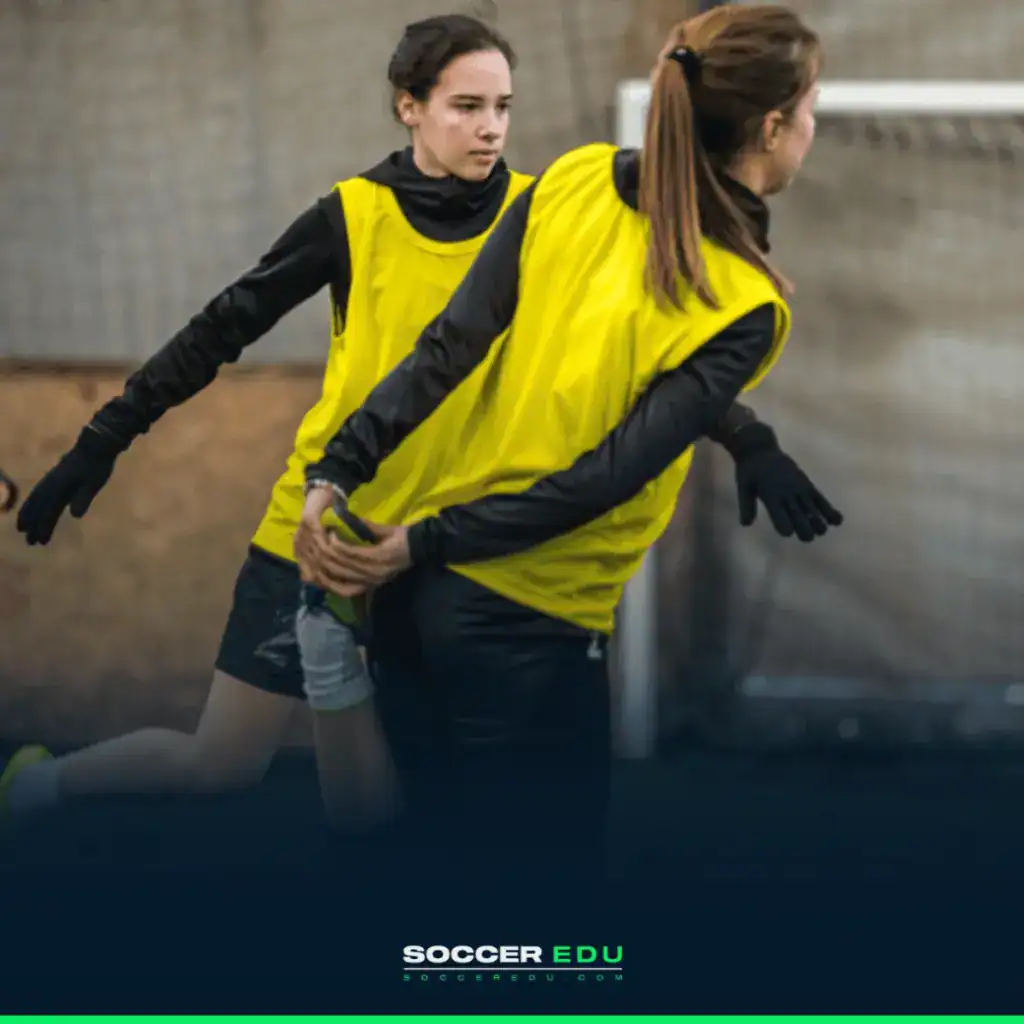
After intense match play or training, muscles accumulate metabolic byproducts including lactate and hydrogen ions, contributing to stiffness and delayed-onset muscle soreness. Static (passive) soccer stretches promote recovery by:
- Maintaining muscle length and preventing adaptive shortening
- Enhancing blood circulation for metabolite clearance
- Reducing muscle tension and promoting parasympathetic recovery
- Preserving range of motion for subsequent training sessions
Example: Static Soccer Stretch Routine (After the Game for 15-20 minutes)
| Drill | Name | Description |
|---|---|---|
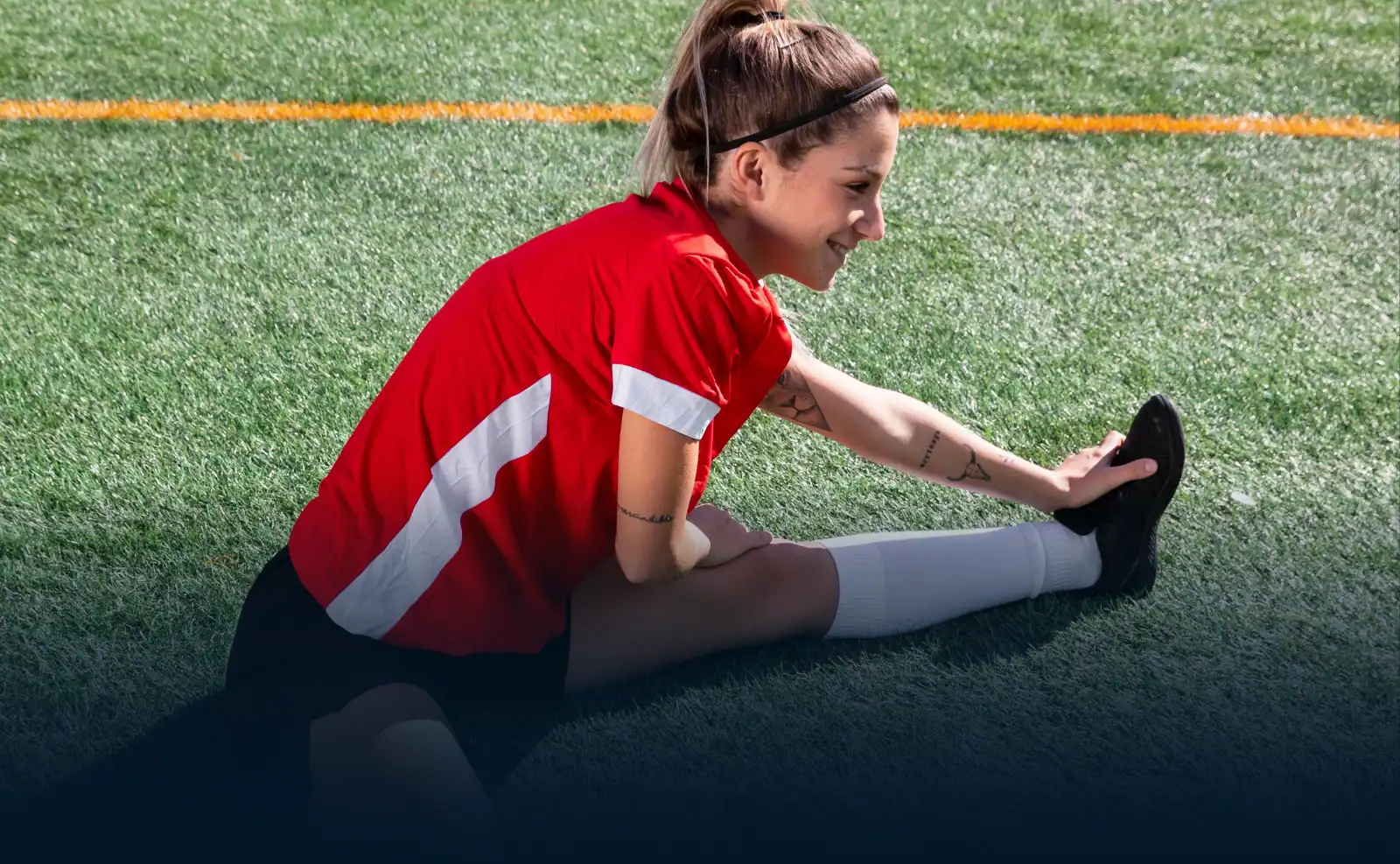
| 1 | Seated Hamstring stretch | Sit on the ground, one leg extended and the other bent. Lean gently toward the straight leg. |
| 2 | Standing Quadriceps stretch | Standing, grab your ankle and pull your heel gently toward your glutes. |
| 3 | Wall Calf stretch | Lunge forward with one leg bent, the other straight behind you, pressing the heel into the ground. |
| 4 | Butterfly Adductor stretch | Sitting with the soles of your feet together, gently press your knees down using your elbows. |
| 5 | Supine lower Back stretch | Lie on your back and bring both knees toward your chest. |
Each soccer stretch should be held for 20 to 30 seconds, with deep breathing to maximize relaxation and flexibility.
Age-Specific Soccer Stretch Programmes
Youth Development (U6-U13): Building Foundation Flexibility
Objective: Establish movement patterns and introduce flexibility concepts through engaging, game-like activities.
Duration: 5-8 minutes
Focus: Fun, movement-based stretches with simplified instructions
Pre-Activity Dynamic Routine:
- Gentle arm circles (5 reps each direction)
- Walking lunges with arms overhead (5 per leg)
- Marching high knees (10 steps)Animal walks (bear crawls, frog jumps)
Post-Activity Static Routine:
- Simple quadriceps stretch (10 seconds per leg)
- Seated reach stretch (10 seconds)
- Standing calf stretch against wall (10 seconds per leg)
Adolescent Players (U14-U19): Supporting Growth and Development
Objective: Address growth-related muscle tightness and support increasing training loads during critical development phases.
Duration: 12-15 minutes
Considerations: Growth spurts can temporarily reduce flexibility; emphasise consistent routine establishment
Pre-Training Dynamic Sequence:
- Front/back leg swings (10 per leg)
- Lateral leg swings (8 per leg)
- Walking lunges with rotation (8 per side)
- Progressive high knees (30 seconds)
- Butt kicks building intensity (30 seconds)
- Post-Training Recovery Protocol:
- Hamstring stretch variations (20-25 seconds)
- Hip flexor stretches (20 seconds per side)
- Thoracic spine rotation stretch (15 seconds each direction)
- Calf and Achilles stretches (20 seconds per leg)
Senior/Professional Level: Maintenance and Injury Prevention
Objective: Maintain optimal flexibility, address accumulated tension from high training volumes, and support career longevity.
Duration: 15-20 minutes
Advanced considerations: Individual assessment for specific muscle imbalances and movement restrictions
Pre-Match Activation:
- Dynamic movement flow incorporating sport-specific patterns
- Progressive intensity building to match tempoEmphasis on movement quality and coordination
- Include ball work in final preparation phase
Post-Match/Training Recovery:
- Comprehensive lower body flexibility routine
- Address commonly tight areas (hip flexors, hamstrings, calves)
- Include upper body and spinal mobility
- Consider foam rolling integration for enhanced recovery
Mistakes to Avoid During Soccer Stretches: Avoiding Performance Pitfalls
Critical Errors That Compromise Results
Overstretching Beyond Pain Threshold
Stretching should create tension, never sharp pain. Excessive force can cause microtears and actually reduce flexibility gains.
Improper Breathing Patterns
Holding breath during stretches increases muscle tension. Implement slow, deep breathing to enhance relaxation and stretch effectiveness.
Wrong Stretch Type at Wrong Time
Static stretching before activity can reduce power output by up to 8.33%, while dynamic stretching enhances performance. Timing is crucial for optimal results.
Inadequate Recovery Time
Stretching immediately post-exercise when muscles are in heightened tension can be counterproductive. Allow 60-90 minutes for initial cool-down before intensive static stretching.
Neglecting Individual Needs
One-size-fits-all approaches ignore personal flexibility limitations and injury history. Tailor routines to individual requirements and gradually progress intensity.
Advanced Integration Strategies
Timing Optimisation for Maximum Benefit
Pre-Training/Match Protocol:
- Light cardiovascular warm-up (5 minutes)
- Dynamic soccer stretches (10-12 minutes)
- Progressive skill-based activities (5-8 minutes)
- Full-intensity preparation
Post-Activity Recovery:
- Immediate cool-down walk (3-5 minutes)
- Light hydration and initial recovery (15-30 minutes)
- Comprehensive static stretching routine (15-20 minutes)
- Optional massage or foam rolling integration
Environmental and Situational Considerations
Temperature Adaptations
Extend warm-up duration in cold conditions; reduce static stretch hold times in extreme heat to prevent overheating.
Match vs. Training Variations
Match preparation may require slightly longer dynamic preparation due to psychological activation needs. Training sessions allow for more comprehensive recovery protocols.
Individual Assessment
Regular flexibility testing can identify personal limitations and track improvement over time, allowing for programme customisation.
Why Wait Before Doing Static Soccer Stretches?
It’s best to wait 1 to 1.5 hours after training or a match before starting passive soccer stretches.
This allows the muscles to cool down naturally and return to a resting state.
Stretching too soon can keep the muscles tense, slowing down recovery and potentially increasing soreness.
This is especially important after intense games or high-volume training sessions.
Soccer Stretches: The Science-Backed Key Takeaways
Soccer now demands evidence-based approaches to physical preparation. By implementing dynamic soccer stretches before activity and static stretches during recovery phases, players can achieve:
- Enhanced performance metrics including sprint speed, agility, and power output
- Significant injury risk reduction particularly for non-contact muscle strains
- Improved long-term flexibility and movement quality
- Optimised recovery between training sessions and matches
Success requires consistent implementation of age-appropriate routines, proper technique execution, and progressive adaptation to individual needs. Whether you’re developing young talent or maintaining elite performance, structured stretching protocols provide the foundation for soccer excellence and career longevity.
The difference between good players and great players often lies not in talent alone, but in the disciplined attention to details like proper stretching that optimise every aspect of physical preparation. Make soccer stretches a non-negotiable part of your routine, and experience the transformative impact on your game.