The U13 category represents a critical inflection point in youth soccer development. This is where players transition from recreational play into competitive organized soccer, where tactical awareness emerges alongside technical refinement. The field dimensions expand, match intensity increases, and the strategic demands of the game become significantly more complex. For clubs, coaches, and parents, understanding the unique demands of this age group is essential to creating an environment where young athletes develop not only as soccer players but as confident, resilient individuals.
This stage is foundational—the decisions made by coaches and the systems implemented during U13 years directly influence a player’s trajectory through U14, U15, and ultimately their success in higher competitive levels. It’s also a period marked by considerable physical and emotional variability, requiring coaches to balance standardized instruction with personalized attention.
How Old Are U13 Players?
The U13 category includes players aged 12 to 13, typically corresponding with the transition to middle school. For the 2025/2026 season, U13 players are those born in 2013, and depending on league regulations, this category is sometimes grouped with U12 players (born in 2014) in certain competitive structures.
This age range presents unique developmental challenges. Within a single team, physical maturity can vary dramatically—some players experience significant growth spurts while others develop more gradually. This biological diversity directly impacts field performance. A player who has grown taller may suddenly struggle with their previous ball-control rhythm, while a smaller teammate might demonstrate surprising agility and quickness. Coaches must recognize these differences not as deficiencies but as natural developmental variation, requiring individualized encouragement and realistic expectations for each player.
Additionally, cognitive development at this age enables players to understand increasingly complex tactical concepts while their emotional maturity makes them more self-conscious about mistakes. This psychological shift demands careful coaching—instruction should be specific and clear, but delivered in a manner that preserves confidence and fosters a growth mindset.
The Evolution of U13 Soccer
Soccer at the U13 level undergoes significant structural changes compared to younger age groups. Field dimensions, ball size, match duration, and the number of players all influence how the game is played and what skills players must develop.
Field Dimensions and Match Format
Depending on your district and league, U13 may be played either 8-a-side or 11-a-side. However, there’s an increasing trend toward full-field, 11-a-side soccer at this level, typically using a size 4 ball on a regulation or near-regulation sized pitch. This evolution is intentional—it prepares players for the field dimensions they’ll encounter in high school and beyond while introducing the spatial awareness demands of full-sided play.
This transition fundamentally changes how players perceive and utilize space. On an 8-a-side field, players could often rely on reading a compressed environment. On a full field, the landscape expands dramatically. Suddenly, width becomes a strategic asset, running into space requires better timing, and passing distances extend considerably. Players must learn to scan the entire field mentally, identify passing lanes they cannot see directly, and understand how their positioning influences both defensive shape and attacking structure.
Match Duration and Intensity
Matches at this level typically last 70–80 minutes (depending on league regulations), with longer game duration demanding improved endurance and tactical focus. The increased time on the pitch requires players to manage their energy expenditure more intelligently—a skill that separates the most effective young players from those who tire and lose focus.
Three Core Development Objectives for U13 Players
Effective coaching at this level requires balancing three interconnected areas of development: technique, tactical understanding, and physical capacity.
1. Develop Technical Proficiency in Dynamic Situations
U13 players must master foundational technical skills—first touch, passing, dribbling, shooting—but crucially, they must execute these skills while moving at pace, under pressure, and in increasingly game-realistic contexts. The focus is not on perfecting isolated techniques in static drills but on linking multiple technical actions together fluidly.
A player should be able to receive a pass on the move, execute a first touch that moves them away from pressure, and complete an accurate pass in two seconds. Technical development at this stage emphasizes efficiency and decision-making speed, not slow, methodical perfection. Players learn to orient their body before receiving the ball, anticipate their next action, and maintain control even as intensity increases.
2. Understand Collective and Tactical Concepts
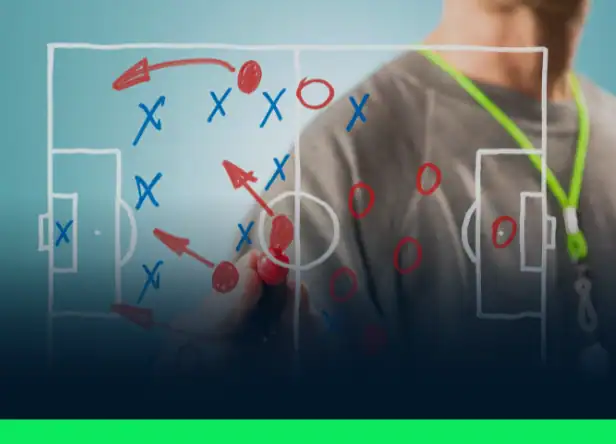
This is where soccer becomes a team sport in its truest sense. U13 players begin to grasp how individual movement affects teammates’ options and how defensive shape influences attacking opportunities. Concepts such as supporting the ball carrier, creating passing angles, transitioning from defense to attack, maintaining width, and defensive positioning start to crystallize.
Players also develop positional awareness—understanding that a fullback has different responsibilities than a central midfielder, and that their runs and movements must align with their team’s tactical structure. Small-sided games become invaluable teaching tools because they allow coaches to isolate specific tactical scenarios and reinforce decision-making repeatedly.
3. Strengthen Motor Skills and Physical Capacity
Coordination, change of direction, acceleration, reaction time, and sport-specific endurance continue developing rapidly at this age. Training should incorporate varied movement patterns—lateral movements, backward running, explosive changes of direction, and multi-directional agility work—rather than repetitive, single-plane exercises.
Players also benefit from developing understanding of their own body awareness, including balance, coordination, and spatial orientation. This foundational athleticism supports long-term performance and injury prevention.
The U13 Coach’s Essential Role
Coaching U13 players requires a sophisticated blend of technical expertise, emotional intelligence, and organizational skill. The coach serves simultaneously as a technical guide, a motivational mentor, and a structural organizer.
Young players at this age are highly attuned to consistency and fairness. They respond positively to coaches who explain the “why” behind instructions, demonstrate new concepts visually, and recognize individual progress genuinely. A coach might say, “When you receive the ball on the flank, your first touch should take you upfield—this creates space to make a decision” rather than simply, “First touch forward.”
Effective U13 coaches also cultivate peer communication. They encourage players to verbally guide each other—calling for the ball, providing positional reminders, and offering encouragement. This communication layer transforms soccer from an individual execution sport into a truly collective experience, deepening understanding and building team cohesion.
How to Organize a U13 Training Session?
A well-organized training session follows a logical progression that players can understand intuitively. Here’s a proven framework:
- Dynamic Warm-Up (8–10 minutes): Begin with movement-based activation that elevates heart rate while introducing technical elements.
- Technical Development Phase (15–20 minutes): Present a focused technical skill or pattern in a relatively controlled setting, gradually increasing complexity.
- Small-Sided Game with Tactical Emphasis (15–20 minutes): Apply the technical focus within a game context, using modified rules or constraints to highlight specific tactical objectives.
- Match-Realistic Format (15–20 minutes): Transition to 11-v-11 or game-specific scenarios that mirror match demands.
- Cool-Down and Reflection (5 minutes): End with low-intensity movement and brief feedback on session objectives.
At this age, players respond enthusiastically to exercises demanding speed of execution. The ball should move quickly, encourage off-the-ball movement, and maintain high intensity—factors that naturally engage young athletes and prevent the attention drift that occurs during overly passive exercises.
What Drills Are Suitable for U13?
As with every age group, the success of a training session depends on the situations that are proposed.
For coaches who want to go further, our dedicated page brings together a wide range of U13 drills, including technical workshops, small-sided games, transition formats, and complete sessions adapted to their needs. These resources make it possible to vary content while maintaining pedagogical consistency.
Rather than multiplying complex situations, the objective is to select a few well-designed drills, run them with precision, and help players understand what is being improved. This approach avoids falling into routine and helps keep all players engaged, including the more reserved ones.
Practical Coaching Strategies for U13 Success
Use Visual Demonstration
Young players at this age learn exceptionally well through demonstration. Show the desired movement, technique, or tactical shape rather than describing it verbally.
Emphasize Key Game Intentions
Reinforce simple, actionable principles repeatedly—move to support the ball carrier, protect possession under pressure, play at the appropriate tempo, transition quickly from defense to attack.
Create Psychological Safety
Players improve fastest when they feel confident attempting new skills without fear of harsh criticism. Mistakes should be reframed as learning opportunities.
Ensure Inclusive Environment
Not all U13 players progress at the same rate. Vary drill complexity and provide multiple entry points so every player feels appropriately challenged.
Celebrate Effort and Improvement
Recognize progress explicitly, especially improvements in decision-making, positioning, and effort—not just technical execution.
U13 Soccer: Key Takeaways
U13 soccer marks a decisive shift toward competitive organized play. Players encounter expanded field dimensions, tactical complexity, and increased intensity. Coaches who understand these demands—and who provide clear instruction, consistent encouragement, and varied, purposeful training—position their players for continued development and long-term success in the sport.
By investing thoughtfully in this transitional phase, coaches lay the groundwork for confident, technically skilled, tactically aware players ready for the demands of U14, U15, and beyond.