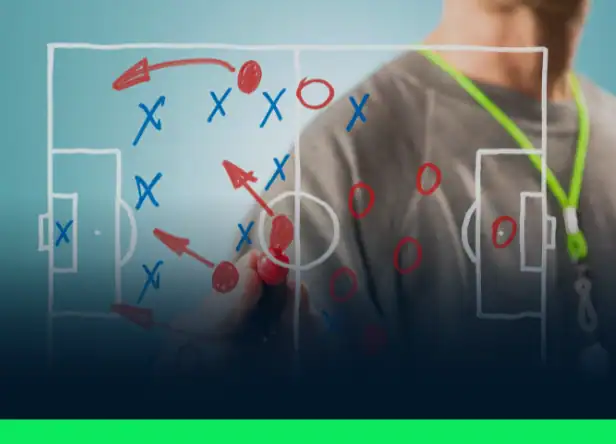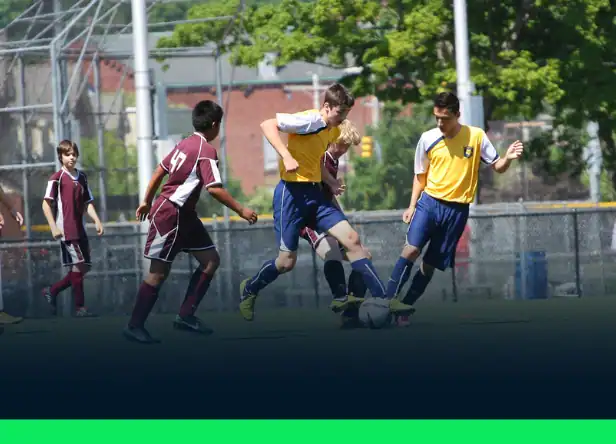
Understanding the U8 Player’s Development Stage
At eight years old, young players enter the U8 age group—a critical transitional phase in their development. They move beyond the basic discovery and free-play phase that characterizes U6 and U7 training and enter a more structured, skill-focused stage of learning. During this developmental window, their motor skills become noticeably more refined, their coordination improves significantly, and their desire to “play together” gradually emerges as a natural progression.
As a coach, your role is to thoughtfully guide each child’s evolution from the simpler U6 and U7 drills to more challenging U8 exercises that match their developmental capacities and cognitive abilities. These new training sessions must be simultaneously stimulating, varied, and thoroughly playful—striking a delicate balance between education and entertainment. The overarching goal remains constant: keep learning through play, but with increasingly precise technical execution and deliberate team-based objectives.
By naturally following the player’s growth trajectory and physical changes, you’ll create sessions that feel engaging rather than monotonous, and progressive rather than repetitive.
Why Structuring a U8 Soccer Session Matters
Organizing a well-structured U8 training session is fundamentally about balancing fun with purposeful learning. At this age, children can sustain focus for longer periods and handle consecutive 10- to 15-minute drill segments without losing interest. Proper session structure allows you to gradually introduce tactical concepts such as field positioning, supporting teammates, and cooperative play.
A well-designed U8 session typically includes three essential stages: a dynamic warm-up that incorporates the ball from the start, a phase of individual or small-group technical drills targeting specific skills, and a controlled small-sided game where players apply newly acquired concepts in a game-realistic setting. This framework provides children with clear reference points and learning objectives while maintaining the freedom to play creatively and experiment with their developing skills.
The structure itself becomes a teaching tool, helping young players understand that soccer involves both individual responsibility and team coordination.
The specific Developmental needs of U8 players
U8 players exhibit noticeable gains in motor confidence: they run with improved efficiency, control their movements with greater precision, and begin to anticipate opponents’ and teammates’ actions. Mentally and socially, they start genuinely understanding the concept of being part of a team and demonstrate significantly improved attentiveness to coaching instruction. This represents a critical developmental window to introduce the foundations of team play without restricting individual technical creativity or self-expression.
The coaching environment should nurture both the developing player and the developing teammate. During U8 training, you must therefore create varied training situations that simultaneously stimulate technical skill, develop coordination, and build information-processing abilities. Ball-oriented games, individual challenges, competitive relays, and skill-testing activities remain essential to maintain high motivation and engagement throughout the session.
This variety prevents training from becoming monotonous and keeps players eager to return to practice.
Core Training Objectives for U8 Soccer Players
A U8 soccer drill aims to develop several skills at once:
- Ball mastery: dribbling, passing, controlling
- Team play: understanding teammates’ movements and adapting choices
- Information processing: keeping the head up and observing before acting
- Team spirit: learning to cooperate, share the ball, and reposition
By integrating these elements gradually, young players build strong foundations that support future progression.
U8 Technical Drills: Building Fundamental Skills
Before addressing team games, it’s important to strengthen technical fundamentals. These workshops improve precision and coordination while keeping the fun factor high.
Drill 1: Directional dribbling with Field Awareness

The objective is teaching players to guide the ball accurately while maintaining head awareness and peripheral vision. Set up several parallel dribbling lanes using cones spaced 10-15 yards apart. Each player dribbles through the lane, executing direction changes at every verbal or visual signal from the coach.Incorporate variations to increase difficulty and l at maximum speed for the final five meters of each run. This progression builds confidence while reinforcing the critical habit of keeping one’s head up during ball movement. This foundational drill helps players control the ball while moving dynamically and simultaneously builds spatial awareness of their surroundings—an essential component of soccer intelligence.
Drill 2: Passing and receiving on the move

Working in pairs positioned 5–8 meters apart, players exchange passes, beginning at a walking pace, then progressing to a jogging pace. The receiving player must control the ball within one or two touches before passing again with proper weight and timing. Once the pair achieves good coordination, add a lateral movement requirement after each pass—the passer moves perpendicular to the passing lane to encourage mobility and on-field communication.
The emphasis throughout should remain on contact quality and passing accuracy rather than power. Young players often kick harder rather than more accurately, so reinforce the principle that effective passing values placement over force. This drill builds both technical competency and the spatial intelligence required for team play.
U8 Small-Sided Games: Introducing Structured Team Play
At U8, children begin genuinely understanding the concept of a shared objective and team responsibility. This developmental stage represents the ideal moment to introduce small-sided games where every player possesses a defined role and meaningful involvement.
Game 1: 3v3 Possession with Target Zones

Divide the field into three vertical lanes, with each team of three assigned to their lane. The objective requires teams to move the ball forward through possession to advance into the opponent’s zone while maintaining possession (avoiding turnovers). Players must actively move into open spaces, create passing angles for teammates, and reposition dynamically based on ball location—principles that transfer directly to larger-sided games.
This format naturally encourages verbal communication between teammates and forces constant decision-making: Should I pass? Can I maintain possession? Is this the moment to advance? Every decision becomes a tactical learning moment, and the constraint of lanes helps younger players understand positional responsibilities without overwhelming cognitive demands.
Game 2: Relay-Pass Competition

Organize two competing teams in a relay format: the first player executes a pass to the next teammate, then sprints to the back of the line. The receiving player immediately passes to the next teammate, continuing the sequence. The tempo naturally creates pressure that demands technical precision while the competitive relay format generates excitement and high engagement.
Add strategic variations such as requiring lofted passes, directional control touches before passing, or small target goals positioned behind each line to increase difficulty and technical challenge. This game format builds passing accuracy under pressure while reinforcing team chemistry and collective accountability.
Learning to collaborate: Developing Team Chemistry and Positive Culture
Team dynamics become central in U8, unlike in U6 and U7. Children begin realizing they improve together, not just individually. The coach’s role is to encourage positive communication and supportive behaviors.
U8: Kindness and positivity
Instead of punishing mistakes, reward good intentions: attempting a pass, making a run, or trying a defensive effort. These moments build confidence and encourage learning through joy.
Effective U8 Coaching Principles
Coaching U8 players demands energy, genuine kindness, and communication carefully calibrated to their developmental stage. Children at this age learn most effectively by observing demonstrations and attempting movements themselves. Your role extends beyond delivering instructions to creating an environment where every player progresses at their individual pace while remaining engaged and confident.
Throughout each session, alternate between dynamic, high-intensity moments and slightly calmer segments to maintain focus and prevent mental fatigue. Encourage exploration and problem-solving by allowing players to discover solutions independently, even if movements appear imperfect initially—this approach develops genuine game understanding rather than rote execution.
Employ visual and demonstrative coaching methods consistently. Young players retain demonstrated movements far better than lengthy verbal explanations. Progress emerges through consistent repetition: revisiting fundamental techniques frequently helps establish proper habits naturally and sustainably. Remember that simplicity consistently outweighs complexity at this developmental level.
Example of a 4-week U8 program
To help coaches, here is a simple, progressive monthly plan to structure learning while keeping variety and fun:
| Week | Main Theme | Technical Objective | Game Format |
|---|---|---|---|
| 1 | Ball mastery | Dribbling, direction changes | Motor course + free dribbling game |
| 2 | Passing & receiving | Contact quality and control | Pair workshops + 3v3 mini-games |
| 3 | Cooperation & communication | Finding an open partner | Zone games + relay-pass |
| 4 | Simplified team play | Understanding ball circulation | 3v3 matches with cues (space, passes, goals) |
This type of plan allows every player to progress at their own pace while following a coherent learning structure.
Conclusion: Building Tomorrow’s Confident Players
At eight years old, every session is an opportunity to learn through play. U8 drills should not target immediate performance outcomes—unlike adult soccer training—but instead focus on establishing comprehensive technical, motor skill, and interpersonal foundations.
Supportive coaching practices, strategically varied training situations, and a genuinely positive team atmosphere are key to igniting each young player’s desire to continuously improve. These foundations, constructed deliberately through joy and curious exploration, shape tomorrow’s players—technically confident, psychologically resilient, and capable of thinking about the game with growing tactical sophistication.ng the young player. For U8 children, soccer is above all about learning together, enjoying the game, and growing in a positive atmosphere.