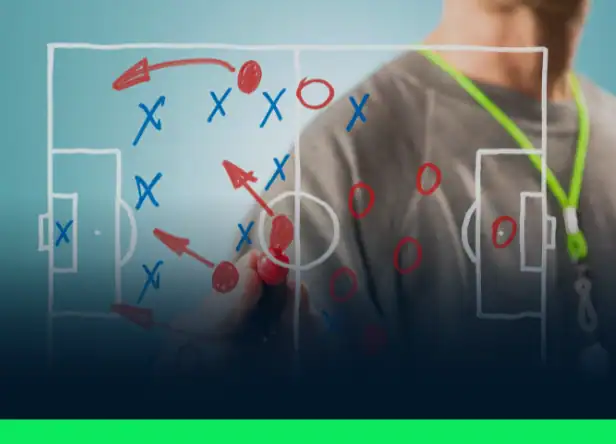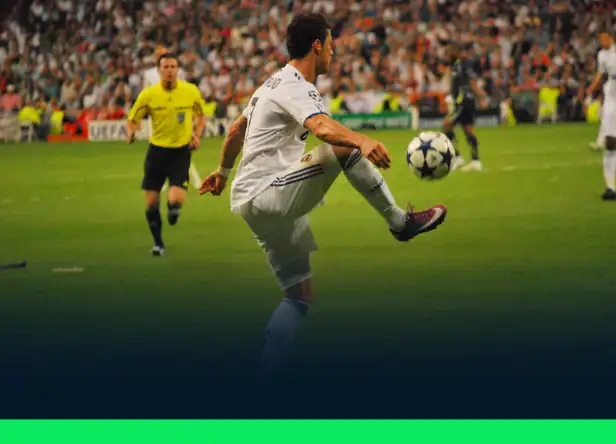
The evolution of tactical systems in modern soccer has fundamentally transformed the roles and responsibilities of players across the pitch. Among these tactical innovations, one position has emerged as increasingly vital to contemporary soccer: the offensive full-back, more commonly known as the wing-back. This hybrid role—combining the defensive discipline of a traditional full-back with the attacking instincts of a winger—has become a cornerstone element in shaping team identity, tactical flexibility, and match-day strategies. Wing-backs are now considered complete soccer players who can single-handedly define the tempo, width, and overall effectiveness of their side’s performance.
What Is a Wing-Back in Soccer?
A wing-back is awide defensive player who operates along the flanks of the pitch, functioning as a dynamic wide midfielder with comprehensive responsibilities in both defensive and attacking phases. They are predominantly deployed in formations featuring three central defenders or five-man defensive lines, where they seamlessly blend the duties of traditional full-backs with those of orthodox wingers. The primary objective of a wing-back is to provide consistent coverage along the entire touchline, contributing actively to both defensive recovery runs and offensive build-up play.
This demanding role requires constant involvement in both phases:
- Defensively, wing-backs must execute rapid recovery runs, close down dangerous spaces, intercept passing lanes, and help establish a compact defensive shape when the team is out of possession. They serve as the first line of defensive pressure against opposing wingers and attacking full-backs.
- Offensively, they are expected to push high up the pitch, stretch opposition defensive lines by providing natural width, deliver accurate crosses into the penalty area, and offer consistent passing options for teammates during build-up sequences. Their attacking contributions often include overlapping runs, underlapping movements, and direct involvement in chance creation.
Understanding the Wing-Back’s Game
The main challenge of playing as a wing-back lies in positioning and timing. A player must constantly decide when to push forward to support the attack and when to drop back to defend and cover open spaces.
If used incorrectly or without proper tactical discipline, wing-backs can leave their teams dangerously exposed to counter-attacks and exploitation of wide areas—which is precisely why coaches must meticulously integrate them into match preparations and ensure clear communication of positional responsibilities before fixtures.
What Does a Wing-Back Do?
The wing-back has multiple responsibilities during a match, each demanding a sophisticated blend of technical ability, tactical awareness, and physical conditioning.
Offensive Duties:
- Make themselves consistently available as passing outlets during build-up play
- Contribute meaningfully to the team’s progression through the thirds
- Engage in one-versus-one situations with opposing defenders
- Create dangerous goal-scoring opportunities through crosses, cut-backs, and overlapping runs
- Provide support for central midfielders and forwards in the final third
- Execute underlapping runs to create overloads in central areas
Defensive Duties:
- Cut off passing lanes to prevent opposition build-up
- Intercept counter-attacking movements before they develop
- Contain and pressure opposing wingers and attacking full-backs
- Close down exploitable spaces on the flanks
- Track back rapidly during defensive transitions
- Support the back three in forming a compact five-man defensive line
To achieve consistent success, wing-backs must master both defensive and offensive aspects of the game—maintaining tactical balance between attack and defense—while making instantaneous decisions regarding positioning, movement timing, and spatial awareness.
The Ideal Wing-Back Profile
A successful wing-back must combine physical endurance with technical skill. They need to be comfortable performing defensive actions (duels, positional awareness, anticipation) while equally adept at offensive contributions (dribbling ability, crossing accuracy, combination play).
The ideal player for this position is demonstrates:
- Explosive pace and acceleration to cover ground quickly in both directions
- Exceptional stamina and physical durability to maintain high-intensity output
- Ability to repeat demanding sprint efforts continuously throughout 90 minutes
- Technical security under pressure in tight spaces
- Tactical intelligence to read game situations effectively
Because of their versatility, many central midfielders successfully transition into wing-back roles—and it’s commonplace to observe players alternating between wide midfield and wing-back positions throughout their professional careers.
The Best Formations for Using Wing-Backs
Wing-backs fit perfectly into three-defender systems, where the width of the field must be covered without sacrificing defensive solidity. Here are the tactical formations that best utilize this position:
3-4-3 Formation
In a 3-4-3 tactical setup, wing-backs function as extremely advanced wide midfielders. They receive instructions to create numerical overloads on the flanks through repeated attacking runs while maintaining the discipline to track back defensively when possession is surrendered.
3-5-2 Formation
Within a 3-5-2 system, wing-backs adopt a more balanced role, constantly alternating between offensive and defensive phases. They facilitate the team’s transformation from a three-man defensive line into a five-man defensive block depending on the match phase and ball position.
3-4-1-2 Formation
In a 3-4-1-2, the central area is heavily occupied by midfielders, the attacking midfielder, and two strikers. This allows wing-backs to stretch the field horizontally and force the opponent to spread their defensive lines.
These systems all rely on wing-backs to provide width, maintain defensive balance, and offer tactical flexibility — essential traits for sustaining pressure and controlling transitions.
Why the Wing-Back Is One of the Most In-Demand Positions in Soccer
The wing-back has become one of the most sought-after positions in soccer for several compelling reasons.
1. Versatility
Wing-backs represent extremely adaptable strategic assets for coaches. They can seamlessly be redeployed as traditional right-backs, left-backs, wide midfielders, or even central midfielders when tactical adjustments are required. This positional flexibility makes them highly attractive in the transfer market.
2. Rarity
Because of their dual responsibilities, few players possess the stamina, physical strength, and technical skill required for the role. Those capable of performing effectively in both defensive and offensive phases are scarce—and consequently valuable.
3. Transfer Market Evolution
The growing importance of wing-backs has driven up their market value. Players like Achraf Hakimi or João Cancelo have witnessed their transfer values rise substantially in recent years due to their exceptional ability to dominate both ends of the pitch.
The Evolution of the Wing-Back Role
While not an entirely novel concept, the wing-back role has undergone significant evolution throughout soccer history. During the 1990s, the playing style of traditional full-backs began transforming—largely attributable to legendary Brazilian defenders Roberto Carlos and Cafu, who revolutionized how wide defenders approached attacking phases.
These pioneering players championed the concept of the offensive full-back. Their relentless overlapping runs, attacking involvement, and direct contributions to goals introduced a new era for wide defensive players—a position historically viewed as purely defensive in nature.
Throughout subsequent years, coaches adapted their tactical philosophies to maximize these player profiles, popularizing formations such as the 3-5-2, which gained widespread adoption during the late 2010s and early 2020s.
The term “wing-back” specifically represents this offensive evolution—describing players who transcend traditional defensive responsibilities to become complete athletes capable of influencing every phase of play.

The Best Wing-Backs in the World
In soccer, wing-backs play a decisive role in tactical systems — their performances often determine a team’s success. Here are some of the top current players in this position:
| Name | Club | Key Strengths |
|---|---|---|
| Alphonso Davies | Bayern Munich | Speed, dribbling, endurance |
| Achraf Hakimi | Paris Saint-Germain | Versatility, accurate crosses |
| Reece James | Chelsea | Power, anticipation |
| Theo Hernández | AC Milan | Offensive runs, attacking energy |
| Trent Alexander-Arnold | Liverpool | Crossing quality, vision and playmaking |
Fun Facts & Common Questions
What Number Does a Wing-Back Usually Wear?
The wing-back doesn’t have a fixed number since it’s not a traditional position. Depending on the team’s system, they might wear 2 or 3 (for defensive orientation) or 7 or 11 (for offensive orientation). The number typically depends on the coach’s system and the player’s tactical role.
How Do Wing-Backs Differ from Traditional Full-Backs?
Traditional full-backs operate within four-defender systems and prioritize defensive responsibilities, whereas wing-backs function in three-defender formations with greater attacking freedom and advanced positioning. Wing-backs are expected to cover significantly more ground and contribute more substantially to offensive phases than their full-back counterparts.
The Wing-Back Position — In Summary
Once perceived merely as an extension of the conventional full-back, the wing-back has evolved into a foundational pillar of modern soccer. It demands exceptional technical skill, remarkable athleticism, and sophisticated tactical flexibility, establishing it as one of the most complete and physically demanding roles on the pitch.
Wing-backs are indispensable components in three-defender systems such as the 3-5-2 or 3-4-3, where they supply both width and structural balance—offering teams the optimal combination of creativity, defensive organization, and match-controlling intensity. As tactical evolution continues shaping the modern game, the wing-back position will undoubtedly remain central to how elite teams construct their playing identities and pursue competitive success.