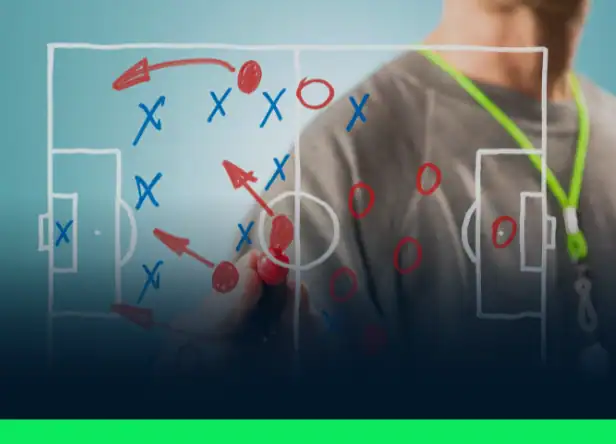
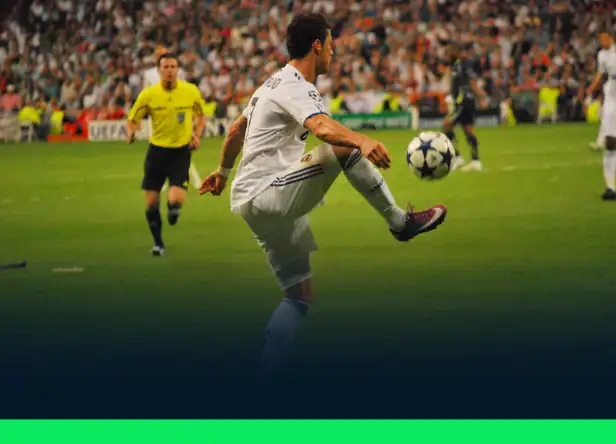
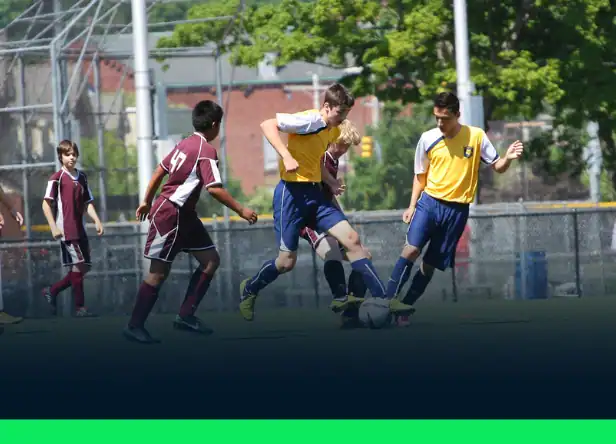
The winger position is often occupied by the most “spectacular” players, known for their technical skills. Some of the biggest names in soccer—such as Ronaldinho, Lionel Messi, and Cristiano Ronaldo—have left their mark on this position. As a video analyst or coach, it’s essential to understand the nuances of players who operate on the flanks and their impact on a team’s attacking dynamics.
Ready? Let’s dive into the evolving role of the winger, the key attributes required to excel, and tactical developments that define this dynamic position.
What Is a Winger in Soccer?

Wingers are attack-minded players, stationed primarily on the flanks. Their presence on the wide channels is pivotal to offensive phases, serving as creative catalysts who can dictate the tempo of matches. A winger’s main job is to stretch the opposition’s defensive block, opening exploitable spaces for teammates in central areas. Based on tactical demands or their individual qualities, wingers may attack the outside to cross, accelerate in 1v1s, or cut inside on their stronger foot to shoot at goal.
Fundamental to providing width and penetration, wingers blend pace, technique, and tactical intelligence, crucial for adapting to various defensive setups. Recent tactical shifts have transformed wingers from mere providers to vital goal-scoring threats.
Positioning and Role of the Winger
Coaches usually place wingers along the touchline, where they use their technical arsenal to take on defenders in 1v1 duels. They advance down the wide channels with the ball before crossing into the box or shooting when in a favorable position.
Their job is not limited to attacking—they also contribute defensively by supporting the fullbacks. Wingers track back to cover opposition runs, ensuring the team maintains tactical balance.
Positioning and Role of the Modern Winger
Coaches usually deploy wingers along the touchlines, maximizing their ability to take on defenders one-on-one. Wingers advance down wide channels, looking for the opportunity to cross or to cut in for a shot. Their defensive contributions are also critical: the modern winger supports the fullback, tracking back to contain opposition runs and preserve tactical balance.
In contemporary systems—especially the 4-3-3 or 4-2-3-1—wingers are expected to fluidly transition across zones, exploit half-spaces, overload central areas, and sprint behind defensive lines. This versatility makes wingers indispensable in high-intensity attack and defense.
What Are the Key Qualities of a Winger?
Within a team, the winger plays a decisive role in creating chances—whether through movement or ball control. They must dribble under pressure, make quick decisions, and stay effective in different phases of play. Here are the core attributes:
- Explosive Pace: Lightning acceleration is essential for beating fullbacks or making decisive runs on the counter.
- Advanced Dribbling: Wingers face constant defensive duels; elite dribbling under pressure is essential. This includes rapid direction changes and close control.
- Tactical Vision: Reading teammate movement and anticipating defensive reactions enable intelligent playmaking.
- Crossing & Passing Precision: Delivering accurate balls into the box is vital for goal creation.
- Physical Endurance: Wingers cover massive distances and must repeat sprints, requiring top-level fitness.
- Tactical Adaptability: Modern systems demand wingers cut inside, defend, and adjust to multiple roles.
- Finishing Ability: Top wingers consistently contribute goals, requiring composure in varied shooting scenarios.
The Evolution of Winger Roles
The way coaches use wingers has evolved over time and continues to adapt to different tactical systems. Depending on the approach chosen, a winger may take on various roles on the pitch, influencing both their positioning and responsibilities within the team.
The Traditional Winger
Historically, wingers would stay wide, aiming to beat opponents with speed or trickery, before delivering crosses for strikers. Traditionally, right-footed players played right wing and left-footers played left. Their focus lay in width and delivery rather than direct scoring.
The Inverted Winger
Modern coaches now favor inverted wingers (left-footed on right, vice versa). These players create overloads by cutting inside, offering greater scoring threat from central positions while allowing overlapping fullbacks to maintain width. Inverted wingers disrupt defensive structure with varied movement.
Creative Wide Playmaker
In possession-oriented systems, wingers operate as wide playmakers, drifting inside to aid buildup. Rather than strictly providing width, they facilitate combination play and maintain control over the ball, often acting as secondary attacking midfielders.
What’s the Difference Between a Striker and a Winger? Tactical Comparison
Both strikers and wingers have offensive responsibilities, and some players (like Cristiano Ronaldo) have excelled in both roles. However, their positioning, responsibilities, and required qualities differ.
Position on the Pitch
- Striker – Central, operating inside and around the penalty area as a finisher.
- Winger – Wide areas, operating on flanks with diagonal runs or crosses.
| Criteria | Striker | Winger |
|---|---|---|
| Position | Central axis | Flanks |
| Zone of action | Penalty area and nearby spaces | Wide channels, sometimes cutting inside |
| Main movements | Runs in behind, holding play, finishing | Wide dribbles, crosses, diagonal runs |
Main Responsibilities
- Striker – Finish chances, hold up the ball, and stay positioned as the main scoring threat.
- Winger – Use speed to stretch defenses, provide crosses, and cut inside for shots. Also supports defensive tracking.
Required Qualities
The qualities required for a striker and a winger are not the same. For a striker’s profile, coaches generally look for a player with excellent offensive positioning and strong finishing ability. Wingers, on the other hand, are expected to be fast, skillful dribblers with well-developed vision.
Here’s a table highlighting the key skills specific to each position:
| Criteria | Striker | Winger |
|---|---|---|
| Speed | Useful but not essential | Crucial to beat defenders |
| Dribbling | Occasional | Fundamental |
| Finishing | Primary quality | Important, but secondary to passing/crossing |
| Vision | Focused on runs/finishing | Anticipates teammate movement for passing |
| Defensive work | Often limited | Helps cover opposition fullbacks |
Best Wingers in MLS
1. Lionel Messi (Inter Miami)

The Argentine legend, with eight Ballon d’Or titles, continues to shine in MLS thanks to his vision, technical precision, and ability to score decisive goals.
Lionel Messi – MLS Record (march 2026)
| Team | Matches | Goals | Assists | Subbed in | Subbed out | Yellow | Red |
|---|---|---|---|---|---|---|---|
| Inter Miami | 65 | 60 | 36 | 9 | 14 | 4 | 0 |
2. Denis Bouanga (Los Angeles FC)
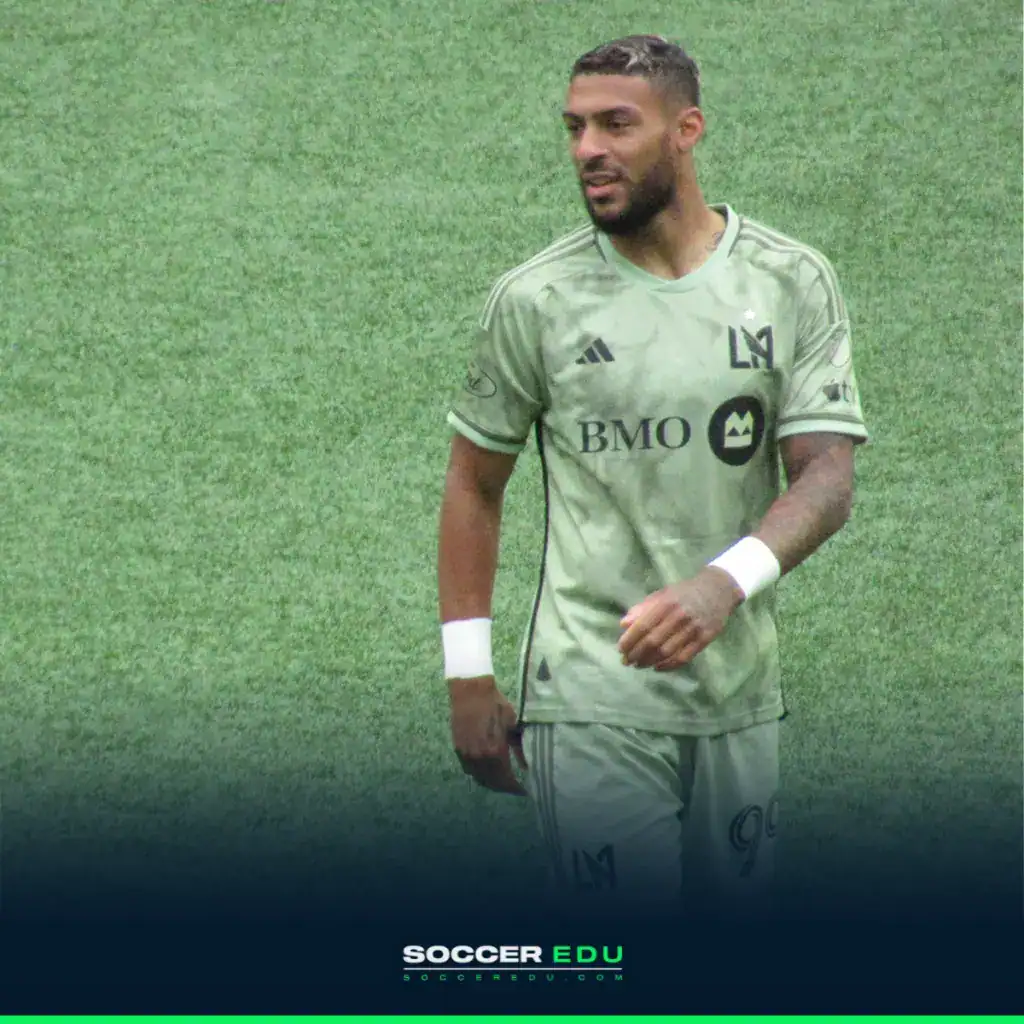
The Gabon international has become one of MLS’s most prolific attackers, combining speed, dribbling, and finishing.
Denis Bouanga – MLS Record (march 2026)
| Team | Matches | Goals | Assists | Subbed in | Subbed out | Yellow | Red |
|---|---|---|---|---|---|---|---|
| LAFC | 114 | 79 | 29 | 20 | 41 | 15 | 1 |
3. Hirving “Chucky” Lozano (San Diego FC)
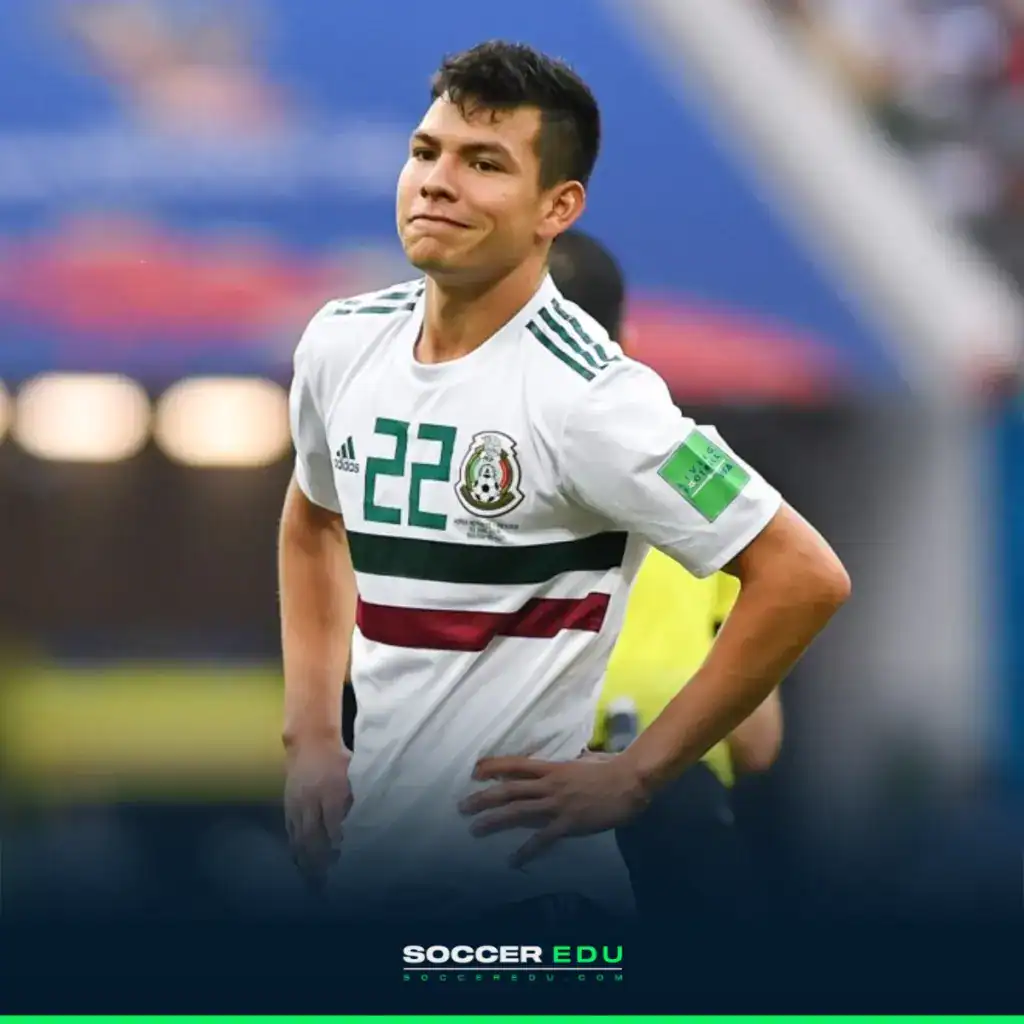
Recently signed by San Diego FC, Lozano has already impressed with his acceleration, dribbling, and offensive threat.
Hirving Lozano – MLS Record (march 2026)
| Team | Matches | Goals | Assists | Subbed in | Subbed out | Yellow | Red |
|---|---|---|---|---|---|---|---|
| San Diego FC | 31 | 11 | 9 | 6 | 13 | 3 | 0 |
Best Wingers in the World
Like any player debate, this is subjective. But based on stats, performances, and impact, here are three current standout wingers:
1. Mohamed Salah (Liverpool & Egypt)

Renowned for his speed, technique, and cutting inside to score. What sets Salah apart is his elite finishing.
Mohamed Salah – Career Record (march 2026)
| Team | Matches | Goals | Assists | Subbed in | Subbed out | Yellow | Red |
|---|---|---|---|---|---|---|---|
| Liverpool | 433 | 309 | 108 | 93 | 122 | 14 | 1 |
| Roma | 81 | 34 | 18 | 7 | 36 | 3 | 1 |
| Fiorentina | 16 | 6 | 3 | 6 | 7 | 0 | 0 |
| Chelsea | 13 | 2 | 0 | 7 | 4 | 1 | 0 |
| Egypt | 118 | 92 | 25 | 52 | 21 | 8 | 0 |
2. Raphinha (FC Barcelona & Brazil)

The Brazilian excels at destabilizing defenders with skill moves and has become a key provider of assists with his crossing ability.
Raphinha – Career Record (march 2026)
| Team | Matches | Goals | Assists | Subbed in | Subbed out | Yellow | Red |
|---|---|---|---|---|---|---|---|
| Barcelona | 167 | 62 | 48 | 36 | 79 | 24 | 1 |
| Leeds | 65 | 17 | 12 | 7 | 14 | 10 | 0 |
| Rennes | 32 | 6 | 4 | 5 | 12 | 7 | 0 |
| Sporting | 32 | 7 | 2 | 10 | 8 | 9 | 0 |
| Vitória SC | 71 | 19 | 8 | 20 | 21 | 7 | 0 |
| Brazil | 35 | 10 | 6 | 3 | 18 | 7 | 0 |
3. Vinícius Júnior (Real Madrid & Brazil)

One of Real Madrid’s biggest stars, Vinícius combines elite dribbling with speed and improved finishing, making him a constant threat.
Vinícius Júnior – Career Record (march 2026)
| Team | Matches | Goals | Assists | Subbed in | Subbed out | Yellow | Red |
|---|---|---|---|---|---|---|---|
| Real Madrid | 362 | 119 | 83 | 75 | 135 | 71 | 4 |
| Flamengo | 50 | 11 | 4 | 31 | 12 | 7 | 0 |
| Brazil | 38 | 6 | 6 | 12 | 15 | 7 | 0 |