Passing is one of the most frequent actions in soccer, but also one of the hardest to master in real conditions. A successful pass isn’t just about sending the ball from point A to point B—it has to be accurate, well-weighted, and executed while moving, often under pressure.
Working on passing in motion helps improve the flow of play, reduce turnovers, and increase a team’s tempo of execution. In this article, we’ll share progressive passing drills you can use in training to develop the accuracy and quality of your players’ distribution.
Why Focus on Passing Drills in Motion?
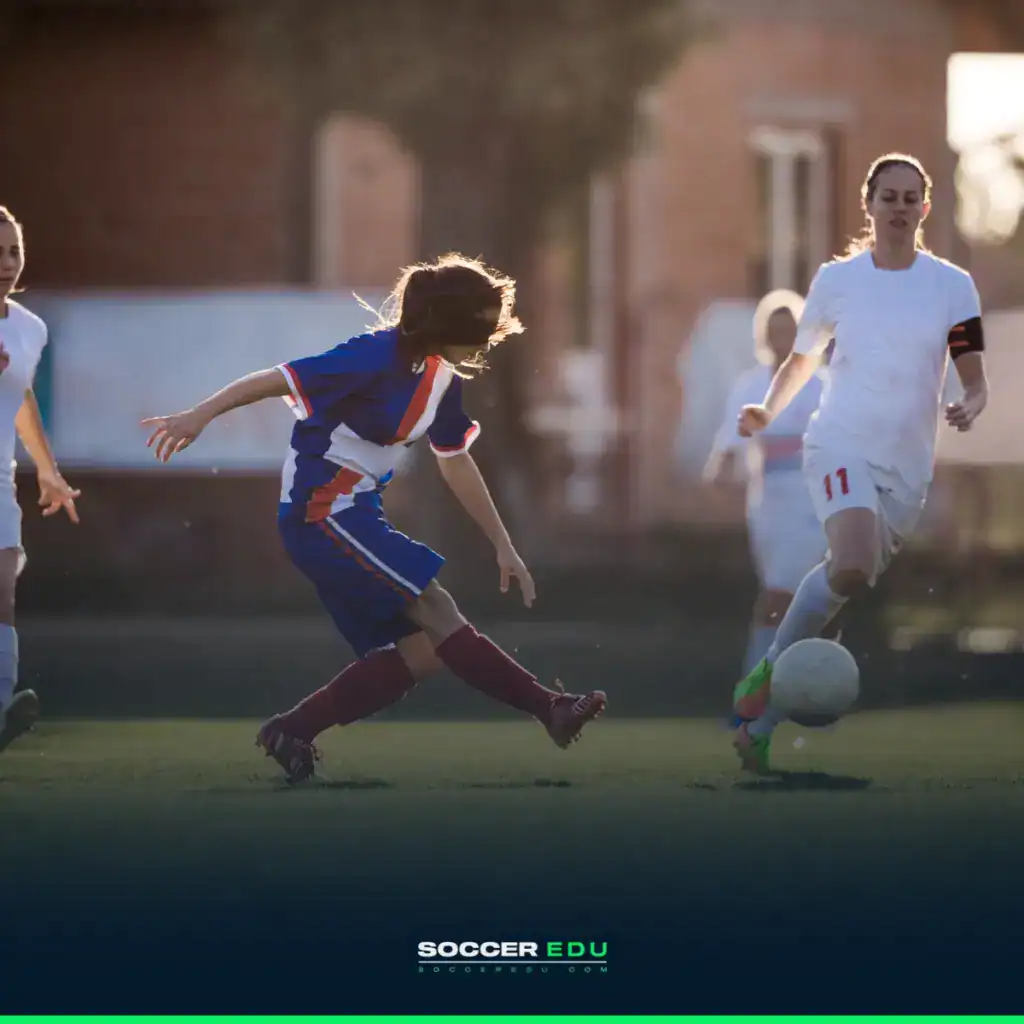
Static passing is useful for learning basic technique, but it doesn’t reflect the reality of a match, where players are running, changing direction, and dealing with defensive pressure. Passing on the run forces players to coordinate dribbling, scanning the field, and striking the ball with precision.
Benefits of Passing on the Move
Practicing passing while moving offers several key benefits for both players and teams.
First, it improves coordination between running and striking the ball, making execution smoother. Second, the tempo of play naturally increases thanks to quicker, sharper passing. Better weight on the pass also helps reduce turnovers and secure possession.
Finally, these drills develop vision, since players have to lift their heads and scan before releasing the ball.
Key Principles of Passing Drills in Soccer
To make training effective, four principles should guide your choice and setup of drills:
- Work in match-like conditions with movement, opposition, and time constraints.
- Emphasize repetition to engrain the technical action.
- Vary distances and angles to stimulate adaptability.
- Always include scanning and awareness before the pass.
Beginner Passing Drills: Control and Passing While Moving
These drills are ideal for beginners or players who want to review the basics of passing on the run.
Moving Passes in Pairs
Two players move side by side, about 5 meters apart, exchanging short passes along the ground. The goal is to keep a smooth rhythm while adjusting pass weight.
Variation: Require an oriented first touch before passing.
Coaching tip: emphasize communication to synchronize movement.
Dribble and Pass
The player dribbles about 10 meters, then makes an accurate pass to a teammate moving forward. This drill focuses on the transition from dribbling to distribution.
Variation: add a cone or obstacle to dribble around before the pass.
Intermediate Passing Drills: Tempo and Accuracy
These formats add more dynamism and constraints to simulate real match conditions.
Moving Triangle
Three players form a triangle and move together, keeping the shape while passing and moving. This drill works on accuracy under constant motion.
Variation: Limit touches to one per pass to increase tempo.
Pass and Crossover Run
Two players start face to face. After passing, the passer sprints to the opposite side and receives the ball again while running.
Objective: practice accuracy to a moving target and timing of the run.
Advanced Passing Drills: Decision-Making and Pressure
For advanced players, adding defenders or constraints increases the challenge and brings the drill closer to match reality.
Rondo Under Pressure
Two teams of 3–4 players play in a 20×20 yard square. The team in possession must complete 10 consecutive passes while moving to earn a point.
Objective: Accuracy, scanning, and managing defensive pressure.
Through Ball Behind the Defense
A midfielder receives the ball, drives forward, and must deliver a through pass to a striker making a run in behind.
Variation: Add a passive defender first, then an active one.
Example Training Session: Passing on the Move
Here’s a sample 65-minute session focused on passing in motion:
| Phase | Duration | Content |
|---|---|---|
| Technical Warm-Up | 10 min | Moving passes in pairs |
| Fundamentals | 15 min | Dribble and pass + oriented control |
| Dynamic Work | 20 min | Moving triangle, pass + crossover run |
| Small-Sided Game | 20 min | Passing under pressure 3v3 |
| Cool-Down | 5 min | Stretching and debrief |
Adapting Passing Drills by Age and Level
Like any technical work, passing drills must be adapted to player profiles to remain effective and motivating.
For U9–U11, the main goal is keeping the ball in play while moving. Drills should stay fun, with minimal constraints and short sequences to maintain focus. Formats like dribbling into a final pass or dribble-and-pass are ideal.
For U13–U15, coaches can add more coordination and accuracy demands—for example, requiring oriented control before passing or varying angles. Players also begin to better understand collective play, so simple patterns like the moving triangle can be introduced.
For U17 and senior players, training should closely reflect match conditions. Reduce space, increase tempo of execution, and introduce active defenders to work on decision-making and technical sharpness under pressure.
For adult beginners, start with drills without opposition, focusing on repetition and pass weight. Then gradually introduce constraints like limited touches or passive defenders to improve technique without causing frustration.
Tips to Progress Quickly
To improve passing accuracy, prioritize consistency over long, occasional sessions. Vary distances, angles, and tempos to stimulate adaptability. Recording drills can also help correct body posture, timing, and weight of the pass. Finally, always remember that passing is inseparable from movement—working on one without the other reduces effectiveness in real matches.
Additional Coaching Points for Enhanced Development
The Push Pass Technique
The inside-of-the-foot pass, also known as the push pass, represents the most fundamental passing technique. Position your non-kicking foot next to the ball, pointing towards your target, and strike through the middle of the ball with the inside of your foot. This technique provides the highest level of control and accuracy for short to medium-range passes.
Creating Passing Lanes
Players must constantly work to create and identify passing lanes. This involves quick positional adjustments, reading the game, and understanding when to check to the ball or when to make themselves available in space. The ability to scan before receiving is crucial for maintaining possession under pressure.
Communication and Support
Effective passing requires constant communication between teammates. Players should use verbal and visual cues to indicate where they want the ball played, whether they have time on the ball, or if pressure is approaching. Off-the-ball movement is equally important—creating angles of support and being ready to receive in various body positions.
Progressive Overload
As players become more comfortable with basic passing drills, coaches should progressively add complexity through:
- Reducing space to increase pressure
- Adding time constraints to improve decision-making speed
- Introducing multiple balls to work on quick transitions
- Varying the number of defenders to create different numerical situations
Passing on the Move in Soccer: Key Takeaways
Passing on the move is an essential skill for creating fluid play and keeping control over opponents. By regularly integrating these drills into your sessions, you’ll help players gain precision, tempo, and game intelligence. The key is to start simple, then progressively add tempo, pressure, and opposition to match real game conditions. Remember that effective passing combines technical execution with tactical awareness—players must understand not just how to pass, but when and where to pass to maintain possession and create attacking opportunities.