To reach elite performance levels, soccer players must develop comprehensive physical attributes—including functional strength, explosive power, and muscular endurance—through meticulously designed strength and conditioning programs.
Below, you’ll discover evidence-based weight training methodologies for soccer, essential muscle groups to target, and periodized programs tailored to specific playing positions and seasonal demands.
How to Build Functional Strength for Soccer
When developing strength for soccer, it’s essential to implement a sport-specific conditioning program that directly enhances on-field performance capabilities.
Unlike traditional bodybuilding approaches that primarily focus on muscle hypertrophy, soccer strength training emphasizes developing explosive power, acceleration, neuromuscular control, and match-specific endurance.
“I love pushing my body to its limits, it makes me feel good, alive.”
— Zlatan Ibrahimović
Is Weight Training Essential for Soccer Players?
Absolutely—strength training isn’t just beneficial for soccer players, it’s fundamental to modern professional performance.
Comprehensive strength and conditioning programs help players:
- Enhance functional strength: Critical for physical duels, aerial challenges, and explosive sprinting
- Minimize injury risk: Stronger, biomechanically balanced bodies demonstrate significantly reduced susceptibility to muscular and joint injuries
- Improve speed and explosiveness: Through compound movement patterns like squats and deadlifts that develop rate of force development
- Boost match endurance: Enabling players to maintain peak performance throughout 90-minute matches plus additional time
Elite professionals such as Cristiano Ronaldo, Adama Traoré, and Robert Lewandowski exemplify the importance of systematic strength training in their renowned conditioning regimens.
However, before implementing any resistance training protocol, understanding soccer-specific muscular demands is paramount.
Key Muscles Groups to Train for Soccer Performance
Soccer engages the entire kinetic chain, but certain muscle groups are particularly crucial for optimal performance.
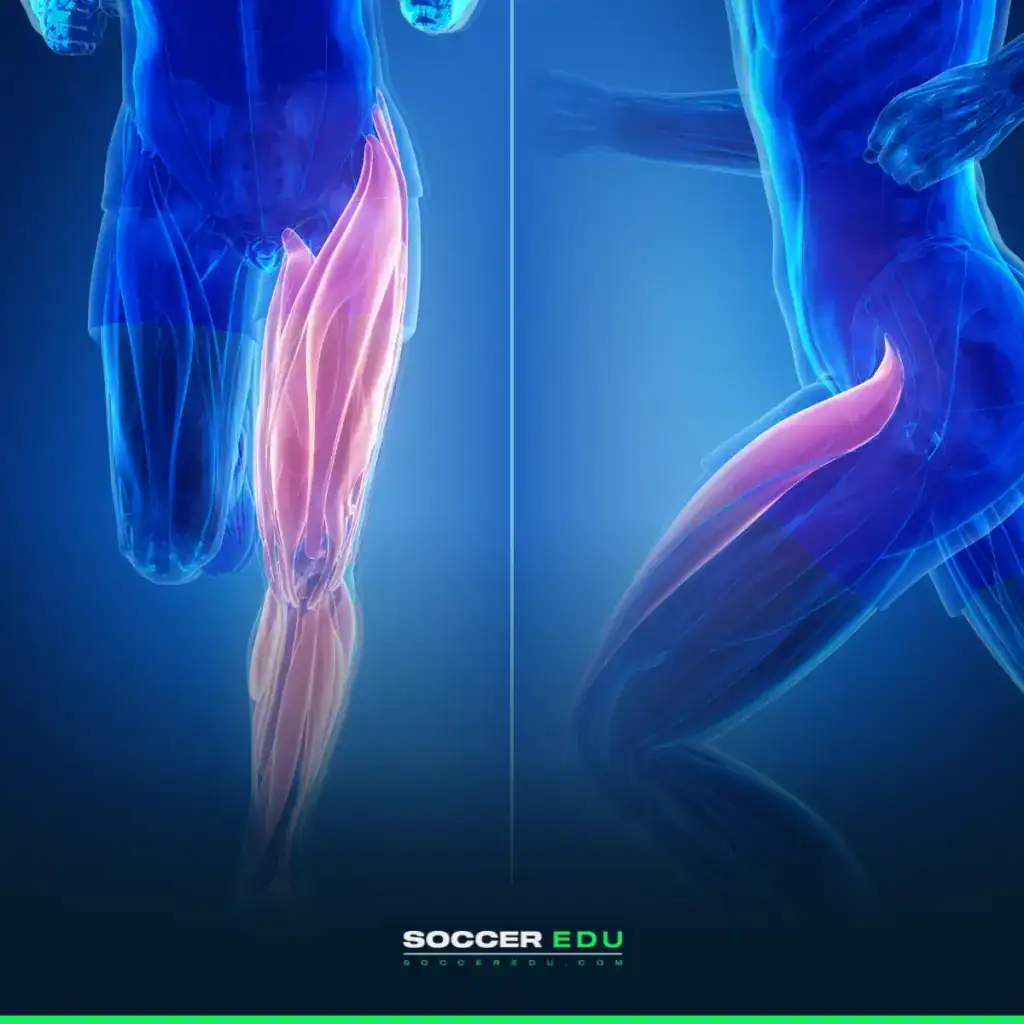
Essential Muscle Groups for Soccer Athletes Table below:
| Muscle Group | Role in Soccer |
|---|---|
| Quadriceps | Essential for shooting, sprinting, and jumping. |
| Hamstrings | Key for speed and injury prevention. |
| Calves | Crucial for acceleration and explosiveness. |
| Glutes | Important for running power and stability. |
| Core (Abs & Obliques) | Maintain core balance and body control. |
| Posterior Chain | Support upper body strength and shielding the ball. |
| Chest & Shoulders | Help in duels, aerial battles, and long passes. |
Training these muscle groups with balanced programming addresses soccer’s multidirectional demands while preventing muscular imbalances that increase injury susceptibility.
Depending on your playing position and seasonal periodization phase, your program should emphasize specific muscle groups and performance outcomes.
Periodized Soccer Strength Training Programs
Professional soccer strength programs must be individualized based on each player’s physical profile, positional requirements, and current training phase within the annual plan.
“Be disciplined. Staying motivated and sticking to your routine is essential. For me, there’s no room for complacency — I must stay strict.”
— Cristiano Ronaldo
Below are detailed examples of soccer weight training programs — including lower-body and upper-body routines, off-season and in-season schedules, and adaptations for each position.
Off-Season vs. In-Season Training Periodization

Off-Season Training Block (Preparation Phase)
The off-season represents optimal opportunity for maximal strength development and addressing physical imbalances identified during competitive analysis.
Example off-season microcycle:
- Strength sessions: 3–4 per week, focused on compound lifts (squats, deadlifts, bench press).
- Functional training: 2 per week, including stability and agility drills.
- Light cardio: running or fartlek training to maintain fitness without exhausting muscles.
- Recovery focus: rest days, stretching, and active recovery to prevent overtraining.
In-Season Training Block (Competition Phase)
During competitive periods, the primary objective is maintaining strength and power output while managing fatigue accumulation.
Example in-season microcycle:
- Maintenance lifting: 1–2 sessions weekly using moderate loads (70-85% 1RM) and reduced volume
- Soccer-specific movement preparation: Focus on reactive agility, balance challenges, and coordination drills
- Recovery protocols: Systematic stretching, soft tissue work, and mobility sessions following matches
- High-intensity, low-volume sessions: Preserve neuromuscular power and reactive capabilities
Lower-Body Strength Development Program
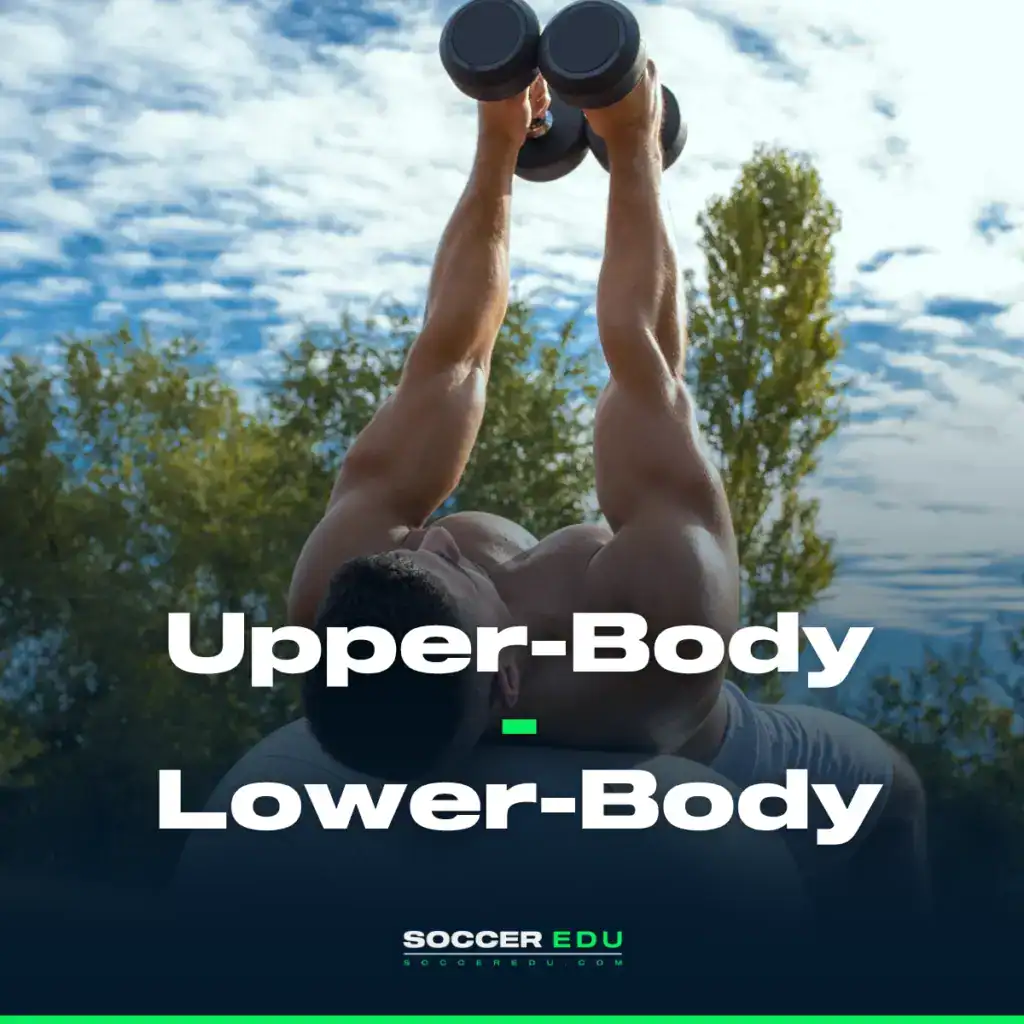
The lower extremities serve as the primary power generators for every soccer athlete. Proper leg training builds the strength foundation necessary for sprinting, jumping, cutting, and tackling movements.
Recommended exercises and protocols:
- Squats (bodyweight or barbell): 4 sets of 8–12 reps — build leg power.
- Forward & lateral lunges: 3 sets of 10 reps per leg — improve hip stability.
- Deadlifts Variations: 3 sets of 8–10 reps — strengthen the posterior chain.
- Calf raises: 4 sets of 15 reps — improve sprinting and jumping ability.
- Plyometrics (jumps, hops): 3 sets of 10 reps — enhance explosiveness.
Upper-Body Strength Development Program
Upper body conditioning cannot be overlooked in soccer development. It’s essential for physical balance, ball protection, and winning contested situations.
Recommended exercises and protocols:
- Bench press: 4 sets of 8–10 reps — strengthen chest and shoulders.
- Pull-ups: 3 sets of 8–12 reps — target back and biceps.
- Overhead press: 3 sets of 10 reps — improve shoulder stability.
- Core work (planks, side planks): 4 sets of 30 seconds — strengthen the midsection.
- Push-ups (variations): 3 sets of 12 reps — increase arm endurance.
Position-Specific Training Adaptations
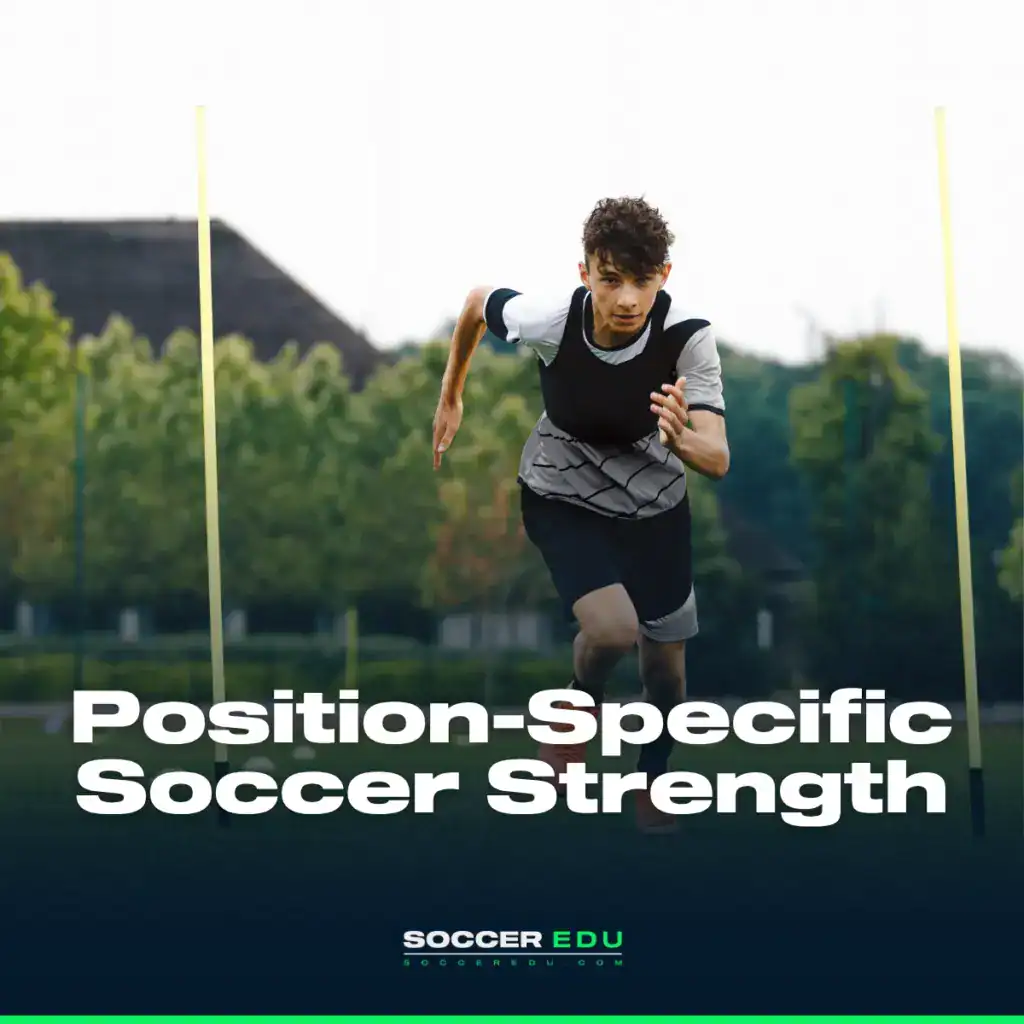
Every position on the pitch demands distinct physical characteristics and movement competencies.
Position-specific training focus:
Position-specific training focus:
- Forwards/Strikers: Emphasize explosive power for acceleration and shooting (jump squats, Olympic lift variations, sprint mechanics)
- Centre-backs: Prioritize strength and stability (heavy squats, deadlifts, core strengthening, aerial preparation)
- Midfielders: Balance strength, endurance, and multi-directional agility (functional total-body training combining strength and conditioning elements)
- Full-backs: Combine lateral speed with endurance capabilities (lateral lunges, agility progressions, conditioning circuits)
Successfully integrating weight training into soccer requires systematic, evidence-based approaches.
Professional Integration Strategies
5 essential implementation principles:
1. Periodization Strategy
Systematically manipulate training intensity according to seasonal demands:
Preparation phase: Build maximal strength (heavy compound lifts, 85-95% 1RM)
Competition phase: Maintain explosiveness (power exercises, 60-80% 1RM)
Recovery phase: Reduce training load while emphasizing mobility and regeneration
2. Functional Movement Emphasis
Prioritize exercises that replicate soccer-specific movement patterns, including lunges, rotational exercises, and multi-planar movements that improve strength, coordination, and injury resilience.
3. Systematic Recovery Integration
Incorporate evidence-based recovery modalities including stretching protocols, soft tissue work, and active recovery methods to optimize adaptation and prevent overuse injuries.
4. Performance Monitoring and Adjustment
Regularly assess progress through standardized testing protocols for strength, power, and endurance. Modify programming based on objective data to ensure continuous improvement while monitoring for overtraining indicators.
5. Nutritional Support and Hydration
Consume adequate protein (1.6-2.2g/kg body weight) and carbohydrates for muscle recovery and energy systems. Maintain optimal hydration before, during, and after training sessions—incorporating electrolyte replacement during high-intensity periods or hot weather conditions.
Common Training Errors in Soccer Strength Development
Three critical mistakes that compromise training effectiveness:
1. Inadequate Movement Preparation
Failing to perform comprehensive warm-up protocols increases acute injury risk including muscle strains and joint injuries. Poor preparation also reduces neuromuscular activation and limits training adaptation potential.
2. Excessive Training Volume
Training beyond recovery capacity leads to overuse pathologies including tendinopathies, stress reactions, and compromised immune function that negatively impacts both training adaptation and match performance.
3. Strength-Only Training Focus
Developing isolated strength without addressing speed, agility, coordination, and soccer-specific movement competencies limits performance transfer and may create imbalances that increase injury susceptibility during rapid directional changes.
Soccer Strength Training: Key Takeaways
Professional soccer strength training represents a fundamental component of elite player development programs.
By targeting sport-specific muscle groups and implementing periodized programming tailored to your position, you can:
- Enhance explosive power, acceleration, and match endurance
- Improve neuromuscular control and movement efficiency
- Significantly reduce injury risk through systematic strength development
Strategically integrating evidence-based strength training into your preparation enables optimal performance while maintaining physical resilience throughout demanding competitive seasons.