Players entering the U12 category reach an important milestone. Their coordination becomes more refined, their understanding of the game expands, and their capacity to sustain repeated high-intensity efforts improves significantly. The U12 season often serves as a transition phase between the foundational work of small-sided soccer and the tactical complexity of 11-a-side competition. It remains rooted in player development and skill acquisition while systematically preparing young players for the demands of 11-a-side soccer that await them in subsequent seasons.
For clubs and coaching staff, the challenge is to create a clear, motivating, and developmentally appropriate environment during this critical period when learning accelerates rapidly and individual differences in physical maturity become increasingly apparent.
What Age Is the U12 Category?
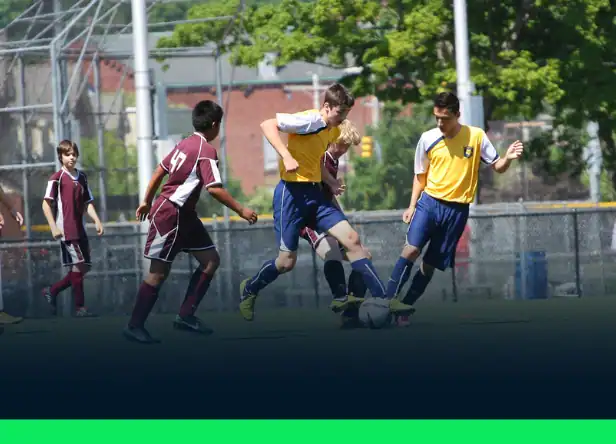
Players in this category are 11 or 12 years old, though age-specific cutoff dates vary by district and state governing bodies. Matches are typically played in 8v8 or 9v9 formats on expanded fields larger than those used in U10 and U11 competition. This evolution in field dimensions and player numbers significantly changes how the game is perceived and executed, as young players must adapt to greater playing space, longer passing distances, and an increasing necessity for coordinated team movement and positional awareness.The competitive format represents a meaningful step forward in soccer complexity while remaining youth-appropriate in structure and intensity.
Understanding the U12 Soccer Category
The U12 age group aligns with widely used youth soccer development models that bridge the gap between small-sided play and full-sided competition. Matches are typically played on reduced-size fields of approximately 65–75 yards in length by 44–55 yards in width, with appropriately scaled goal dimensions that match players’ physical capacities. Most youth programs implement rolling substitutions to ensure consistent playing time and learning opportunities, and matches consist of two 25-minute halves overseen by referees trained to support an educational and developmental environment.
The training framework at this level focuses on consolidating essential technical skills, including oriented first touch (receiving the ball with awareness of space and pressure), short- and medium-range passing, ball-carrying with the head up, and 1v1 dribbling both in attacking and defensive situations. Players aged 11 to 12 also begin integrating collective tactical concepts such as maintaining width and depth, recognizing when to play forward, and understanding basic defensive shape, all while developing coordination, speed, and endurance.
The educational environment created by the coach reinforces fair play and respect while fitting into a broader pathway of talent identification and preparation for U13, U14, and regional development programs. This makes the U12 category a strategic step in a young player’s overall soccer progression and long-term athletic development.
The Pedagogical Challenges of U12 Soccer
Training volume and expectations increase at U12, and players begin to absorb the basic principles of team play and tactical organization. The objective is not early specialization or rigid game models, but rather to equip players with a broad set of tools that will allow them to approach future seasons with confidence and adaptability.
The move to a larger field changes match dynamics in a significant way. Children must learn how to organize themselves in a wider space, use wide channels effectively, recognize when to switch play, and manage transitions more quickly in both attack and defense. This adaptation tends to occur naturally when coaches consistently introduce game-like situations that replicate the demands and decision-making of real matches.
Clear Reference Points Without Restricting Role Versatility
Even though positions become more identifiable at U12, it remains essential to allow players to rotate through different roles over the course of a season. The goal is to give players clear reference points—such as basic responsibilities for defenders, midfielders, and forwards—without permanently locking them into fixed positions. A child who experiences multiple areas of the field develops a deeper overall understanding of the game, learns how different lines of the team interact, and gains versatility that will be valuable at older age groups.
Position rotation also helps prevent early labeling and allows late-developing players to find roles that fit their strengths as they grow physically and mentally.
Main Objectives in U12
At this stage of development, players must progress across three key areas: technical improvement, game intelligence, and athletic foundations. These pillars support both immediate performance and long-term development.
Refining Technical Execution in Dynamic Situations
U12 drills and activities should allow players to link increasingly precise actions at realistic game speeds. They learn to orient their first touch based on intention—whether to play forward, protect the ball, or change the point of attack—pass with greater accuracy over short and medium distances, and carry the ball while keeping their head up to scan for teammates, opponents, and space.
Technical mastery must be expressed under pressure and at tempo, which means coaches should favor dynamic, opposed situations over static, isolated repetitions. Small-sided games, rondos with directional goals, and position-specific patterns that end with a finishing action all help connect technique to decision-making and game context.
Developing Tactical and Collective Game Understanding
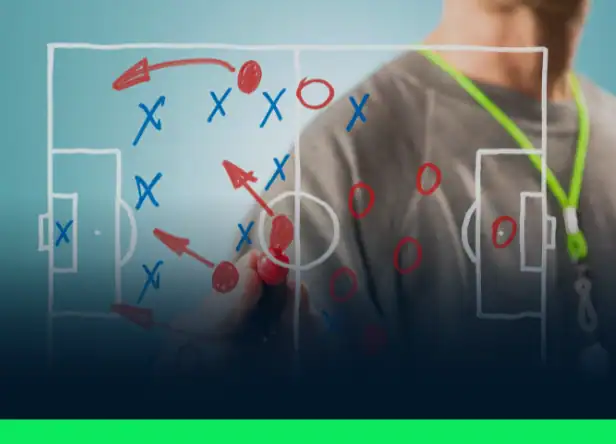
In U12 soccer, true collective concepts begin to emerge and can be introduced in a progressive way. Players discover how to occupy space intelligently, provide width and depth, create passing angles, and support teammates both in possession and when pressing or recovering defensively. They start to understand basic principles such as creating numerical superiority around the ball, covering for a teammate who steps out to press, and recognizing when to attack quickly versus when to keep the ball.
Young players gradually internalize the idea of playing together rather than simply playing individually next to each other. Themed games—for example, rewarding forward passes, breaking lines, switches of play, or quick counterattacks—help give meaning to these principles without overloading sessions with complex tactical lectures.
Supporting Physical Development and Athletic Capacity
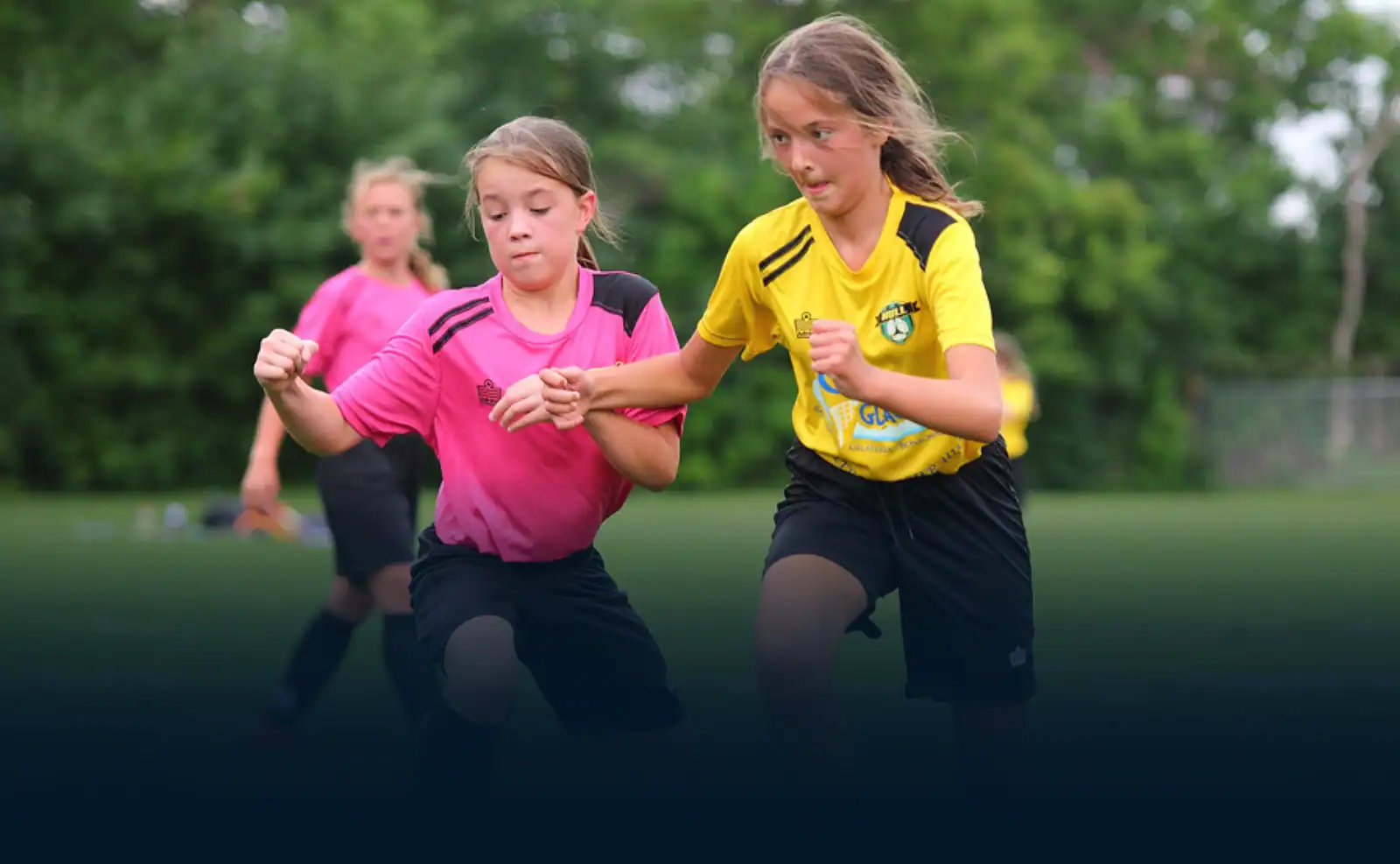
Physical development varies greatly at this age. Some players are in the middle of major growth spurts, while others develop later and remain smaller in stature for a time. Training must respect these differences and avoid creating unnecessary physical stress or imbalances. Coordination work, agility exercises, changes of pace and direction, and game-based running are essential components at U12.
The priority is to build a healthy, versatile athletic foundation rather than chase early physical dominance. Simple, fun movement patterns, basic speed mechanics, and age-appropriate endurance developed through games are more beneficial than heavy conditioning or strength training at this stage.
The Role of the U12 Coach: Structure With Freedom
Moving into the U12 category requires attentive and structured guidance. Players become more receptive to instruction while still needing a positive framework. The coach must support this transition by reinforcing autonomy and game understanding.
Providing Clear Tactical Framework Without Limiting Creativity
U12 players want to know what is expected of them and how they can improve. A coach who explains concepts in simple language, demonstrates them consistently, and encourages questions helps players feel secure and motivated. At the same time, creativity must remain part of the training culture: dribbling, 1v1 moves, and individual initiative in the final third should be encouraged rather than discouraged.
Training sessions can be structured around clear themes—such as building out from the back, pressing after losing the ball, or creating chances from wide areas—while still leaving room for players to experiment with different solutions. This balance between framework and freedom is central to effective coaching at U12.
Emphasizing Cooperation and Collective Movement
The transition to larger fields makes cooperation and coordinated movement essential. Coaches should help players identify nearby passing options, recognize useful spaces to move into off the ball, and understand how their runs can create space for teammates even if they do not receive the pass.
By focusing on principles such as support, cover, balance, and compactness rather than rigid formations, coaches can build strong collective habits without freezing players into overly strict systems that limit problem-solving and creativity.
Tips for Organizing a U12 Training Session
U12 training sessions increase in intensity but must remain accessible and fluid. The sequence of activities should strike a balance between technique, tempo, and application.
Build the Session Around a Clear Theme
A well-structured U12 session usually follows a logical progression tied to a single main theme. It might start with a dynamic warm-up that includes ball work and introduces the idea of the day, followed by a technical or semi-opposed exercise that reinforces the key concept. From there, the session moves into a small-sided game where the theme is emphasized through conditions or scoring rules and finishes with a more open game where players are encouraged to apply what they learned with fewer constraints.
This structure gives meaning to each activity, helps players connect the dots between drills and real games, and prevents sessions from becoming a random collection of unrelated exercises.
Vary Situations Without Multiplying Instructions
U12 players are capable of understanding more complex ideas, but they still benefit from concise, focused communication. A few clear coaching points and a quick visual demonstration are often more effective than a long explanation. Whenever possible, coaches should let the activity itself “teach” and use brief interventions to guide, correct, and reinforce.
Varying field dimensions, number of players, scoring conditions, and rules is an efficient way to create new challenges without constantly stopping to explain new exercises in detail.
What About the U12 drills?
Even though the U12 category requires more structure than earlier stages, training activities must remain fun, varied, and game-like. Many coaches look for ready-to-use drills to save time, refresh their sessions, or target specific objectives, and a well-designed collection of U12 drills can be extremely valuable.
Useful resources for this age group typically include technical circuits, oriented first-touch drills, passing and combination sequences on the move, themed small-sided games, transition scenarios, and formats close to 8v8 play. Each drill should align with the physical and cognitive capacities of U12 players and support the broader goals of the category.
By relying on a curated selection of drills, coaches can quickly adapt a session based on the objective of the day—for example, focusing on speed of execution, pressing after loss of possession, or building out from the back—and then reinforcing the theme through appropriate game formats. This helps ensure consistent progression, variety in content, and reduced monotony across the season.
Guiding U12 Players Toward the Next Stage
The U12 category directly prepares players for entry into more competitive, results-focused soccer at U13 and beyond. When properly supervised, it provides the technical foundation, collective understanding, and initial athletic base needed to progress confidently through the next stages of youth development.
The key is to maintain a motivating and positive environment where enjoyment, curiosity, and the desire to learn remain central. U12 players progress quickly when sessions are lively, varied, and built around the game itself, with clear themes but plenty of opportunities to make decisions. By respecting these principles, coaches help young players build not only skills and game intelligence, but also a lasting love for soccer that will support them throughout their journey.